






 Portuguese
  Spanish
  3 min of reading
  0 comments


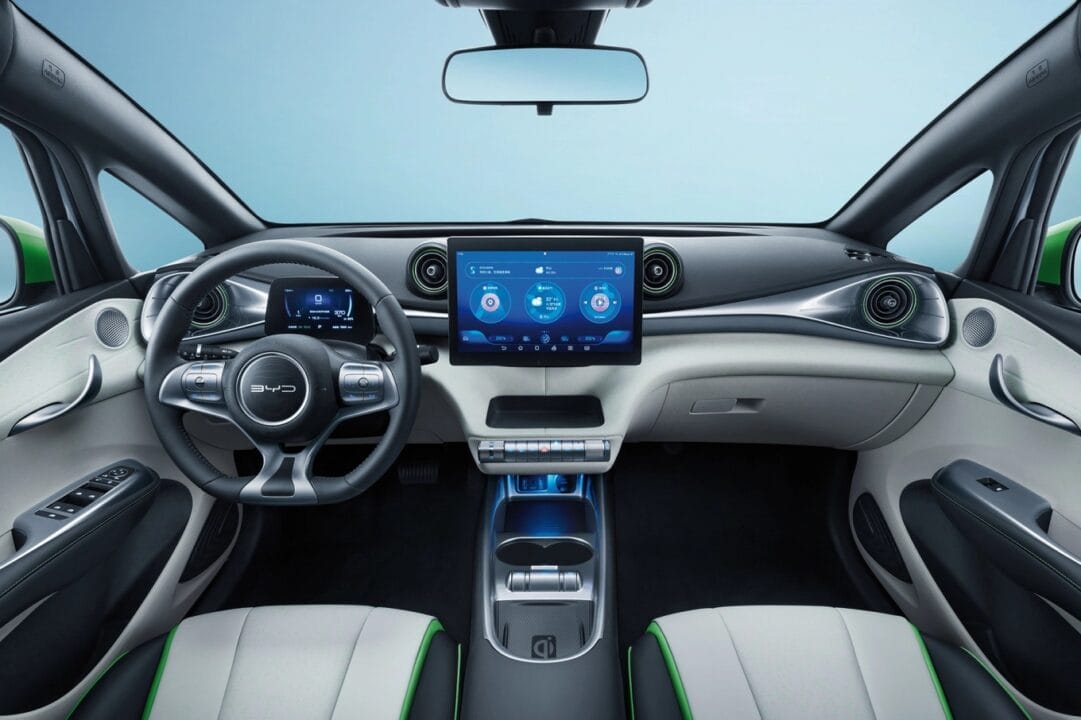
New Chinese Car Arrives in the Brazilian Market and Sells Up to 25 Times More Than the Renault Kwid. This Is the BYD Dolphin, Best-Seller in the Electric Market.
The Brazilian automotive industry welcomes a new competitor that promises to revolutionize the electric vehicle segment in the country. Surpassing sales expectations compared to the popular Renault Kwid E-Tech, this newcomer is rapidly establishing itself as a serious threat not only to Renault’s model but also to other already-established electric vehicles in the market, such as the JAC e-JS1 and the Caoa Chery iCar. Discover more about this new electric car from BYD that is changing the game and capturing the attention of Brazilian consumers.
Meet the Car That Is Disrupting Renault Kwid Sales
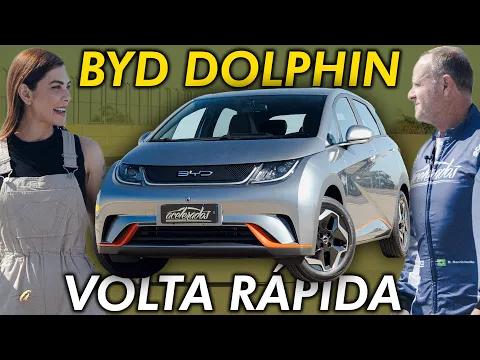

This refers to the immense success that the famous BYD Dolphin has generated in the market, with China’s new electric compacts coming and the GWM Ora 03 on its way; even the French, who also import the Renault Kwid from there, are facing some difficulties.
-
Is the BYD Song Pro worth it? The Anderson Sincero channel says it doesn’t exceed R$ 140,000, and the price dropped by R$ 47,000, reinforcing the depreciation of the plug-in hybrid in the Fipe table.

-
Caoa Changan CS75 arrives for R$ 199,990 with 4.77 m in length, a trunk of up to 1,620 liters, 8-speed Aisin transmission, 180 hp, 37.2 inches in screens, and Zero Gravity seat with massage.
-
Cheaper than a brand new Fiat Cronos, this used SUV offers a giant 516-liter trunk, a 1.0 Turbo 200 flex engine, CVT automatic transmission, and six airbags; the 2023 Fiat Fastback Impetus positions itself as a more complete alternative than the entry-level Cronos for those seeking more for the same budget.

-
The Ford Ranger plug-in hybrid, the same rugged pickup that handles 800 mm of water, becomes a plug-in pickup with a flex-fuel ethanol engine and is chosen as the International Pickup of 2026.


Thus, in an effort to regain sales, for the second time this year alone, the Renault Kwid E-Tech received a great discount, now costing R$ 123,490, which is R$ 16,500 less than it had been since August, when its price was first reduced from R$ 149,990 to R$ 139,990. That’s R$ 26,500 less in just three months, according to data from Motor1.
This is because, compared to the new electric car BYD Dolphin, which is being sold for R$ 149,800, the Kwid does not surpass it in terms of finish, space, and range. The model from China boasts a range of 291 km versus 185 km from the Kwid, as calculated by Inmetro, in addition to 95 horsepower and 18.3 kgfm, compared to 65 hp and 11.5 kgfm of the Kwid.
Sales Difference Between the Renault Kwid and the Chinese Electric Car
In light of this, the new Dolphin car arrived in July 2023 and, even so, is already the best-selling electric car in Brazil in 2023, with 2,870 registrations, almost ten times more than the 276 E-Kwids sold over twelve months. However, in October, the surge was even greater, with the BYD Dolphin electric car reaching 1,366 registrations, selling 25 times more than the 55 Kwid E-Tech.
Thus, it is easy to speculate that the problem with the Kwid E-Tech really lies in its cost-benefit ratio. It remains to be seen how much Renault will have to charge for its entry-level electric car to perform better in the national market, according to data. It is worth noting that currently, consumers can buy the Chinese model from BYD starting at R$ 149,800.
BYD Is Not Playing Around
After the Dolphin, BYD is already working on launching its new cheap electric car Seagull in Brazil, which is expected to happen in the first months of next year. The subcompact is a novelty even for the Chinese market and will arrive in Brazil costing less than the Dolphin listed at R$ 150 thousand.
The estimate is that this will be the cheapest electric car in Brazil, priced between R$ 110 thousand and R$ 130 thousand. The Seagull is a subcompact measuring 3.78 meters in length and 1.71 m in width. However, its axles are at the ends of the bodywork, with a very short front and rear overhang.
This configuration favors the wheelbase, which opens up 2.5 m for internal space and is a great ally in the car’s dynamic behavior, in addition to facilitating the designers’ work in balancing the proportions of the body.
In terms of style, the headlights resemble those of Lamborghini, with wedge cuts. In China, the version of the electric car with a larger battery runs up to 405 km considering the country’s cycle, with a maximum speed of 130 km/h.





Be the first to react!