Portuguese
  Spanish


Discovery in Preserved Location May Change What Is Known About Ancient Agriculture in the Pacific
A new archaeological discovery on the island of Guam, located in the Micronesia region of the Western Pacific Ocean, surprised researchers by revealing remnants of rice that are up to 3,500 years old.
The phytoliths — tiny plant fragments — were adhered to the surface of ceramics found in the Ritidian Beach Cave in the northern part of the island.
The fragments belong to rice husks and leaves and have been dated to between 3,500 and 3,100 years ago.
-
Brazil’s Largest Grain Port Faces Delays in the Hinterlands, Missing Rail Link Costs Agribusiness Billions

-
Astronomers Detect Excess Alcohol on Interstellar Comet 3I/ATLAS, Revealing Unique Chemical Signature from Another Star System
-
13-Year-Old Californian Girl Wins $25,000 Prize for Creating Low-Cost Water Filter from Discarded Animal Bones

-
Entrepreneur Secures $15 Million to Transform Steel Mill Waste into Concrete Material, Builds Demo Plant in the U.S. with a Goal of 10,000 Tons Annually




According to the archaeologists involved, this is the oldest evidence identified of rice use in the remote Pacific region.
Previously, the oldest records indicated the presence of the grain only between 1,000 and 700 years ago. The new discovery extends that timeframe by over two thousand years.
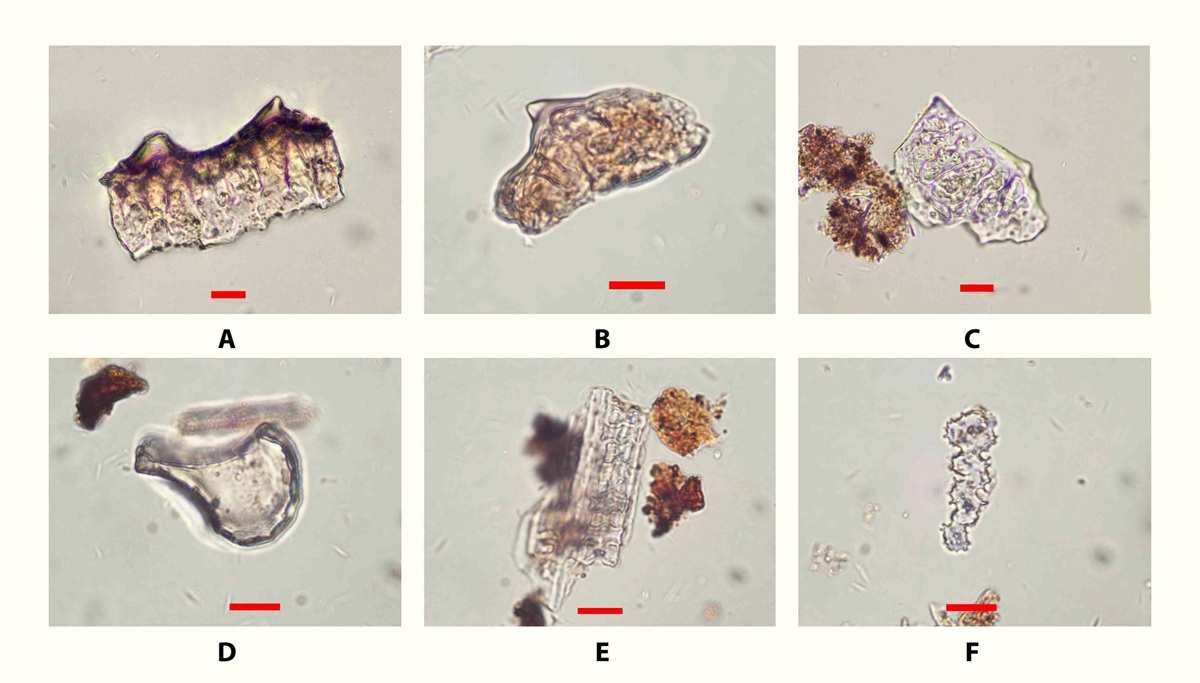
et al., doi: 10.1126/sciadv.adw3591.
Origin and Cultural Significance
The first Austronesians, indigenous peoples from Taiwan, had already been cultivating rice for at least 4,800 years. They migrated throughout the Asia-Pacific region starting 4,200 years ago.
One of the routes of this migration included the long journey to Guam, in the Mariana Islands, in western Micronesia.
The domesticated rice carried by these peoples originated in the Middle Yangtze Basin in mainland China.
However, during migrations, rice cultivation became less common in the more remote areas. Only Guam and the Mariana Islands maintained historical planting records, primarily in the 1500s and 1600s.
The new discovery reinforces the idea that rice was not consumed daily in Guam. For Dr. Hsiao-chun Hung from the Australian National University, it was a valued commodity, possibly used in ritual and ceremonial contexts.
Ceramics and Cultural Layers
The team of scientists from Australia, China, and Guam found the remnants in the oldest layer of the cave. The fragments were on the surface of red pottery vessels. To date the material, researchers used modern techniques, such as radiocarbon dating on human refuse found around the cave.
Despite the significance of the discovery, archaeologists did not identify evidence of rice fields, irrigation systems, or farming tools. This reinforces the hypothesis that rice was not cultivated on a large scale.
The humid environment of the cave also indicates that the grains were not stored there. Apparently, rice was processed and cooked at another location, with the pottery being brought into the cave after use.
Impressive Migration and Navigation
One of the most impressive aspects of the discovery is the distance traveled by the ancient Austronesians. According to researchers, the rice grains were transported from the Philippines to Guam, crossing 2,300 kilometers of open ocean. This is considered the largest known maritime journey of the time.
For scientists, this feat demonstrates a high degree of navigational skill and a strong cultural connection to the food. The effort to preserve the rice and bring it over such great distances highlights its symbolic importance.
Dr. Hung emphasizes that the discovery strengthens the connection between current practices of the local population and the traditions of their ancestors.
A Preserved and Revelatory Site
The Ritidian Beach Cave plays a central role in the research. Unlike other areas of Guam that have been altered by conflicts and military occupations, the site has remained virtually untouched. This ensured the preservation of the oldest layers.
Despite various excavations in open areas of the island, this was the first time researchers found such clear evidence of rice use in such ancient times. The cave has thus become a key point for studying the Austronesian presence in the Pacific.
The discovery opens new possibilities to understand how the first inhabitants of the Pacific lived, moved, and what they valued. And, in this case, rice was much more than just food.
The discovery was reported in a paper in the journal Science Advances.