Portuguese
  Spanish


Decorated Streets Contest for the World Cup in Rio rekindles an old tradition, puts R$ 50,000 in competition, mobilizes neighbors around the Brazilian National Team, and also promises to transform ordinary alleys and lanes into meeting points, emotional memory, and popular celebration.
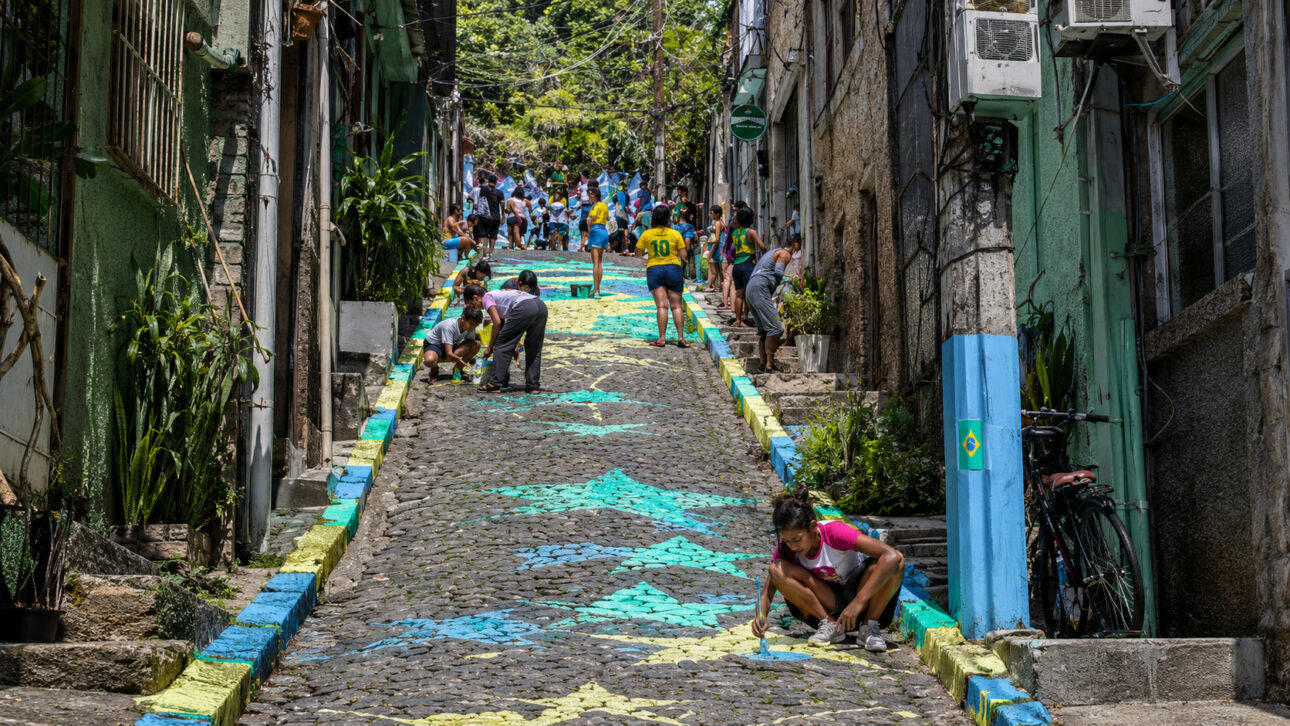
Painting streets for the World Cup seemed like an increasingly distant tradition, but Rio decided to put public money into the competition to try to bring this custom back. The city created a contest that will reward residents capable of transforming streets, alleys, and lanes into grand green and yellow World Cup settings.
The information was released by Prefeitura do Rio, the municipal body of the city of Rio de Janeiro. The contest is called Believing is an Art, Rio in the Colors of the Hexa and offers a prize of R$ 50,000 for first place, R$ 30,000 for second, and R$ 20,000 for third.
The idea mixes football, neighborhood, street decoration, and emotional memory. Instead of letting the tradition slowly die, the city wants to see residents gathered to paint the ground, hang flags, and transform the neighborhood into a fan space.
-
Chinese Man Transforms Home into 10-Story Pyramid Over 8 Years, Defying Authorities Before Demolition

-
Faced with College Costs, Brazilian Student Lived in a Minivan for Nearly Two Years to Graduate Debt-Free
-
Tokyo Scientists Create First 18cm Biohybrid Hand Using Human Muscle, Capable of Scissor Gesture and Holding a Pipette

-
Brazil Faces Norway in World Cup at Stadium Linked to Jimmy Hoffa’s Mysterious Disappearance


Rio transforms the old tradition of painting streets for the World Cup into a contest with cash prizes
The contest was created to encourage thematic decorations on streets, alleys, and lanes in the municipality of Rio de Janeiro. The proposal is simple to understand: organized residents can prepare a decoration related to the World Cup and compete for an official prize.
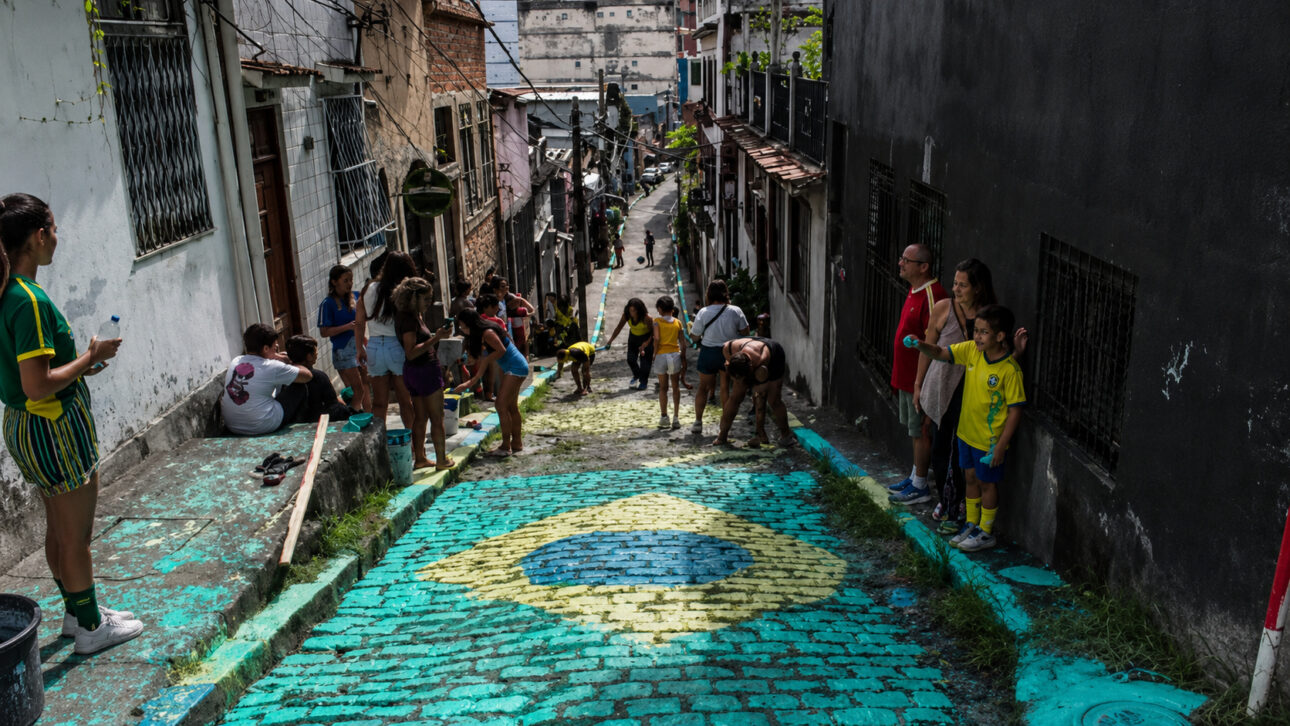
The decoration can use elements related to the Brazilian National Team, national colors, football, sports, and Brazilian culture. In practice, it includes asphalt paintings, flags, panels, visual installations, and other decorations made together.
What once depended solely on the will of the neighbors now takes the form of a public competition. The street is no longer just a place of passage and can become a setting for gatherings, photos, cheering, and socializing during the World Cup.
The strength of the theme lies precisely in the contrast. While many people have become accustomed to seeing fewer painted streets in World Cup years, Rio has decided to reward those who manage to recover this classic image of Brazil.
How much each decorated street can win in the World Cup contest
The total cash prize reaches R$ 100,000. The first place will receive R$ 50,000, an amount that makes the contest more attractive for residents who were already thinking of organizing to decorate the street.
The second place will receive R$ 30,000. The third place will receive R$ 20,000. These amounts will be awarded to the three streets, villages, or alleys best classified by the judging committee.
In addition to the money, the 20 initiatives with the highest scores will receive a commemorative plaque. This recognition creates a permanent memory for the community, even after the World Cup is over.
For the average resident, the impact is direct. A street that comes together to decorate can gain visibility, cash prizes, and also leave a record of the neighborhood’s participation in a popular tradition.
Which streets, villages, and alleys can participate in the contest in Rio
Streets, villages, and alleys located in the municipality of Rio de Janeiro can participate. Registration is free, and participation must be collective, with residents involved in the decoration.
Registration is aimed at individuals over 18 years old, residing in the municipality, who act as representatives of the street. It is also necessary to prove the collective participation of residents in the action.
The project submission period runs from 2:00 PM on June 1, 2026 to 6:00 PM on June 10, 2026. Submissions are made through the official registration platform on the Municipal Department of Culture’s portal.
This point makes it clear that the contest was not designed for an isolated house. The focus is on the street as a shared space, with neighbors working together to create a decoration capable of attracting attention.
Creativity, beauty, and safety are part of the evaluation of decorated streets
The World Cup decorations will be evaluated based on criteria such as creativity, originality, coherence with the theme, and the ability to transform the space. This means that simply placing some loose decorations is not enough. The street needs to show identity, organization, and visual impact.
The Rio City Hall, a municipal body of the city of Rio de Janeiro, also informed that the decorations cannot compromise the circulation of pedestrians and vehicles. The rule also applies to urban accessibility, public safety, and the operation of public services.
In simple terms, the celebration can occupy the street, but it cannot create risk or disrupt the neighborhood’s life. The decoration needs to be beautiful, but it also needs to respect those who pass by, work, or live in the area.
The evaluation will be conducted by a judging panel composed of representatives from municipal areas related to culture, the Civil House, government coordination, and sports. The final choice does not depend solely on appearance but also on organization and suitability to the public space.
Why painting streets for the World Cup stirs so much with Brazilians’ memories
Painting streets for the World Cup has always been more than just decorating the ground. In many neighborhoods, this tradition brought together children, adults, merchants, and neighbors in days of preparation, conversation, and anticipation for Brazil’s matches.
The image is familiar to many Brazilians: painted ground, flags above, colorful walls, and residents following every detail before the ball starts rolling. The World Cup left the television and entered the street’s routine.
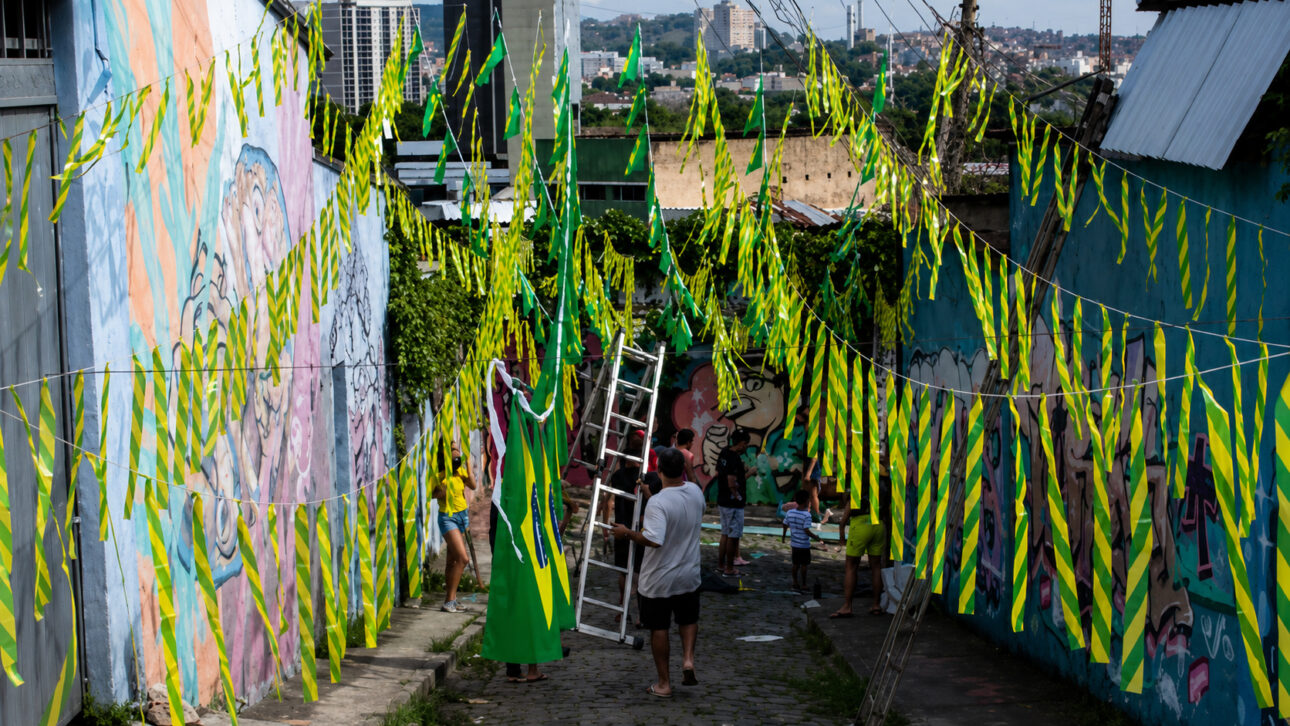
That’s why the contest has a great chance of attracting attention. It combines World Cup nostalgia, money at stake, strong images, and popular participation. It’s the kind of theme that resonates with those who lived this tradition and those who would like to see it return.
The contest announcement was published on May 28, 2026 by the Rio City Hall, a municipal body of the city of Rio de Janeiro. In the official release, Eduardo Cavaliere, who took office as mayor of Rio in March of the same year after the resignation of former mayor Eduardo Paes, argues that street decoration keeps a popular World Cup tradition alive.
“The World Cup has always had a special meaning on the streets of Rio. It’s part of the Carioca culture to see entire neighborhoods mobilized and decorated to create meeting spaces where everyone gathers to cheer together,” said Eduardo Cavaliere, Mayor of Rio.
Contest also transforms street decoration into cultural recognition
The plaque for the 20 finalists gives the contest a significance that goes beyond the cash prize. It acknowledges that street decoration is part of popular culture and can mark the history of a community.
In many regions, a decorated street becomes a point of visit, a photo setting, and a source of pride for the residents. The neighborhood becomes remembered not just by its address, but by its ability to organize and create something collective.
This type of action also values small urban spaces. Alleys and lanes that normally don’t appear in the news can gain prominence due to the creativity of the residents themselves.
In the end, the contest puts the street at the center of the celebration. The World Cup is not limited to the stadium, television, or large events. It passes through the sidewalk, the painted asphalt, and the unity of those who live in the neighborhood.
Rio bets on green and yellow on the streets to rekindle World Cup spirit
The contest Believing is an Art, Rio in the Colors of the Hexa tries to revive a tradition that has been part of the lives of many Brazilians. The prizes of R$ 50,000, R$ 30,000, and R$ 20,000 give extra motivation for residents to organize.
The initiative also shows how a simple street can become a meeting space when there is collective mobilization. With painting, flags, and creativity, alleys and lanes can transform into symbols of the World Cup in Rio.
More than choosing the most beautiful street, the contest brings into debate the value of popular traditions. It shows that a decoration made by neighbors can carry memory, identity, and pride.
Do you think that awarding decorated streets helps to save a Brazilian World Cup tradition or changes the meaning of a celebration that has always been born from the will of the residents themselves?