






 Portuguese
  Spanish


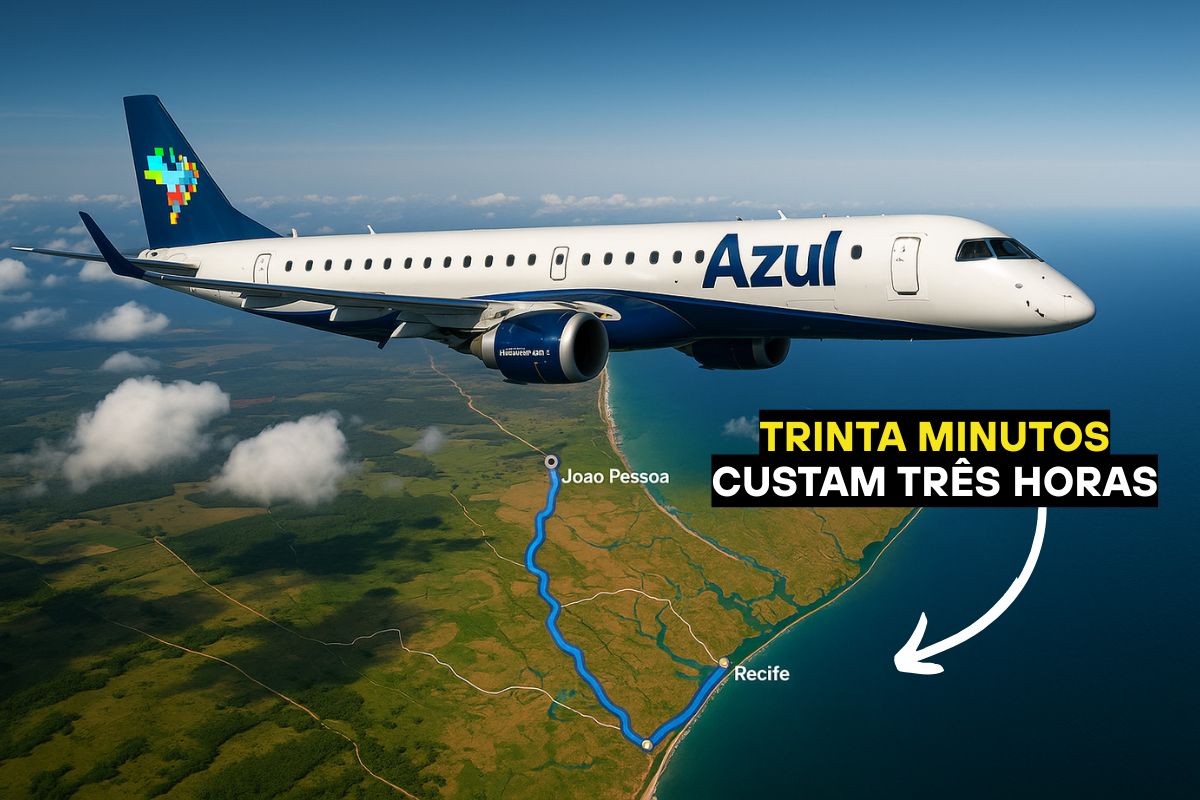


Even with only 30 minutes in the air, the flight between João Pessoa and Recife can take up to 3 hours in total and cost up to R$ 2 thousand, being used more for strategic connections than for time saving
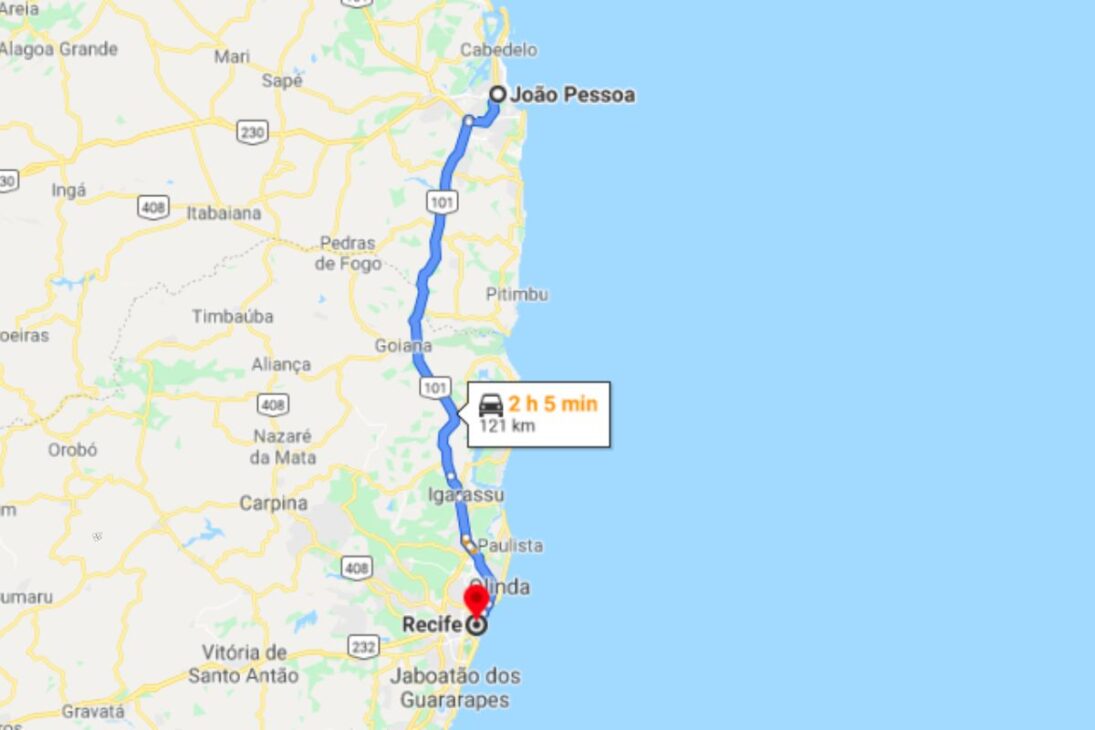
The flight between João Pessoa and Recife lasts about 30 minutes in the airplane, but the total time involved in getting to the airport, check-in, boarding, and disembarking can exceed 3 hours, the same time as the drive. Despite this, the route continues to operate daily with full aircraft.
The reason? This short route is not aimed at those who want to save time between the capitals, but rather to feed national and international connections in Recife. And the price, surprisingly, can exceed R$ 2 thousand if purchased separately, more expensive than the car or even an executive bus trip.
The Shortest (and Controversial) Flight in Brazil
Flight AD2834 from Azul, operated by an ATR 72-600 with about 70 seats, covers the route between João Pessoa and Recife in about 30 minutes of actual flight.
-
European Country Achieves 100% Glass Recycling and 52% Municipal Waste Recovery, Highlighting Brazil’s Challenges Despite Selective Collection in 60.5% of Cities

-
Facing extreme heat, floods, and disappearing fertile soil, Pakistan launches a “10 Billion Tree Tsunami” in three years to combat desertification, protect rivers, create green jobs, and make reforestation a national survival priority.

-
Cape Verde’s World Cup Surprise: Betting on Electric Cars, a 5 MW Solar Plant, and an Ambitious Plan to Transform Energy for 600,000 Residents

-
Man Finds 1,469 Ancient Roman Silver Coins While Metal Detecting in Romania


However, when added to the time spent on urban transit, baggage check, security inspection, and wait for boarding, the total journey exceeds two to three hours door-to-door.
The curious thing is that, even with this total time comparable to the land trip, the flight continues to have high occupancy.
According to the channel Novas Fronteiras, which documented the entire experience, the plane goes back and forth full daily, even seeming pointless at first glance.
It is a flight that at first glance seems absurd, but reveals itself to be extremely functional within the logic of quick connections at the Recife hub, explains Rafael Scapella, the video’s author.
Why This Flight Exists
The explanation lies in the strategic logistics of Azul. The João Pessoa–Recife route mainly serves as a feeder for the company’s hub in the state capital of Pernambuco.
From Recife, passengers continue to longer destinations such as São Paulo, Salvador, and even Buenos Aires.
A real example is the team from the channel, which bought a ticket from João Pessoa to São Paulo with a connection in Recife for R$ 700 in total.
However, if the same passenger tried to buy just the João Pessoa–Recife leg, the fare could reach R$ 2,000, according to simulations done for the video.
The cost of the isolated leg is often disproportionate because its function is to integrate more profitable networks, highlights Rafael.
Lost Time or Efficient Connection
In the video, the complete journey between João Pessoa and Recife, including transit to the airport, boarding, and disembarking, took about 3 hours.
Meanwhile, the drive, although it seems more practical, also faces bottlenecks, especially on the Abreu e Lima stretch, upon reaching Recife, where congestion is frequent.
In other words, neither option guarantees absolute speed.
However, for those who need to catch another flight in Recife, the aerial route offers the advantage of disembarking directly in the secure area of the airport, speeding up the connection.
The flight has the advantage of predictability, less dependent on urban traffic and with a lower risk of logistical delays, despite the extra time involved.
Minimum Altitude, Maximum Frequency
Another curious detail revealed in the video is that the flight barely climbs. The pilot reaches about 3,000 feet of altitude (approximately 1 km) before already starting the descent.
For comparison, regular flights in Brazil reach up to 35,000 feet.
Even with this reduced altitude, the flight maintains a daily frequency and operates with surprising speed.
The aircraft lands, disembarks passengers, refuels, and within minutes is already taking off again in the opposite direction.
This intense pace shows that, even though it may not seem necessary to the average passenger, the flight has high operational value within the regional air network.
Cost-Benefit for Those Who Need Speed


If the isolated flight seems expensive and time-consuming, within a smart network it can be more advantageous than it appears.
For those traveling for work, for example, or needing to ensure punctual connections with flights to other regions, the logistical value pays off.
For the airline, the goal is not to profit from the short leg itself, but to ensure efficiency in transporting passengers to more profitable routes.
This explains why the flight continues to be offered, even with significant operational costs.
Have you taken this flight or do you think it is worth it? Do you think this type of connection is strategic or a waste? Leave your opinion in the comments; we want to hear from those who have lived this journey in practice.


