






 Portuguese
  Spanish
  4 min of reading
  0 comments


Vladimir Putin Proposed a “Duel” With the USA Using the New Russian Hypersonic Missile Oreshnik. The Suggestion, Part of a Scenario of Increasing Tension in the War in Ukraine, Reignites the Alert About Global Military Escalation.
In a moment marked by global tensions and an unprecedented military escalation, Vladimir Putin launched a proposal that caught the world by surprise and further increased the climate of geopolitical uncertainty.
The idea of a “duel” of missiles between Russia and the United States, suggested by the Russian president, goes beyond a simple demonstration of strength.
It carries strategic implications that could shape the balance of power between the two largest nuclear powers on the planet.
-
Ukraine launches largest drone attack on Moscow since 2022, Russia claims to have intercepted nearly 200 aircraft near the capital, Kapotnya refinery targeted again, and offensive reignites alert about war reaching the Russian energy heart just a few kilometers from the Kremlin.

-
Truck drivers, freight, and fines from 2022 take center stage in politics: Chamber approves MP with amnesty, mandatory tracking by CIOT, million-dollar penalties, and new minimum wage for those who spend more than 24 hours on the road.

-
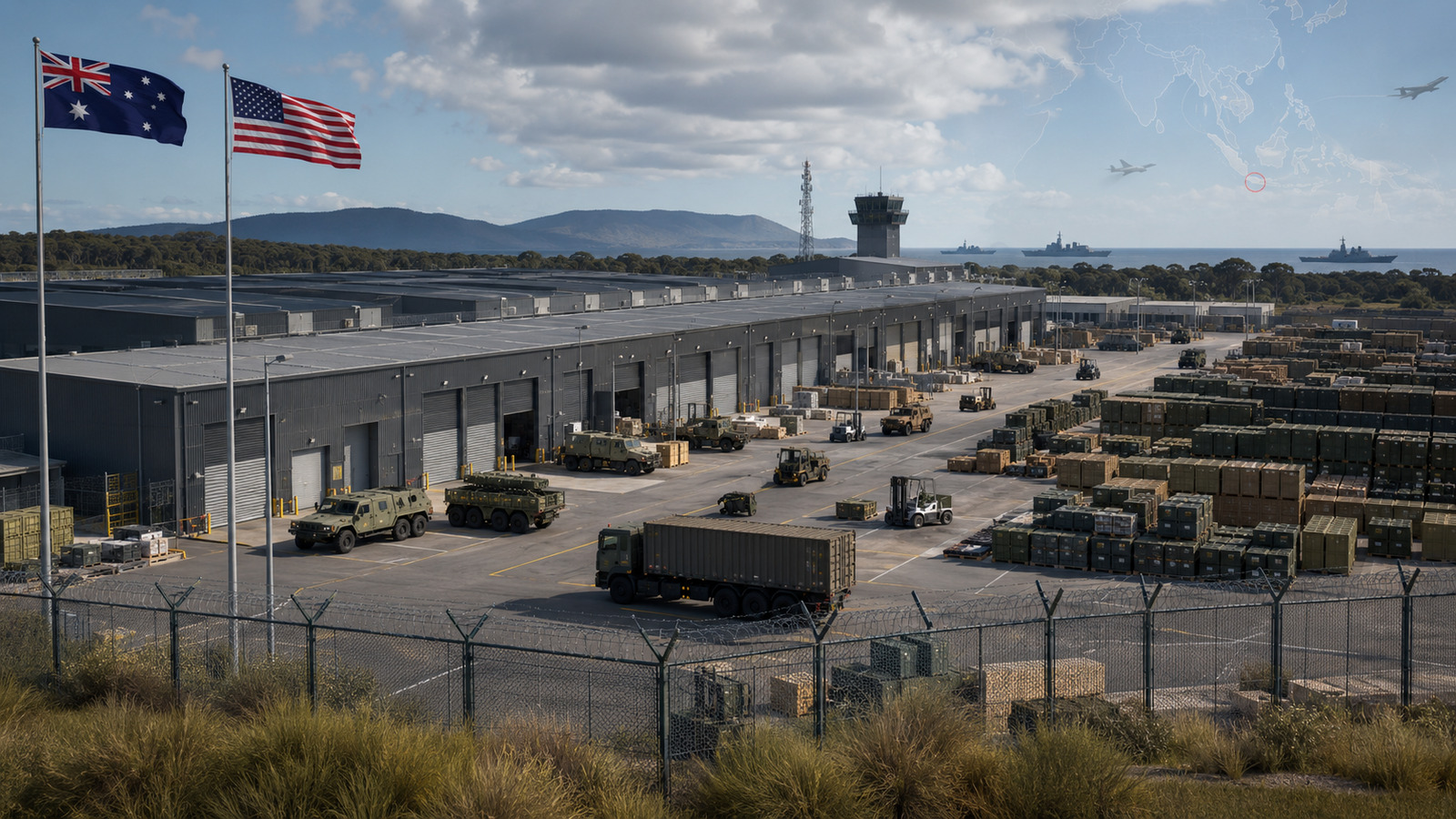
China off the radar: US plans mega $30 million weapons depot in Australia, out of reach of most Chinese missiles, with full capacity expected by 2028

-
Trump’s wall advances at a rapid pace: government promises to complete a barrier of over 3,000 km by 2027 while drones and cartels turn the US border into a new field of technological dispute



Putin not only defended the superiority of Russian technology but also suggested a direct experiment that would challenge American missile defense systems.
The statement was accompanied by a practical demonstration: the launch of the hypersonic missile Oreshnik in Ukraine.
The proposal and its possible consequences reignited the debate about the arms race and the future of relations between the West and the East.
Oreshnik: The New Weapon in the Arms Race
During a statement made last Thursday (19), Vladimir Putin proposed an experiment that consists of selecting targets protected by U.S. missile defense systems.
These targets would serve as a testing ground for the Russian hypersonic missile Oreshnik, which, according to Putin, is capable of overcoming any Western technological barrier.
“We are ready for such an experiment,” asserted the Russian president, in a tone that mixes challenge and confidence.
Putin highlighted that, although the Oreshnik is the result of recent innovations, its design bases date back decades of Russian military development.
According to information released by international agencies, the Oreshnik was used for the first time in an attack on the city of Dnipro in Ukraine on November 21, 2024.
The projectile, equipped with conventional warheads, demonstrated its precision and lethality capabilities.
However, the most alarming aspect is that it can also be configured to carry nuclear weapons, raising the risks of an unprecedented escalation in the conflict.
War in Ukraine: A Conflict Without An End in Sight
The backdrop to this “duel” proposal is the war in Ukraine, which since February 2022 has become a battlefield between Russia and the Western powers that support the Ukrainian government.
The Russian invasion, launched from three fronts — Crimea, Belarus, and the Russian border — marked one of the most dramatic moments in recent history.
In the early days of the conflict, Putin’s troops advanced rapidly, but Ukrainian resistance was able to halt the offensive at strategic points, including the capital, Kyiv.
Since then, the conflict has dragged on, accumulating thousands of deaths, millions of refugees, and widespread destruction in various regions of Ukraine.
In October 2024, analysts began to describe the war as the most dangerous moment since its inception.
Russia, under the leadership of Vladimir Putin, intensified the use of advanced weaponry, including hypersonic missiles, while Ukraine began directly attacking Russian territory with arms supplied by the United States, the United Kingdom, and France.
The West’s Response and Russia’s New Alliances
Putin’s proposal occurs against a backdrop of increasing diplomatic isolation for Russia. Since the beginning of the invasion, Moscow has suffered a series of economic sanctions and faced international condemnation.
However, the Kremlin sought new allies, including North Korea, which, according to Western intelligence, may have sent troops to assist Russian forces in Ukraine.
Although Moscow and Pyongyang do not officially confirm military cooperation, analysts state that this alliance represents a new axis of influence in the global landscape.
Additionally, Russia strengthened its partnership with China, which, while avoiding direct involvement in the conflict, continues to provide political and economic support to the Kremlin.
Meanwhile, the United States and its NATO allies have intensified the supply of modern weapons to Ukraine, making the conflict increasingly technological and unpredictable.
The introduction of ATACMS and Storm Shadow missiles on the battlefield elevated Ukraine’s capability to hit targets on Russian territory, forcing Moscow to adopt more drastic measures.
The Impact of the Arms Race on the Global Future
The proposal for a “duel” between hypersonic missiles symbolizes more than just a dispute between powers.
It highlights the intensification of the arms race, which has dominated the global landscape since the early 21st century.
Experts warn that the development of increasingly sophisticated military technologies could trigger a new Cold War, jeopardizing global security.
Moreover, the possibility of using nuclear weapons amid rising tensions raises an alert for international organizations.
Despite mediation attempts by the UN and neutral countries such as Turkey and Switzerland, peace negotiations remain stalled.
As pointed out by military analysts, Vladimir Putin’s posture reflects an effort to reaffirm Russia’s leadership in the geopolitical arena while pressuring the West to reconsider its support for Ukraine.
However, the cost of this strategy could be high, both in economic and human terms.
And you, do you believe that Putin’s challenge is merely rhetoric or an indication of an even more dangerous confrontation in the future? Leave your opinion in the comments!


-

1 person reacted to this.