






 Portuguese
  Spanish
  2 min of reading
  0 comments


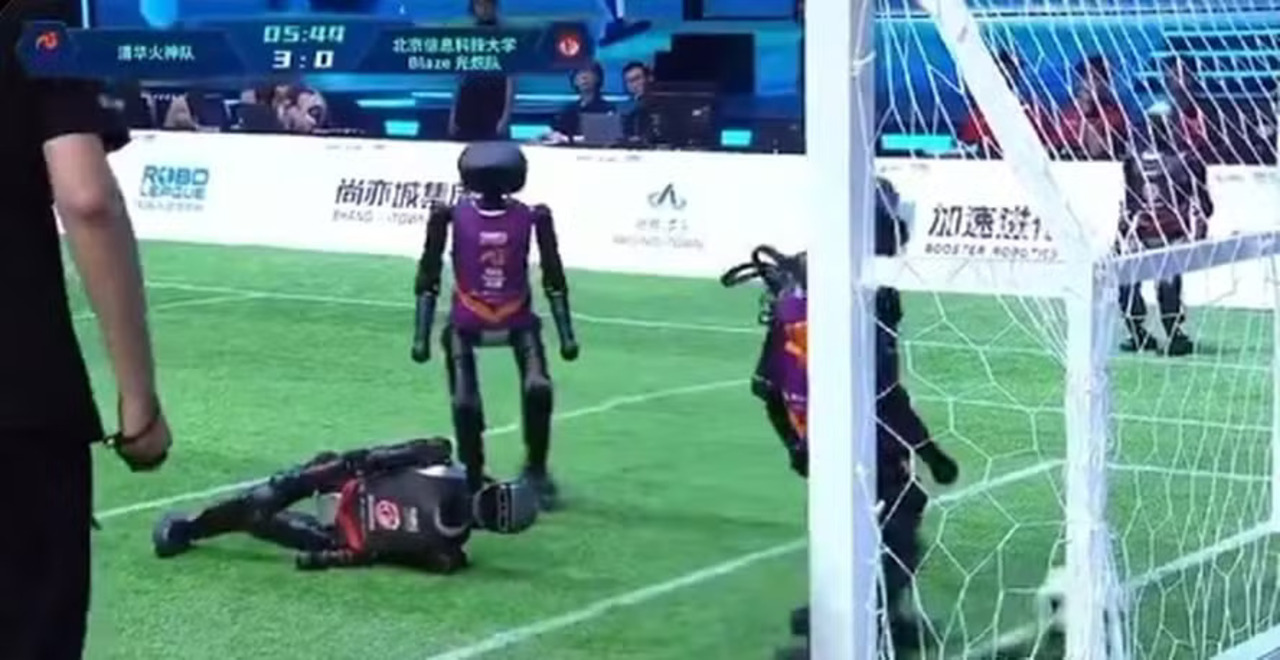
With Clumsy Movements and Algorithms in Command, Robots Compete in a Soccer Match in Beijing During the RoBoLeague, Promoting Chinese Robotics
On Saturday, June 28, a field set up in an industrial area of Beijing, China, was the stage for an unusual scene. Humanoid robots competed in a soccer match for the World Robot Soccer League, the RoBoLeague. Without coaches shouting from the sidelines, the mechanical athletes were guided by algorithms of artificial intelligence.
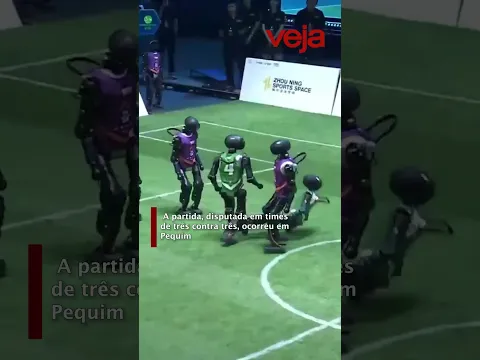
Wearing purple and black uniforms, with individual numbering, the robots played two halves of 10 minutes.
Despite the clumsy movements and falls during the game — at one point, two players fell on top of each other — the match served as a demonstration of advancements in balance, agility, and decision-making based on AI.
-
Helicopter Drops 180 Tons of Sand and Gravel on Swedish River to Revive Ecosystem Damaged by Decades of Exploitation

-
Brazilian Company Launches Retro Smartphone with 48 MP Camera, T9 Keyboard, and Privacy Features for Social Media-Free Use

-
Self-Taught Chinese Farmer Builds 5-Ton Submarine from Scrap, Launches It in Anhui River
-
Invisible Induction Technology Enables Wireless Power for Blenders, Coffee Makers, and Air Fryers, Reducing Countertop Cables





The robots even celebrated after goals, raising their fists, although the goalkeepers showed weak performance.
The event brought together teams from renowned Chinese universities, such as Tsinghua University and the Beijing University of Information Science and Technology. According to China News Network, the Tsinghua team, Vulcan, won the match 5 to 3.

The RoBoLeague is part of a broader strategy by China to lead the robotics sector. According to data from Morgan Stanley, the country accounts for 40% of the global market, currently valued at US$ 47 billion, with projections for growth to US$ 108 billion by 2028.
In addition to soccer, other competitions have been organized to showcase Chinese technological advancements. In April, Beijing hosted a half marathon for humanoid robots.
In May, Hangzhou hosted a kickboxing tournament between machines. Despite being innovative, these events still face technical challenges: many robots fall, break, or lose parts during the competitions.
Even so, the robots demonstrated impressive skills. Using cameras and sensors, they can detect the ball from up to 18 meters away, with 90% accuracy.
They also recognize field lines, opponents, and the goal. Game decisions — such as passes, dribbles, and shots — are made in real-time using deep reinforcement learning techniques.
The championship on Saturday also served as preparation for the World Humanoid Robot Games, scheduled for August 15 to 17, 2025, in Beijing. The event will feature 11 categories, including gymnastics, athletics, and soccer.
With information from Época Negócios.




Be the first to react!