






 Portuguese
  Spanish


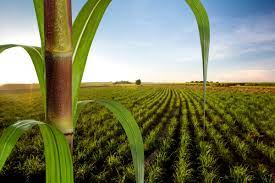

This Monday, January 23, the diplomatic mission involving representatives of the Filipino government from the sugar-energy sector, the Center for Agricultural Sciences (CCA) at the Federal University of São Carlos (UFSCar), Araras campus, formed a delegation to consolidate the partnership in ethanol and biofuel production.
Also participating in the visit was the manager of the General Coordination for Africa, Asia, Oceania, and the Middle East of ABC/MRE (Itamaraty), Antonio Divino Junqueira. The UFSCar rector, Ana Beatriz de Oliveira, was the one who welcomed the delegation to Brazil, and the request became one of the most mentioned among corporate news in the entire sugar-energy sector.
The rector declared: “It is a great pride for UFSCar to be a reference for this very important project, which will contribute to the technological development of the Philippines. I am sure it will be a highly successful cooperation, from which we will also learn a lot,” asserted Ana Beatriz.
The extension project was titled, “Technical Cooperation for the Government of the Philippines for the Ethanol and Biofuel Production Chain,” and Professor Octávio Antônio Valsechi is technically coordinating it. He mentioned during the event that UFSCar’s partnership with the United Nations (UN) involves the entire sugar-energy chain and has been ongoing since the 2000s.
-
The world has nearly 12,000 nuclear warheads, with the majority held by the United States and Russia; see the figures for China, France, and the United Kingdom.

-
Venezuela Faces UN Alert for Hunger, Disease, and Service Collapse After Earthquakes Cause Nearly 2,000 Deaths and $6.7 Billion in Damages

-
Brazil Deploys Navy Field Hospital with ICU, Orthopedics, Pediatrics to Earthquake-Stricken Area in Venezuela, Offering 30 Beds and 150 Daily Consultations
-
European Union Announces €260 Million Investment to Extend EllaLink Submarine Cable to Northern Brazil, Reducing Digital Dependence on U.S. Routes



Other countries in Africa, Sri Lanka, and India, through the Association of Southeast Asian Nations (ASEAN), have also benefited from the agreements. Valsechi informed that “our knowledge and technologies will allow us, based on the reality of the country, to contribute to increasing ethanol production in the Philippines,” explained the professor.
The district representative of the Republic of the Philippines, Emilio Bernardino Lin Yulo, expressed his excitement and certainty that the partnership with UFSCar will certainly increase Filipino production, as Brazil has cutting-edge technologies that serve as a reference for the sector. The Philippine government seeks excellence. With soils of the same origin, technical cooperation significantly favors the production of ethanol and biofuels, which today counts with 90,000 producers. It is a means to enhance sugarcane production.
However, the partnership in ethanol and biofuel production benefits not only the Philippines but also allows Brazil to exchange knowledge and technologies, led by UFSCar.
Advantages and Disadvantages
Environmental sustainability and the capacity to completely or partially replace fossil fuels like gasoline and diesel are perhaps the main advantages of ethanol and biofuel production. Additionally, they can achieve the necessary reduction in global warming, with diversification of supply. This is because it is widely known that our oil reserves could be depleted overnight.
Biofuels promote low CO2 emissions into the atmosphere. In Brazil, a wide variety of flora elements can be used as raw materials. Sugarcane is one of the most profitable energy sources, providing 90% lower production costs.
However, it is necessary to be aware that the gases produced by biofuels accelerate the greenhouse effect. Another focal point should be cultivation, ensuring that planting does not occur in deforested areas, as large production requires intensive crops, which lead to higher profits for producers, encouraging reduced planting of food.


