






 Portuguese
  Spanish


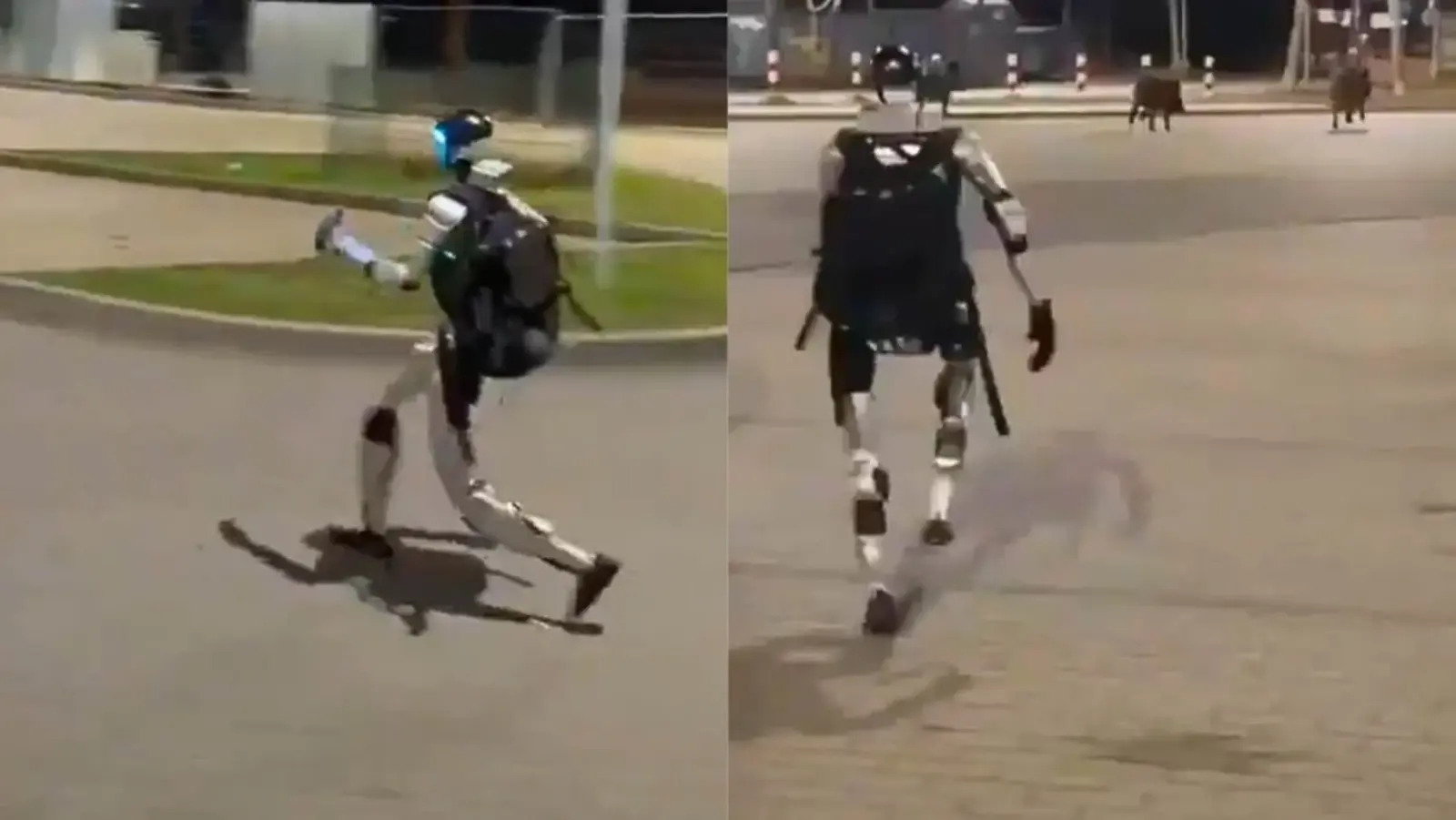
Use of humanoid robot to repel wild boars from residential areas at night highlights new urban strategy that combines technology, safety, and environmental preservation
The presence of wild boars in urban areas has led cities to seek safer and less aggressive solutions. Among them, the use of a humanoid robot to drive the animals away from residential regions at night has gained prominence for uniting technology, safety, and environmental preservation.
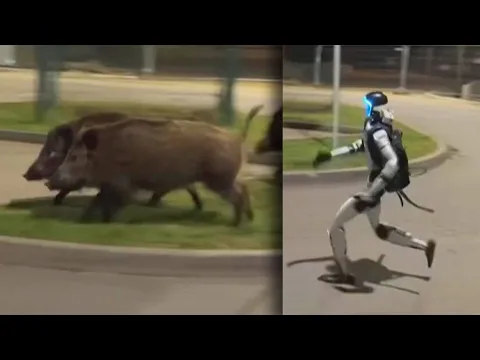

Humanoid robot enters urban management
The use of a humanoid robot in urban wildlife control has drawn attention for demonstrating a practical application of technology in an increasingly common problem in cities.
The proposal consists of guiding wild boars out of residential areas at night, reducing risks without resorting to aggressive methods.
-
In Somaliland’s Desert, Greenhouse Uses Sun and Seawater to Grow Lettuce, Cucumbers, and Tomatoes Without Rain: 1-Hectare Project Cools Crops, Desalinates Water, and Converts Brine into Commercial Salt

-
Trump Unveils $400 Million Boeing 747 Donated by Qatar as Temporary Air Force One Amid Boeing Delays, Sparking Debate on National Security, Costs, and Foreign Influence
-
Chinese Company Unveils Robotic Toilet That Comes to You, Featuring Lidar Sensors, Voice Command, Bidet, Hot Air Drying, UV Light, and Self-Cleaning Waste Disposal
-
Rotterdam Develops Floodable Square to Absorb Nearly 2 Million Liters of Rainwater, Doubling as Sports, Theater, and Leisure Space When Dry to Combat Urban Flooding



The strategy relies on visual intimidation and controlled movement to encourage the animals to retreat.
This type of solution gains traction in light of urban expansion into natural habitats, a scenario that increases the frequency of encounters between people and wildlife.
Technology acts without physical contact
The humanoid robot used has bipedal locomotion and controlled movement, allowing for a gradual and predictable guiding of the wild boars.
Equipped with lighting, the device acts as a visual stimulus that discourages the animals from approaching.
As a result, the distancing occurs without direct contact, reducing risks for both humans and wild boars.
The application of robotics in urban environmental control also reinforces a safer approach, as it decreases the need for direct human intervention in risky situations.
Reasons for the presence of wild boars in cities
Urban expansion and the availability of food appear as central factors for the presence of these animals in residential neighborhoods.
Improperly discarded food scraps end up serving as an easy source of energy.
This encourages the movement of wild boars in streets and inhabited areas, increasing the occurrence of unexpected encounters.
Among the main problems are damage to gardens, harm to public spaces, and alterations in the local ecological balance. There are also risks of accidents in urban areas.
Strategy seeks a more ethical solution
Unlike traditional methods, this strategy uses behavioral deterrence to keep animals away without causing physical harm.
This model is seen as a more ethical alternative compatible with modern conservation practices.
Furthermore, it can be adjusted according to animal behavior, which enhances its flexibility in different urban contexts.
Trend points to new applications
The use of robots in wildlife management indicates a path where technology and the environment can work together strategically.
With smart solutions becoming more accessible, the expectation is for the expansion of these practices in various regions of the world, focusing on public safety, environmental control, and risk reduction in cities.
With information from Fala Ciência.





Be the first to react!