Portuguese
  Spanish


In a single instant, giant batteries supplied 42.8% of all California’s electricity — five years ago, they said this was impossible, and now the state proves that the sun can power homes even after dark
On March 29, 2026, at 7 PM — when the sun had already set and 40 million Californians were turning on lights, televisions, and air conditioning at the same time —, batteries supplied 12.3 gigawatts of energy.
According to data from CAISO, the grid operator for 80% of California, this volume represented 42.8% of the state’s total electricity demand at that moment.
For context: less than a decade ago, the entire United States had only 500 megawatts of storage connected to the grid. Today, California alone has almost 60,000 megawatt-hours (60 GWh).
-
Brazil Aims to Become a Global Exporter of Green Hydrogen, the Clean Fuel Set to Generate Billions

-
Brazil to Hold First Offshore Wind Energy Auction, Aiming to Become the Country’s New Hydropower
-
Brazil to Hold First Auction for Batteries to Store Solar and Wind Energy from the Northeast
-
Brazilian scientists are simultaneously advancing two research projects on clean hydrogen and driving solutions that could transform the energy matrix, enhance industrial competitiveness, and accelerate large-scale emission reduction targets.

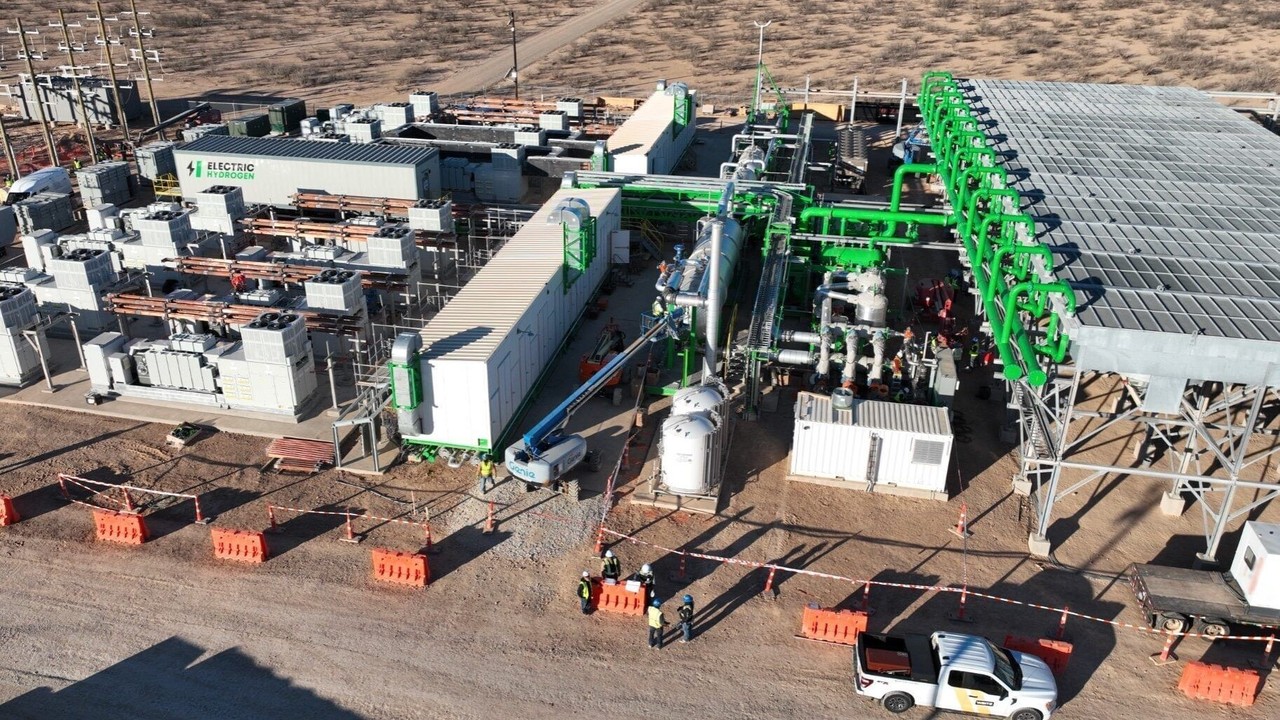

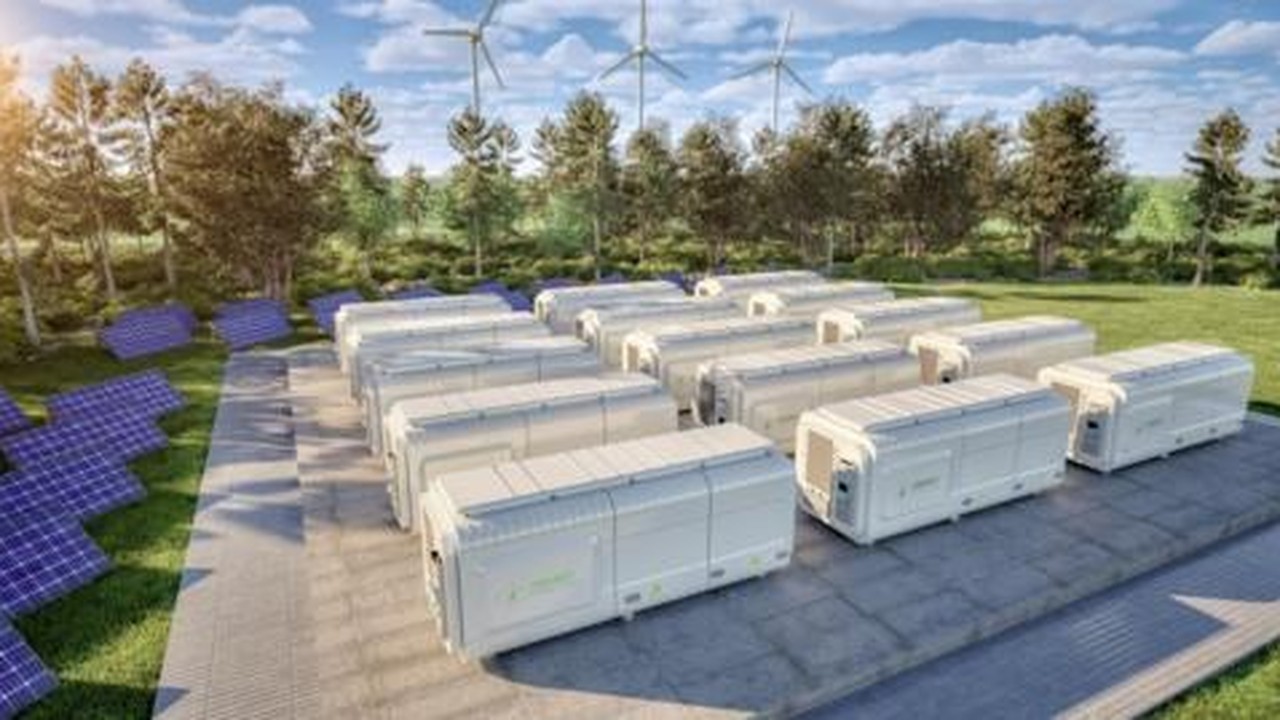

It’s proof that solar energy can power a $4 trillion economy even when the sun isn’t shining.
The problem no one knew how to solve — until now
For years, California suffered from what engineers call the “duck curve”. The graph is named this because it resembles the silhouette of a duck.
During the day, solar panels produce excess energy. Prices plummet. Some of this energy is wasted because there’s nowhere to store it.
But when the sun sets, demand explodes. Millions of people return home, turn everything on, and the grid needs to bridge the gap between zero solar and maximum demand in a matter of minutes.
Before batteries, natural gas plants covered this transition. Now, batteries charged during the day return solar energy at night, eliminating the need to burn fossil fuel at peak times.
On March 29, batteries were California’s largest source of energy at 7 PM. Larger than gas. Larger than wind. Larger than hydroelectric.

A month before the record, batteries operated for 24 consecutive hours
The March milestone didn’t come out of nowhere. On February 1, 2026, California’s batteries reached another record: they operated continuously for almost 24 hours.
From 4:05 AM on January 31 to 12:30 AM on February 2, the grid ran on stored solar energy — a total of 44 hours and 25 minutes of uninterrupted operation with direct or indirect solar (via batteries).
At 6:25 AM, before sunrise, batteries were already the state’s largest energy source. The sun hadn’t appeared yet, but yesterday’s solar energy was powering California.
It’s as if the state had found a way to bottle the afternoon sun and serve it for breakfast.
From 500 MW to 60 GWh: the explosion of storage in a decade
The numbers are dizzying.
- Before 2016: less than 500 MW of batteries in the entire USA
- 2025: 57.6 GWh installed in that year alone, 29% growth
- 2026: 70 GWh projected; California alone with 60 GWh accumulated
- 2030: 500 GWh in the USA, 110 GWh annually
Today, 163 GWh of batteries are connected to the American grid — enough energy to power 5.1 million homes per year.
California, Texas, and Arizona account for 74% of the entire large-scale battery market in the United States. California leads by a wide margin.
The projected investment for the sector in 2026 is US$ 25.2 billion — and 24 battery factories are already in operation or under construction in the country.

Half of new batteries don’t need sun or wind
A subtle shift is transforming the market. Almost 50% of new battery installations in the US are standalone — independent of solar panels or wind turbines.
These batteries buy energy when it’s cheap (early morning, windy days, times of solar surplus) and sell it when it’s expensive (nightly peak, cloudy days, emergencies).
They function as price arbitrators in the energy market. And they are extremely profitable.
In California’s case, standalone batteries export afternoon solar energy at high prices during the night, when utilities would pay dearly for natural gas. The result: profit for the operator and clean energy for the consumer.
What this means for your electricity bill — and for the planet
Batteries stabilize prices. Without them, the nightly peak would require turning on gas plants with high operational costs, passed on to the consumer.
With batteries absorbing solar surplus and returning it at night, the price difference between day and night decreases. Less gas burned means fewer emissions.
For California, which has committed to 100% clean electricity by 2045, batteries are the missing piece. Solar and wind generate. Batteries store. The grid operates 24 hours without fossil fuels.

Not everything is perfect: the risks no one talks about
Lithium batteries are flammable. Fires at storage facilities, though rare, have already occurred in California and Arizona.
The supply chain depends on cobalt and lithium — minerals concentrated in the Democratic Republic of Congo and Chile. External dependence is real.
Furthermore, the 42.8% performance was an instantaneous peak, not a daily average. Most days, batteries contribute 10-20% of nightly demand.
But March 29, 2026, proves that the ceiling is much higher than imagined. If California can reach 42.8% in one day, why not 60% by 2030?
And while California stores 60 GWh of solar energy in batteries, Brazil — which receives more sun than any American state — still wastes renewable energy because transmission lines can’t handle it. Is anyone paying attention?