






 Portuguese
  Spanish
  4 min of reading
  0 comments


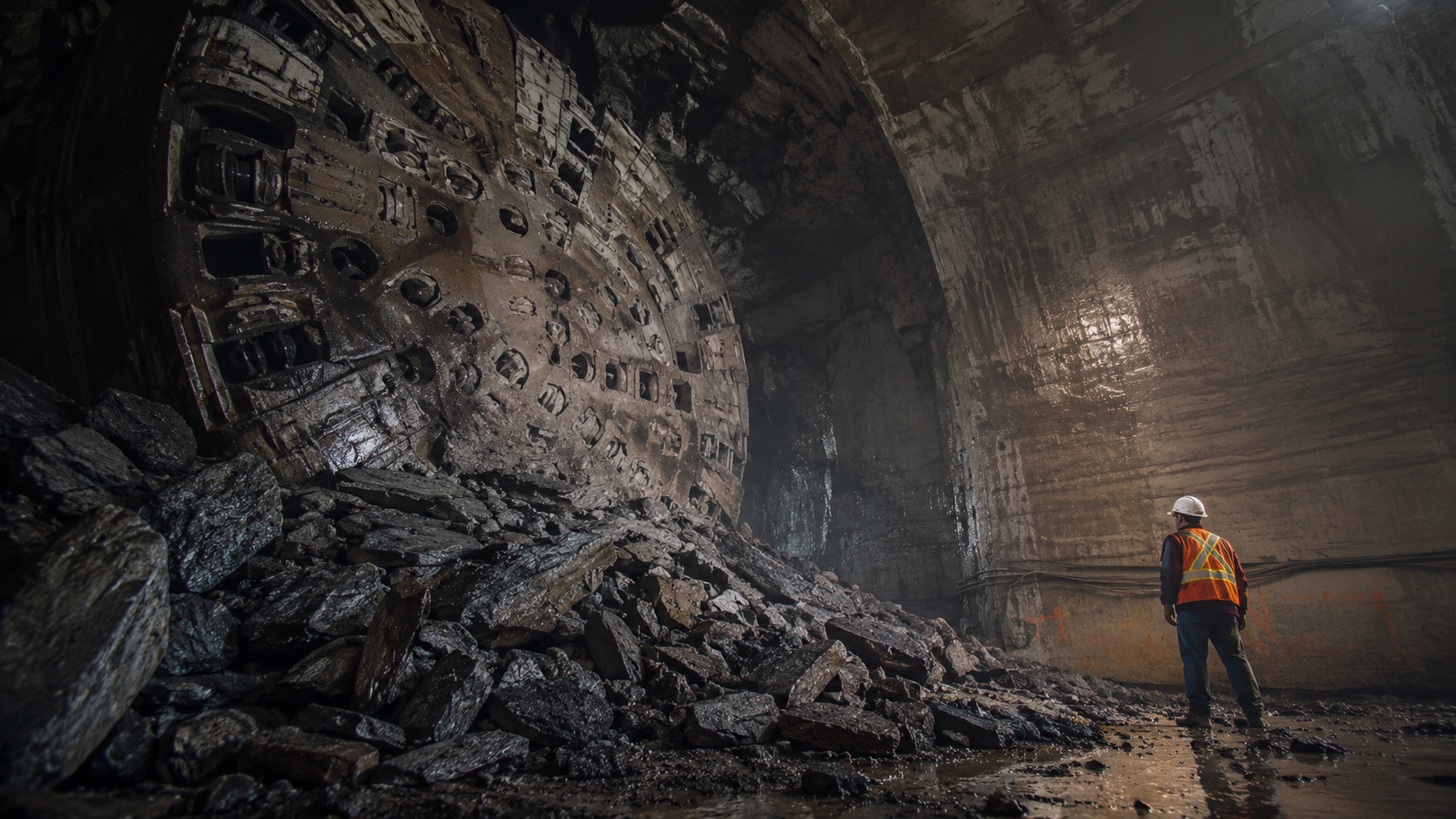
Big Becky, the largest hard rock tunnel boring machine of its time, excavated 10.2 km under Niagara Falls to expand clean energy in Canada.
On May 13, 2011, the gigantic tunnel boring machine Big Becky broke through the rock and completed the main excavation of a tunnel under Niagara Falls, in Ontario, after working since 2006 between 90 and 140 meters below the city. The machine had been used to open a passage intended to divert part of the water from the Niagara River to the Sir Adam Beck hydroelectric complex, expanding electricity generation from one of the most well-known natural landscapes on the planet.
Documents from Ontario Power Generation, OPG, show that the project resulted in a tunnel of 10.2 kilometers with an internal diameter of 12.7 meters and an excavated diameter of 14.4 meters, designed to allow better use of the available river flow. When it became operational in March 2013, the project began to add about 1.5 TWh per year to the production of the Sir Adam Beck stations and deliver an additional 500 cubic meters per second to the system.
Why Canada dug a giant tunnel under Niagara Falls to generate more clean energy
The goal of the project was simple in essence and colossal in execution: to capture a larger portion of the water available on the Canadian side of the Niagara River and channel it to the OPG plants. According to OPG, the new tunnel was specifically designed to increase the use of the flow already available to the system, enhancing generation capacity without creating a new dam at the site.
-
Luciano Hang buys for R$ 140 million the last mansion standing on the beachfront of the “Brazilian Dubai”: a 1,415 m² property with a front view of the sea, surrounded by skyscrapers in one of the most valuable square meters in the country, in Balneário Camboriú.

-
Goodbye, concrete in the backyard: the 60s trend is back in full force and has become an alternative in construction

-
Without tiles, grout, or demolition: laminated panels that click onto the wall promise to speed up bathroom renovations by up to 5 times, cover old surfaces, and eliminate joints where mold, dirt, and germs usually accumulate.

-
He got tired of renting, bought an old school bus, removed the seats, modified the roof, reinforced everything with steel, and created a two-story mobile home that looks small on the outside but houses two bedrooms inside.



The official expectation of the Ontario government, presented when the project was launched, was to add 1.6 billion kWh per year, a volume sufficient to supply about 160,000 homes.


This energy gain helps to gauge the project. In practice, the tunnel allowed the Sir Adam Beck complex to increase its contribution with more water diverted per second and with additional large-scale renewable generation.
For the province, it was a strategic infrastructure intervention, capable of reinforcing the supply of clean electricity for decades in a region historically linked to hydroelectricity.
Big Becky was the largest hard rock tunnel boring machine in the world and crushed solid rock
The scale of the machine helps explain why the project became a reference in underground engineering. According to OPG, when it went into service, Big Becky was the largest open hard rock tunnel boring machine with a main beam in the world, with a diameter of 14.44 meters, about 150 meters in length, and weighing approximately 4,000 tons.
The name was born from a contest among local schools and referred to Sir Adam Beck, a central figure in the history of public electricity in Ontario.
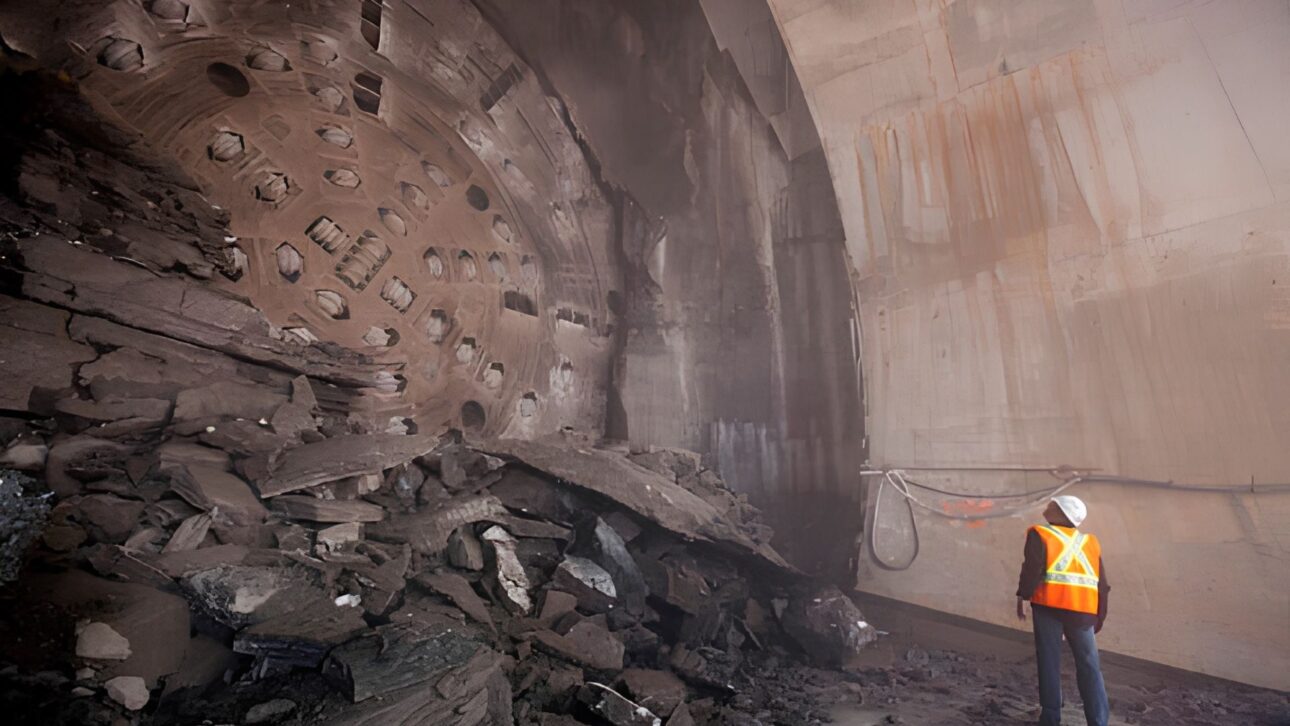
The machine did not advance in soft ground, but in hard rock. Therefore, the construction method needed to combine excavation with immediate support of the massif.
According to OPG, the initial lining included rock bolts, friction anchors, wire mesh, steel channels, and shotcrete. Then came the final lining in cast-in-place concrete, protected by a waterproof membrane to face the geological conditions of the excavated section.
Difficult rock, water, and extra cost turned the project into a much longer and more expensive venture
Although the final breakthrough of the tunnel boring machine occurred in 2011, the story of Big Becky was far from linear.
OPG itself recorded that the project went into service in March 2013 with CA$ 514.8 million in expenses above the original budget of CA$ 985.2 million, bringing the total capital to about CA$ 1.5 billion.
Global News reported, at the time of the machine’s breakthrough, that the project had been criticized for being four years late and approximately half a billion dollars over budget.
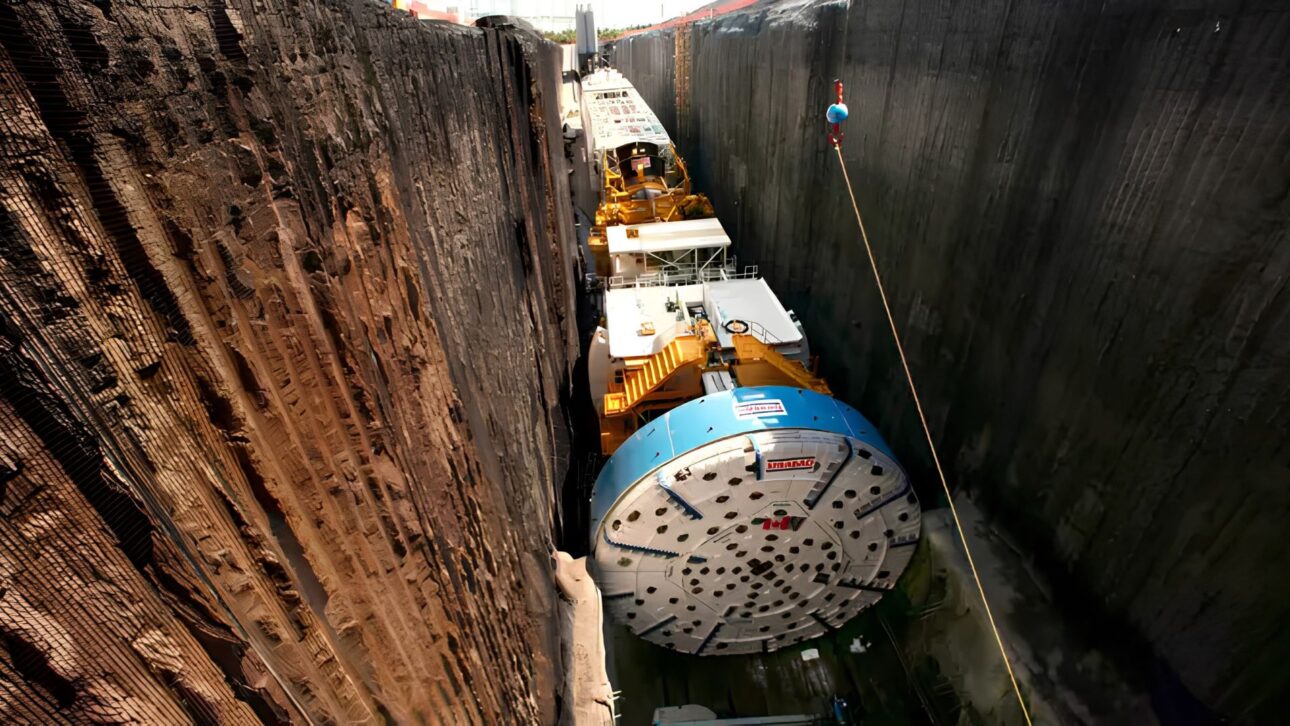
Global News
The technical documents of OPG explain part of these difficulties. The route crossed rocks with high internal stresses and formations susceptible to water-induced swelling, a factor that required a more robust lining system and increased the complexity of execution.
This combination shows why the project became an emblematic case of heavy engineering: even with the largest hard rock tunnel boring machine of its time, the underground continued to dictate the pace of the project.
The legacy of Big Becky remains invisible beneath the city, but with a direct effect on Ontario’s energy
The tunnel built by Big Becky was not intended for just a few years of operation. OPG states that the solution adopted for the lining increased confidence that the structure would meet a required lifespan of 90 years, while the company’s institutional communication began to present the project as an infrastructure prepared to operate for 100 years or more with relatively low maintenance costs.

This is the central point of the legacy left by the machine. After crossing 10.2 kilometers of rock beneath one of the most famous regions of North America, Big Becky helped transform an almost invisible underground work into a long-term strategic asset for Ontario’s power grid.
The tunnel continues to exist out of the public eye, but its function remains clear: to capture more of Niagara’s force and convert it into clean energy on an industrial scale.







Be the first to react!