






 Portuguese
  Spanish
  3 min of reading


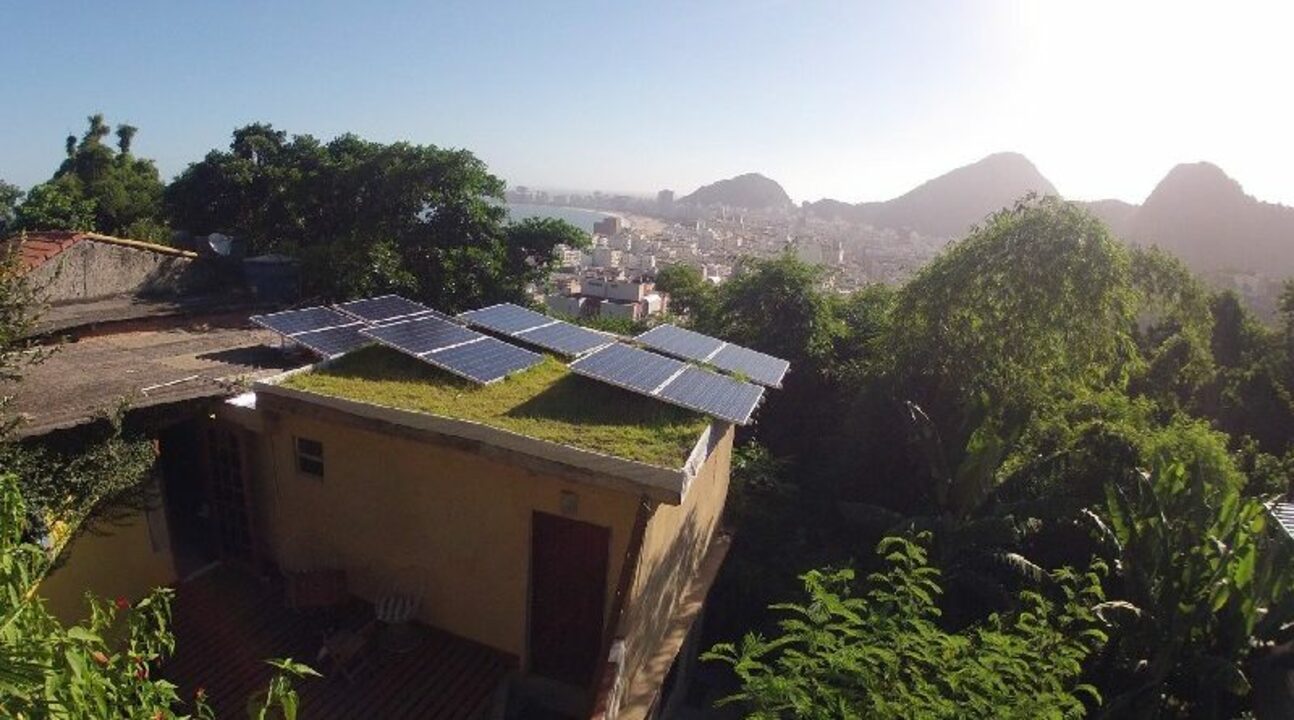
The Solar Energy Company Win Renewable Energies Believes That Low-Income Individuals Can Benefit From Price Reductions on Solar Energy Equipment
Win Renewable Energies, a distributor of customized photovoltaic systems, both ready-made and on demand, believes that the new federal government measure to include solar energy equipment on a list of capital goods whose import taxes will be zeroed until the end of 2021 is a step forward for the country’s development and should lower the costs of photovoltaic systems for low-income individuals.
Also Read
More Solar Energy for Low-Income Individuals With Win Renewable Energies
“The measure could reduce the price of solar energy equipment sold in Brazil by 10% to 15%,” assessed Cláudio Fetter, a shareholder of Win Renewable Energies. In his view, with the new exemption on the import tax on these products, solar power becomes even more competitive in the country and crucial at this time of the pandemic, as it helps to ease the budget of low-income families by significantly lowering electricity bills, in addition to providing more competitiveness for businesses and rural properties.
The exemption from import tax reduces taxation by 12% for photovoltaic modules and 14% for inverters. The validity of the new measure is from August 2020 until the end of 2021.
-
Brazilian scientists are simultaneously advancing two research projects on clean hydrogen and driving solutions that could transform the energy matrix, enhance industrial competitiveness, and accelerate large-scale emission reduction targets.

-
Advancement in renewable energy: A R$ 150 million project launched by Petrobras and Finep aims to create state-of-the-art electrolyzers for green hydrogen, strengthening national research and preparing Brazil to compete in a billion-dollar energy market.
-
Illiterate or semi-literate grandmothers were trained to repair solar systems, open rural workshops, and light up homes that still depended on kerosene.
-
The world has bet on green hydrogen as the fuel of the future, but now faces the side effect: producing 1 kilogram requires about 9 liters of ultrapure water, and the largest projects on the planet are precisely in the driest regions of the Earth, where water is already scarce for people.





Bill and Win Renewable Energies
The bill amends the National Financial System Law (Law 4.595, of 1964) to include among the duties of the National Monetary Council (CMN) the guarantee of favorable rates for financing aimed at promoting the “acquisition of clean energy generation equipment, notably solar photovoltaic and wind energy, by low-income families.”
In the justification of the bill, Confúcio Moura states that families with lower purchasing power feel the economic crisis much more intensely and are more adversely affected by unemployment. In this population group, electricity bills account for a significant portion of the family budget, the senator adds.
The parliamentarian asserts that with the approval of this bill, low-income families will have affordable financing to purchase clean energy generation equipment.
“Low-income families will be able to generate at least part of their own energy, resulting in lower energy bills. Such savings can help pay off the financing for acquiring the equipment. Once the financing operation is settled, the financial relief for families can be allocated as they see fit. It is, additionally, a way to encourage the increased use of clean energy. With these measures, a growth in electricity generation from wind and solar photovoltaic sources is expected, along with greater diversification of the Brazilian energy matrix. Moreover, the country will benefit from a greater democratization of investments in energy generation,” argues Confúcio Moura in the justification of the proposal.






Be the first to react!