Portuguese
  Spanish


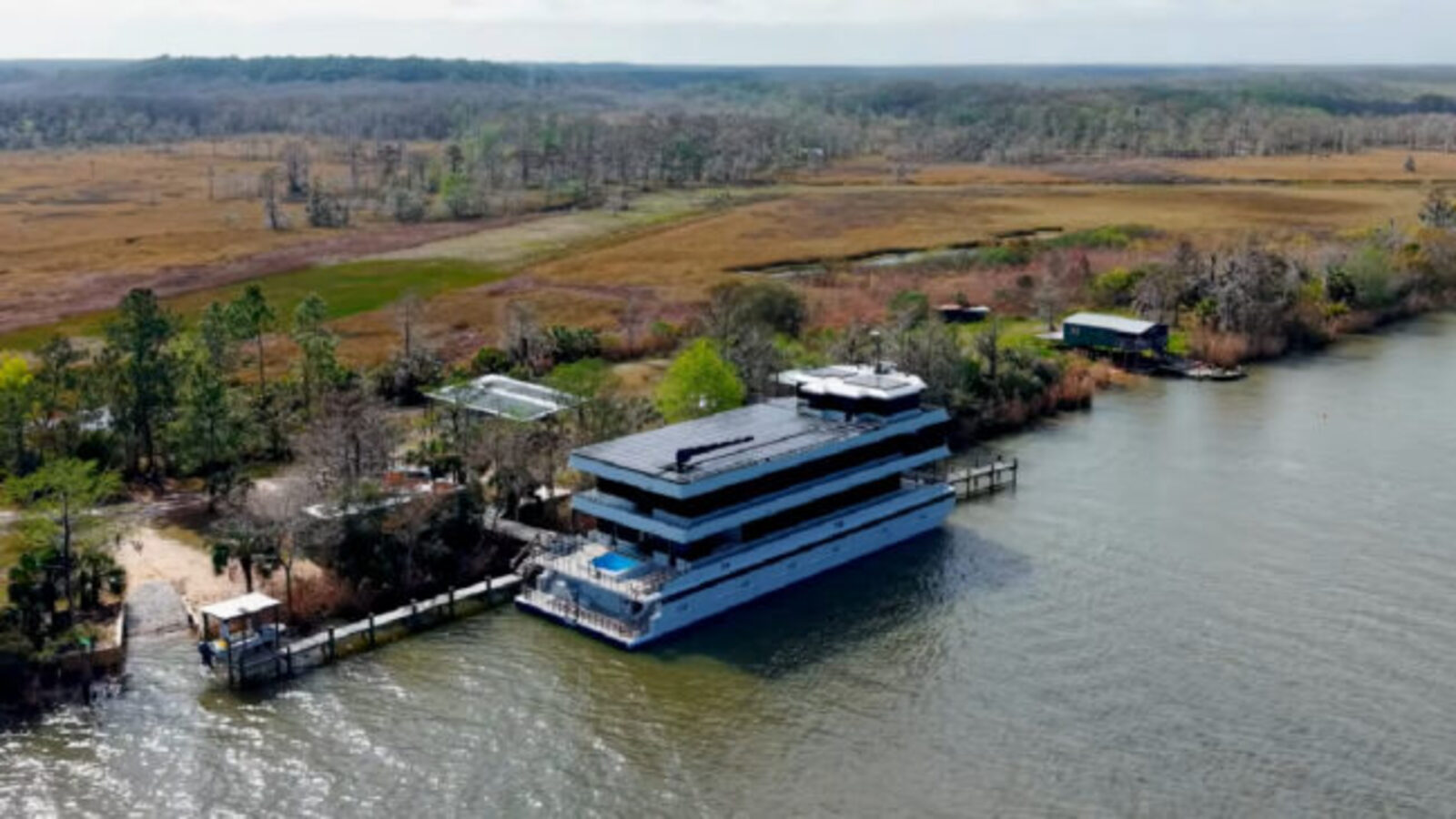

Valued at US$ 15 million, around R$ 77.5 million, the Shine Down, a true floating mansion, draws attention in the United States for combining the appearance of a modern house, over 1,100 square meters, five suites, seven bathrooms, and a solar system with 108 panels, designed to reduce energy dependency in ports.


Shine Down was designed to look like a floating mansion
The Shine Down does not follow the traditional look of a luxury yacht. The vessel has a rectangular shape, four glassed floors, and large balconies distributed across the levels, in a proposal closer to a high-standard floating residence.
The project encompasses over 1,100 square meters of total area, including internal spaces and technical areas.
-
Brazilian Civil Servant Earns $2,800 Monthly but Seeks Legal Help as Bank Loans Consume Nearly 80% of Income

-
Brazilian Pet Industry Giant with $6 Billion Valuation Targets 24 Million Customers, Launches Franchise Model with Six Revenue Streams and $7.80 Subscription Plan for National Expansion

-
Daughter of a Mechanic, Roberta Pirolla Turns Passion for Cars into a Million-Dollar Vehicle Wrapping Business Set to Grow 75% in a Male-Dominated Industry

-
At 30, Thyago Plácido turned Innova into a solar energy operation serving central Brazil with over 300 projects completed.


The structure houses five cabins with king-size beds, seven bathrooms, a gourmet kitchen, a pool, and leisure-oriented living areas.
Inside, the vessel reinforces the residential proposal. Crafted ceilings, wooden floors, large windows, and decor inspired by sophisticated homes create an environment far from the nautical elements more common in conventional boats.
The mansion-like appearance on the water is one of the points that make the project unusual in the market. The Shine Down was conceived to offer comfort comparable to that of a luxury property, but with its own navigation and operation solutions.
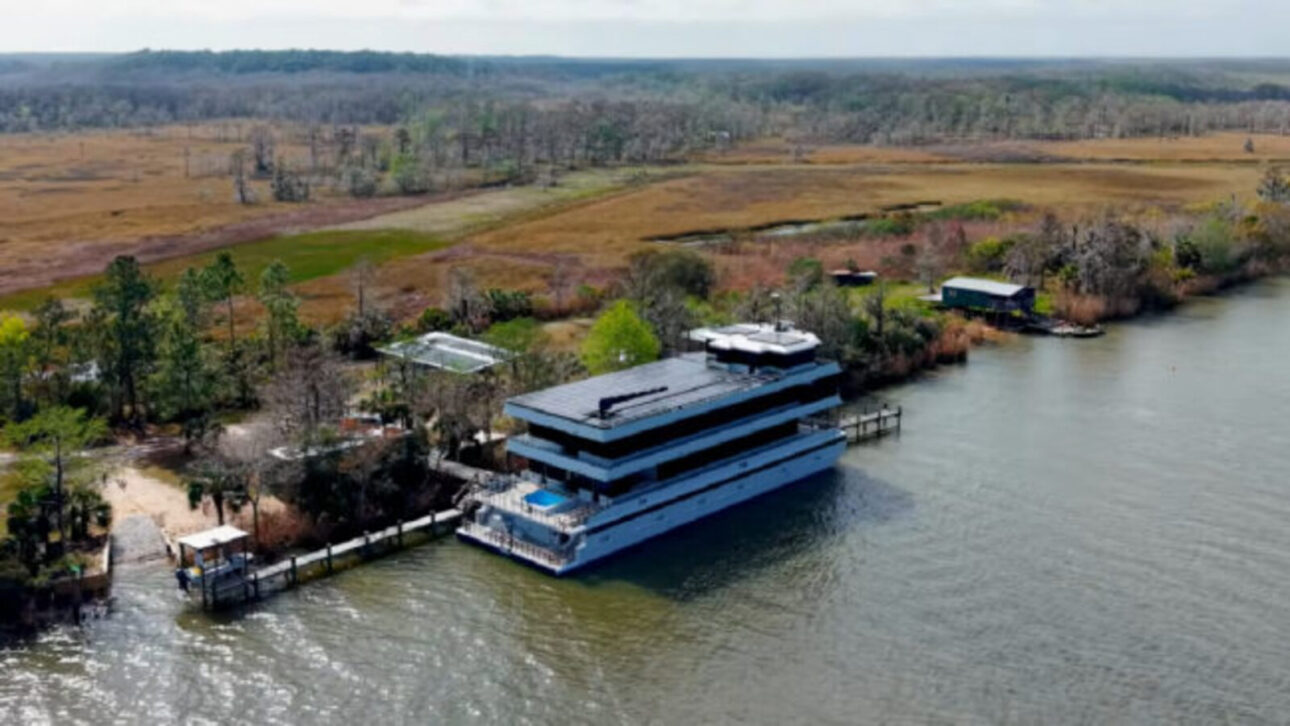
Naval engineering is the point that differentiates the floating mansion
Despite the apparent luxury, engineering is one of the central aspects of Shine Down. The owner envisioned the project and sought a shipyard specialized in commercial vessels to transform the idea into a functional and durable structure.
The construction was entrusted to Breaux Brothers Enterprises, a Louisiana company known for manufacturing workboats used in demanding maritime operations. The choice of shipyard led to the use of industrial-grade aluminum in the vessel.
This type of construction brings Shine Down closer to a more robust logic than that of a simple floating house.
The proposal combines structural strength, efficiency, and features typically associated with technical or commercial use vessels.
Among the differentiators is an internal garage for auxiliary boats, a feature more common in much higher-value superyachts.
Shine Down also includes workshops, water storage, and equipment geared towards independent operation.
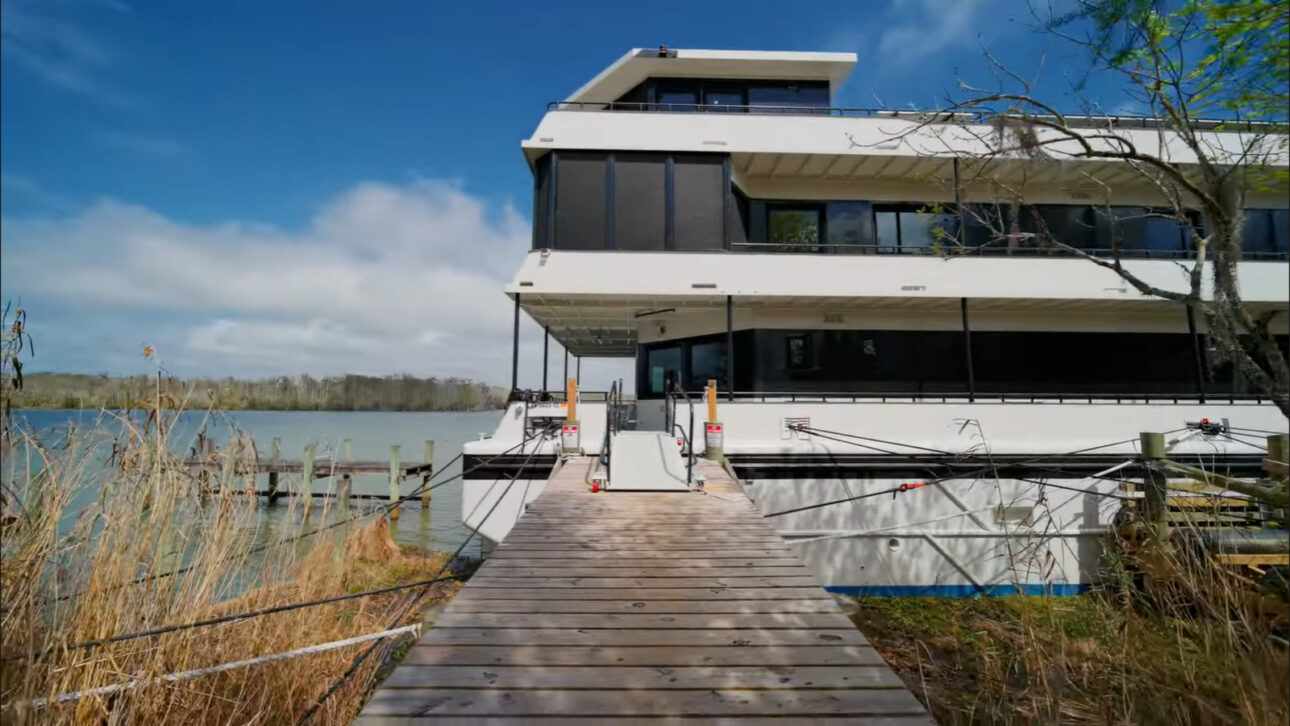
Solar system allows operation with less dependence on ports
The energy system is one of the most important points of Shine Down. Unlike vessels that rely on electrical connection at marinas or ports, it was designed to generate practically all the energy used daily.
At the top of the structure, 108 high-efficiency solar panels power a lithium iron phosphate battery bank with a capacity of over 300 kilowatt-hours. The system was designed to give the vessel autonomy for long periods.
The battery technology was chosen for offering stability, long lifespan, and low maintenance needs.
In practice, this allows Shine Down to keep its main systems running from its own solar generation.
Even so, the vessel does not entirely dispense with external support. A diesel generator remains available for prolonged periods of rain or low solar incidence, but it does not appear as the main energy source of the project.
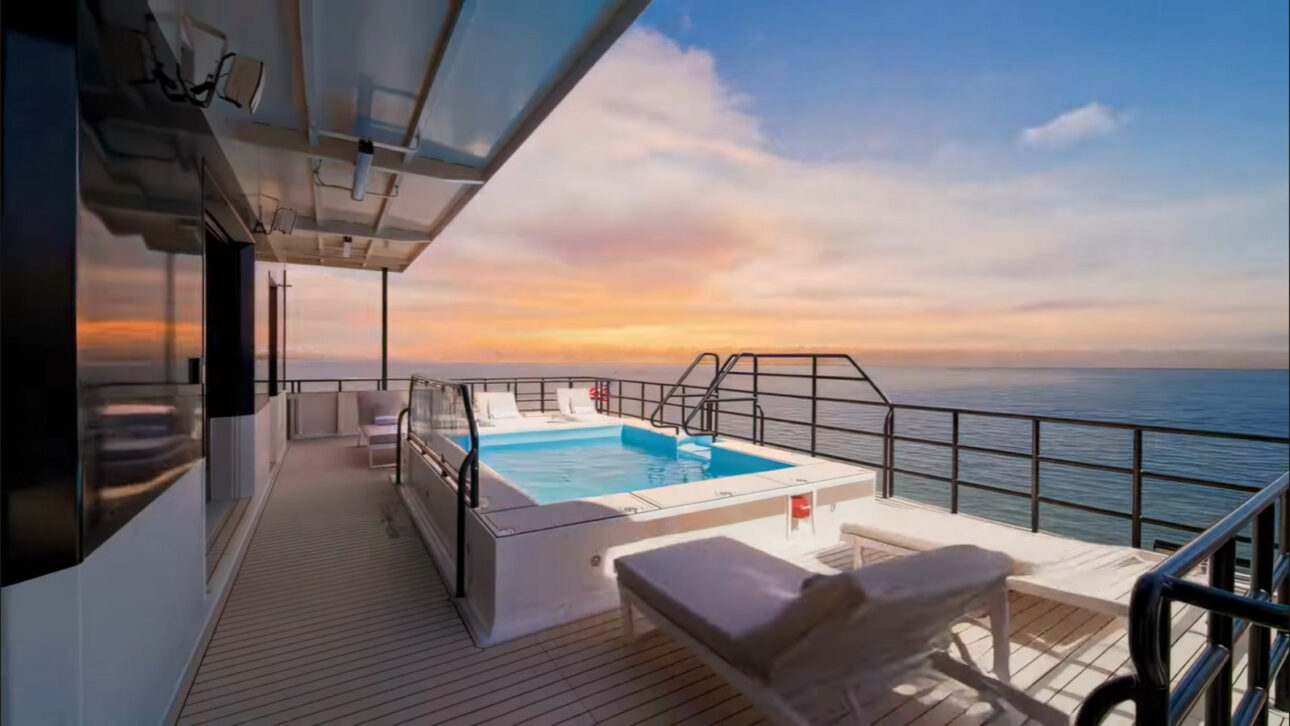
Propulsion uses a common feature in ships related to oil and gas
Another technical highlight is the propulsion system. The Shine Down uses three propellers and an azimuth thruster installed at the front, a technology often used in support vessels for the oil and gas industry.
This type of thruster allows the thrust to be directed at different angles. As a result, the vessel gains greater maneuverability, even with dimensions and a shape that resemble more a modern house than a traditional boat.
The technology allows lateral movements and helps maintain position with more precision in challenging situations.
For a structure of this size, the ability to control is an important part of safe and efficient operation.
The combination of a large built area, five suites, seven bathrooms, self-generated energy, internal garage, and advanced propulsion makes the Shine Down difficult to classify. It combines characteristics of a yacht, a modern house, and a residential platform on the water.
More than the value of US$ 15 million, what differentiates the vessel is the set of solutions applied in a single project.
The Shine Down attempts to bring together residential comfort, energy autonomy, and naval engineering in a single floating property.
This article was prepared based on information from the provided source material, with data, numbers, and descriptions preserved as per the consulted material.