






 Portuguese
  Spanish
  3 min of reading
  0 comments


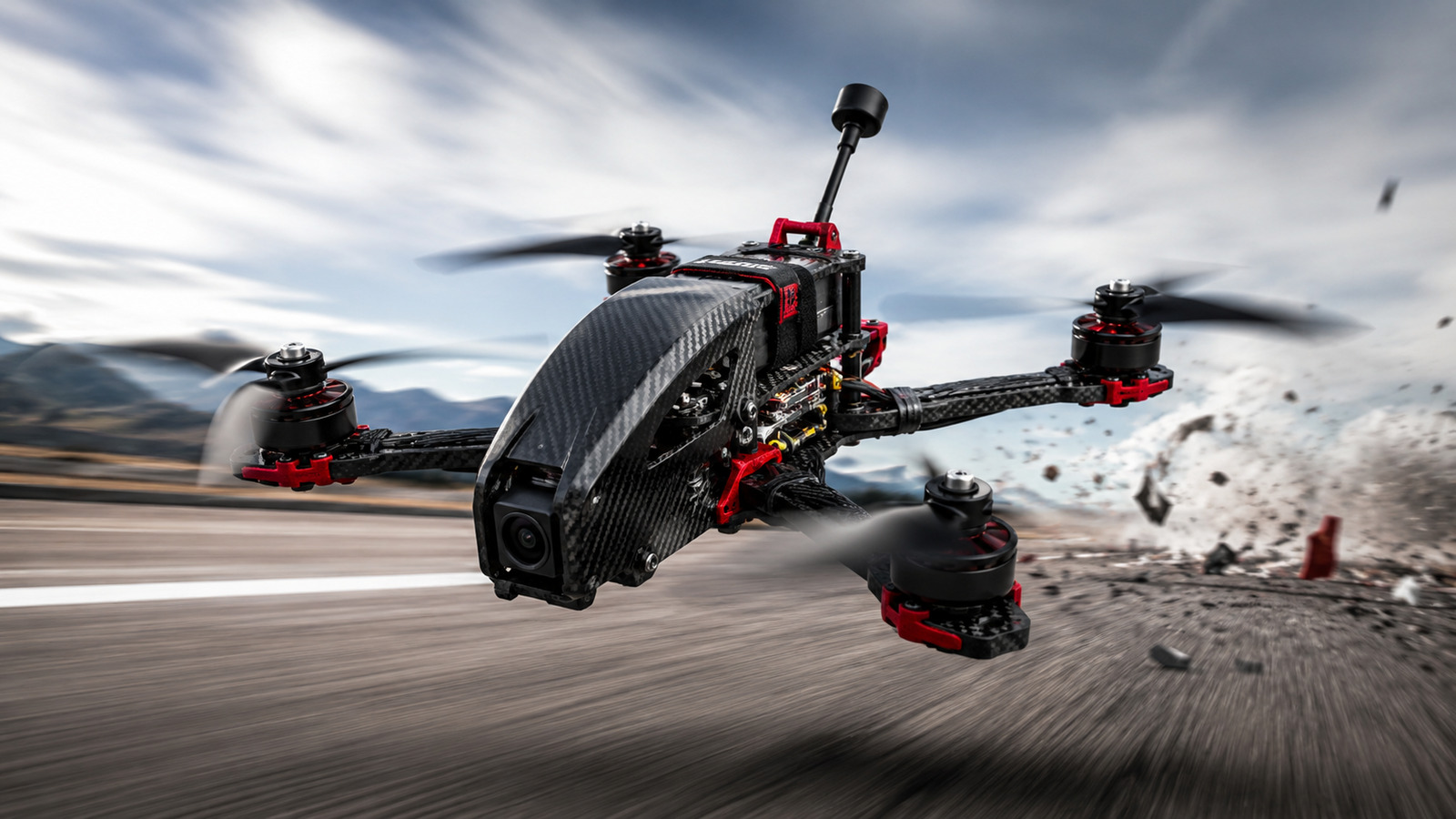
Drone Pro Hub claims to have surpassed the previous Guinness record by 27 km/h, after two days of testing, two accidents, and a final attempt that took the equipment to 730 km/h
The Drone Pro Hub channel recently released a video claiming to have set a new drone record, with a verified average speed of 685 km/h and a peak of 730 km/h. The mark surpassed the previous Guinness record by 27 km/h, after two days of intensive testing, two accidents, and a final attempt made with the only remaining drone.


Drone record surpassed previous Guinness mark
The attempt occurred after a series of advances in the quest for more speed. In December 2025, the drone had reached 626 km/h. After that, Luke Maximo Bell reached 658 km/h and set his Guinness record.
Drone Pro Hub had already reached 662 km/h but decided to make a new attempt. The result was a verified average speed of 685 km/h, enough to surpass the previous mark by 27 km/h.
-
Space technology used to search for water on Mars is now hunting for invisible leaks under the streets of São Paulo, using satellites, AI, and chlorine signals to help Sabesp recover up to 6.7 billion liters of water.

-
Japan sends ship to extract mud rich in rare earths at nearly 6,000 meters deep in the Pacific, attempts to lift 350 tons per day from the seabed, and transforms sediments near Minamitori Island into a strategic weapon to reduce dependence on China.
-
Venus Aerospace promises a rotating detonation hypersonic engine that takes the Stargazer to Mach 9 and crosses oceans in 1 hour, but the flight that made history barely surpassed the speed of sound.

-
Brazilian student creates a cheap formula that makes plants grow up to 90% faster and wins an award in a global scientific competition.




Drone reached 730 km/h with tailwind
During the tests, the equipment reached a maximum speed of 730 km/h on the stretch with a tailwind.
In the run against the wind, it reached 640 km/h. The average between the two directions resulted in the 685 km/h reported by the channel.
This bidirectional method was used to reduce the influence of the wind on the measurement. The validation involved GPS and telemetry recorded on camera, aiming to prove the accuracy of the data presented in the video.

Technology used carbon fiber, 3D printing, and customized propellers
To achieve this level of speed, the drone received a customized carbon fiber fuselage, carbon subframes, and additional parts printed in 3D.
The project also used Max engines and manually developed propellers for the attempt.
The propellers had an aggressive design and serrated edge, made specifically to seek the highest possible speed. During operations, energy consumption reached 400 amperes for 10 seconds.

Next goal is to reach 800 km/h
The attempt recorded in the video was marked by difficulties. The process involved two days of testing, two accidents, and ended with only one drone available for the final attempt that resulted in the record.
After reaching an average of 685 km/h and a peak of 730 km/h, Drone Pro Hub has already set a new goal: to reach 800 km/h in future attempts.
This article was prepared based on information from the Drone Pro Hub channel, with data, numbers, and statements preserved as per the material consulted.


Be the first to react!