Portuguese
  Spanish


The gravity-powered cargo cable car replaces long hikes with tomatoes and goods on the back with two carts attached to cables, which use the weight of the descent to move the load in the opposite direction, without engine and without fuel
In sections without direct road between the farm and market access, farmers in Nepal improvise a cable car and use two carts connected by cables to transport tomatoes and other goods through mountainous areas. A loaded cart descends, and its weight helps to take the other one up. The information was released by Practical Action, an international organization that publishes technical solutions for rural communities.
The gravity cargo cable car changes a task that can require hours of walking with weight on difficult trails. Instead of carrying the production on their backs to the point of sale, farmers use cables, pulleys, and brakes to move goods between the farm and the lower part of the mountain.
This equipment is made to transport loads, not to carry people. It only works where there is a slope and where the loading and unloading stations can support a firm structure.
-
Urban Waterways in Major Brazilian City Recycle Wastewater for Fish Ponds and Agriculture, Supporting Workers and Raising Public Health Concerns

-
At 15, Logan Walter started making TikTok videos at home, discovered he could earn money selling beauty products, dropped out of college at 21, and made his first million through commissions, famous brands, and men’s self-care.

-
Historic 600-Ton Church Relocated 5 km to Avoid Sinking Ground Near Brazilian Mine, Prompting City Reorganization
-
Indian Farmers Use 200-Year-Old Bamboo Tube System for Drip Irrigation Without Electricity or Pumps



How two carts connected by cables carry tomatoes and goods between high and low points
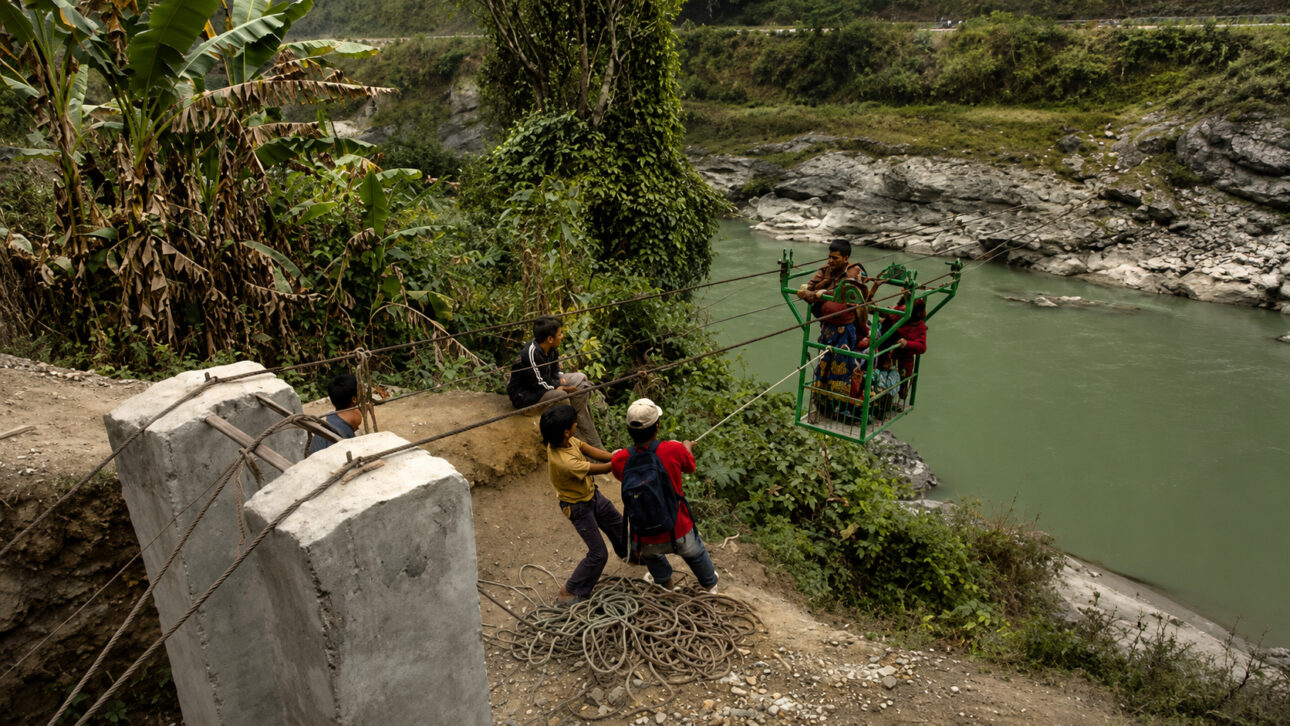
At the high point, a cart receives the load that needs to go down the mountain. At the low point, another cart waits to go up. The two are connected by a control cable and move on support cables.
When the load from above starts to descend, the force of gravity pulls the other cart in the opposite direction. That’s why the gravity cargo cable car doesn’t need an engine, fuel, or electricity to create movement.
Tomatoes, fruits, vegetables, and daily use items can follow this route. The system helps connect isolated farms to the nearest path to the market.
The weight of the load does the work that an engine would do
For the carts to move correctly, it’s not enough to just place goods in the boxes. The load going down needs to be three times heavier than the load going up. This difference creates the necessary force to pull the set.
The slope degree also interferes with the operation. A steeper descent makes the cart gain speed, while a lesser incline reduces the force available for the operation.
This shows why the solution is not suitable for every rural location. The cable car depends on the slope, distance between stations, and suitable conditions to accommodate cables and platforms.
Brakes, pulleys, and platforms prevent the descent from becoming a risk
From afar, the structure seems simple. But the gravity cargo cable car uses support cables, control cable, pulleys, platforms, and a brake system. Each piece has a function on the route.
At the lower point, the operator receives a signal via the cable and activates a manual brake to control the arrival. The steering wheel and pulleys help guide the movement and reduce the impact upon unloading.
The upper and lower platforms are the places where the load enters and exits. They need to support the operation, as they receive the equipment, cables, and the weight of the products.
The cargo cable car in Nepal reduces the effort of farmers and brings markets closer
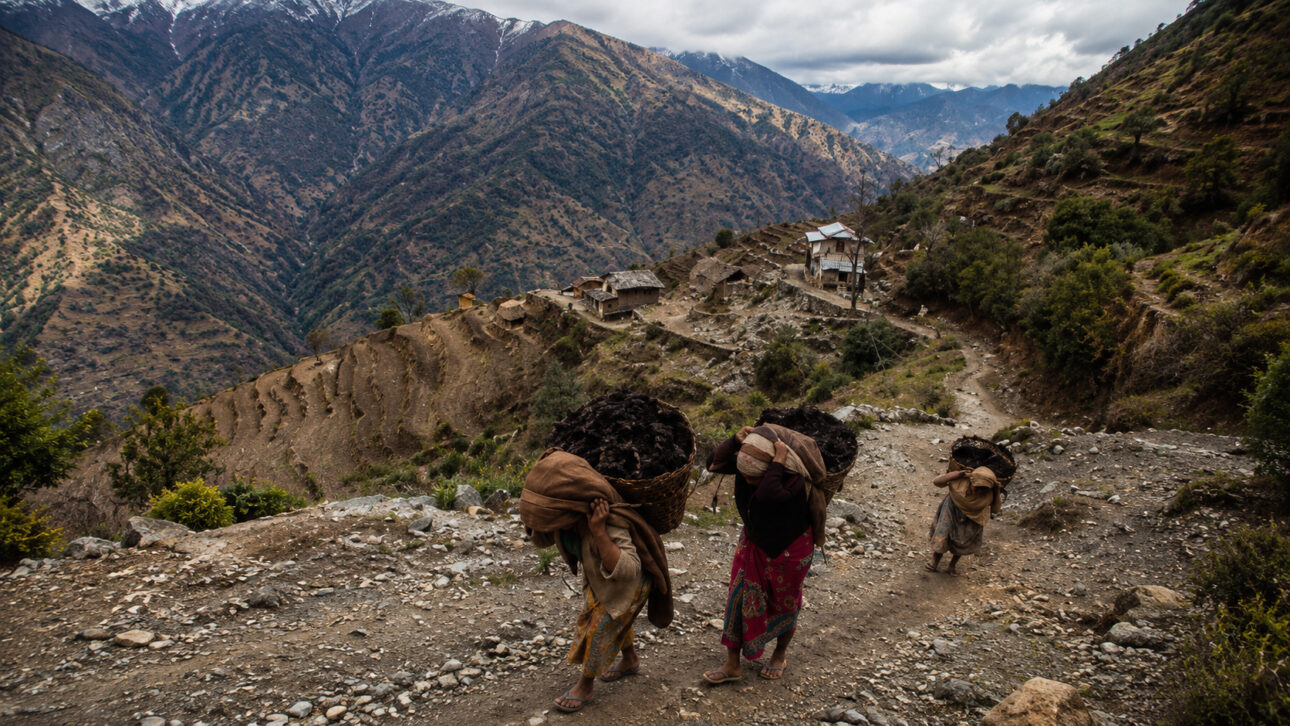
Carrying harvests over steep slopes can take up a good part of the day and requires strength to carry weight. In rural areas of Nepal, many farmers also manage production activities and face this journey.
Practical Action, an international organization that publishes technical solutions for rural communities, reported the experience of Radhika Pariyar, a farmer and seamstress in the municipality of Shantinagar. She lived a routine of transportation on mountainous trails that was heavy and time-consuming.
With the cargo carts, the journey of production between the slope and the lower part can take minutes, instead of hours of walking. The time gain facilitates the transportation of vegetables and fruits and reduces part of the physical effort needed to reach the market.
Transport cost may decrease, but the structure is not a ready solution for any mountain
An initial assessment indicated a reduction of at least 50% in transport cost of agricultural products in areas served by the system. The decrease helps producers bring more goods to the market and fetch important items for the community.
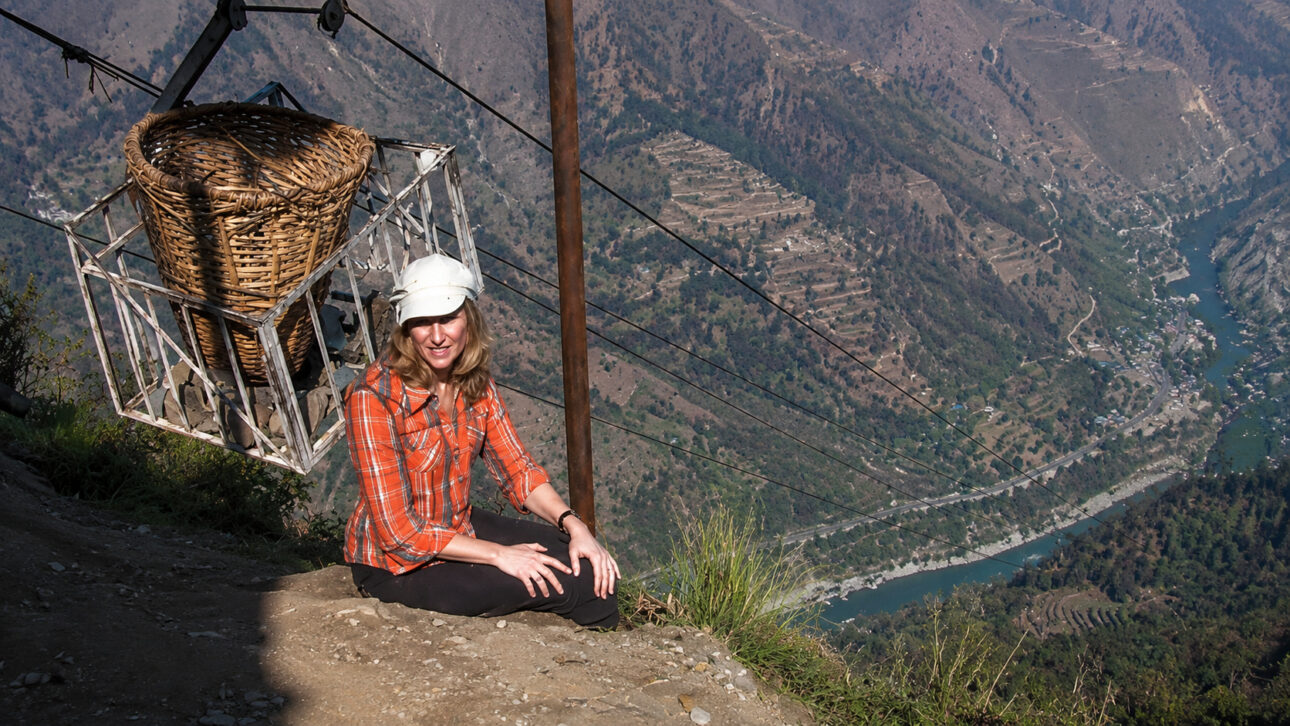
Building a gravity cargo cable car depends on the shape of the terrain, the slope, the distance between stations, the materials available, and the technique used in assembly. Each installation needs to be tailored to the local reality.
Therefore, the idea cannot be copied without a project. It is necessary to assess the strength of the bases, the condition of the cables, the functioning of the brake, and who will operate the structure.
Mountain regions in Brazil can observe the logic, but need their own project
In rural properties with hills and difficult access, the example of Nepal shows a way to harness gravity to move loads. The interest is not in copying a foreign structure, but in understanding how the slope can reduce heavy labor where vehicles cannot reach.
In Brazil, any similar solution would require a study of the terrain, definition of the loads, and safe operation. A poorly planned installation can increase risk instead of solving the transport difficulty.
It is also important not to confuse the model with a passenger cable car. The focus is on tomatoes, vegetables, tools, and goods, using a cargo system designed for inclined areas.
The two carts connected by cables show a simple solution to a tough problem: transporting food over mountains without fuel and without long walks carrying weight. The weight of the descending load becomes the force that carries another volume upwards.
But the system only works with a firm structure, controlled brake, and appropriate terrain. Where these conditions exist, the gravity cargo cable car can make the routine of producers less burdensome and bring the harvest closer to the markets.
In a mountain region near you, which load would make the most difference to transport by cables instead of carrying on your back for hours? Tell us in the comments and share this post.