





 Portuguese
  English
  Spanish
  5 min of reading
  0 comments


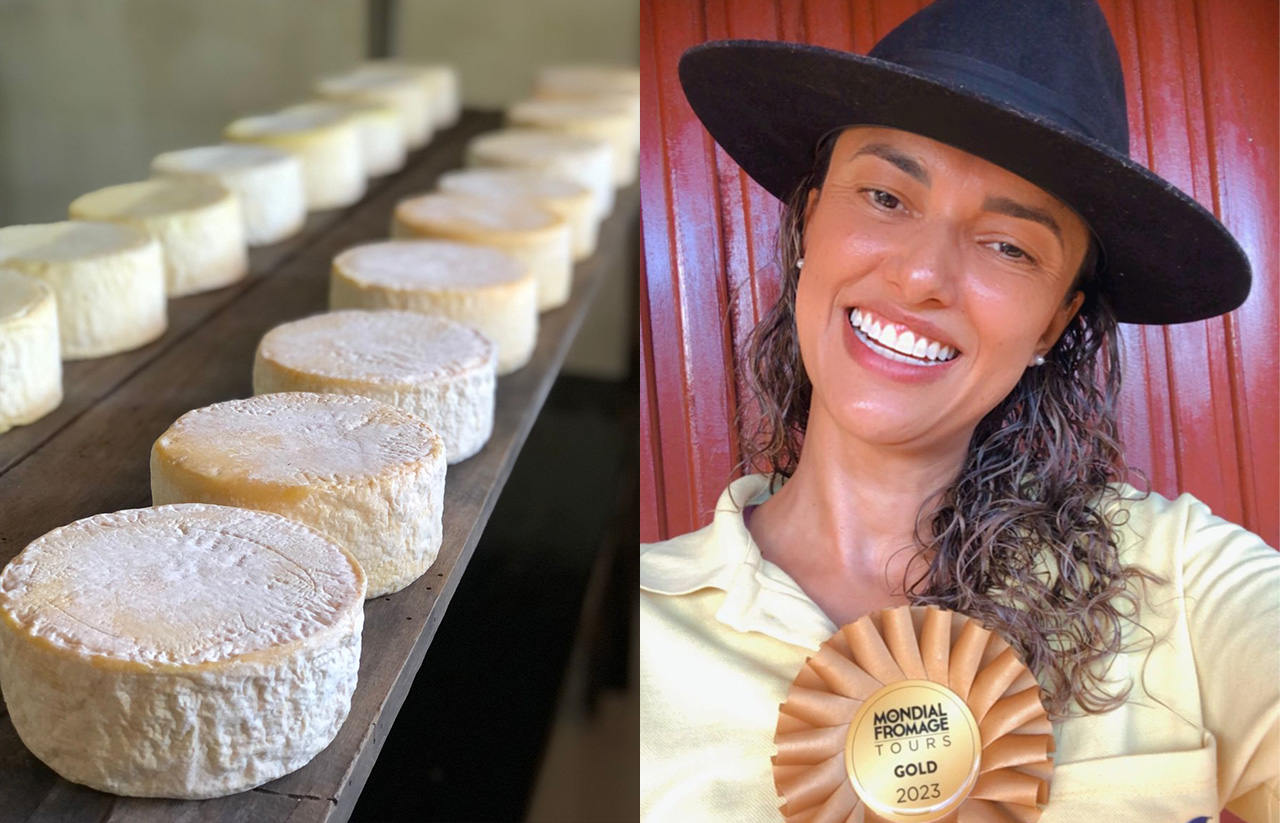
Christiane Brandão returned to the family farm in Serro after her father’s death and transformed Maria Nunes Cheese into an international reference.
In 2012, the life of Christiane Brandão changed abruptly. With a degree in Information Systems and living in Belo Horizonte, she saw her urban career interrupted by her father’s death and decided to return to Fazenda Maria Nunes, in Santo Antônio do Itambé, in the Serro region, to take over a family production that would need to be practically rebuilt from scratch. What seemed like just a forced return to the countryside ended up becoming one of the strongest stories in artisanal Minas cheese. According to Sebrae Minas, Christiane became the first woman to take command of the farm in five generations and elevated Maria Nunes Cheese to a level of national and international recognition.
Christiane Brandão returned to Serro and took on a legacy of nearly 300 years of Minas cheese
Christiane’s journey is powerful precisely because it combines personal rupture, rural succession, and cultural preservation. According to Sebrae, she was born and raised in the countryside, accompanying her father in cheese production and cattle management, but left to study and build a career in the capital. The return to the farm only became definitive after the mourning and the need to reorganize the family property.


Upon returning, she did not find a ready-made business waiting for automatic continuity. The producer herself reported that she had to learn and relearn in a challenging way, conducting inventory, management, and reconstruction of the activity. The weight of succession was amplified by the fact that she took on a space that historically was not occupied by women in the family.
-
The same type of jet engine that powered the V-1 bombs of World War II now appears under a motorcycle made in a garage, with thrust of up to about 45 kilograms, which the owner claims exceeds 110 kilometers per hour.

-
A Brazilian tank almost became a star in the Middle East, surpassed tough tests against legendary armored vehicles, and disappeared from the market when Engesa most needed to win.

-
The best states to live in Brazil have just been revealed: Distrito Federal, São Paulo, and Santa Catarina dominate the national quality of life ranking in 2026.
-
Half a million liters of fresh water extracted from the sea per day, 300 tons of feed, and 84 fans that renew all the air every 60 seconds keep 16,000 animals alive and even fattening inside the Becrux on its way to Indonesia.



This story is directly connected to the tradition of Serro Artisanal Minas Cheese, whose production, according to Sebrae Minas and Iphan, dates back at least three centuries and is part of a way of making rooted in the cultural identity of the Minas mountains.
Maria Nunes Cheese was born in a historic region and preserves the artisanal method recognized by Iphan
The weight of Maria Nunes Cheese comes not only from its current quality but also from the territory in which it is produced. According to Sebrae Minas, the Serro region, in the Espinhaço Mountain Range, combines altitude, climate, water, and soil that help shape the sensory profile of the local cheese, produced for about 300 years.
This traditional knowledge received institutional recognition. According to Iphan, the Methods of Making Minas Artisanal Cheese were registered as Cultural Heritage of Brazil on June 13, 2008, and the title was revalidated in 2021, with expanded coverage to the now recognized producing regions.
This means that Christiane’s production is not just part of a rural business but a cultural chain protected and valued as Brazilian intangible heritage. The farm’s cheese carries not only raw milk, whey, rennet, and salt but also a way of making passed down through generations in the interior of Minas Gerais.
Producer faced resistance in the field and became a symbol of female succession in Serro cheese
One of the most striking aspects of Christiane’s journey is the gender issue. According to Sebrae Minas, she was the first woman in the family to take over the management of Fazenda Maria Nunes and faced resistance in a traditionally male rural environment.

The very account published by Sebrae Minas shows that inequality was part of the farm’s routine before her arrival in leadership. Christiane stated that, in her father’s time, there was only one woman working, earning less than men even while performing equivalent functions and even leading the team. Upon taking over the business, she began advocating for greater female presence and equality within the property.
This change made her story transcend the productive dimension. The case also came to be seen as an example of female succession in the field, in a region where the cheese tradition is old, but where the command of rural businesses has not always been equally shared between men and women.
Technical support and focus on quality led Queijo Maria Nunes to international recognition
The farm’s turnaround didn’t happen just because of the succession. According to Sebrae Minas, Christiane sought technical support to improve processes, enhance product quality, and strengthen management. In 2015, she joined the Região do Serro project, developed by Sebrae Minas, and participated in actions related to the collective brand, cooperation culture, and the regulatory council of the Indicação Geográfica Serro.
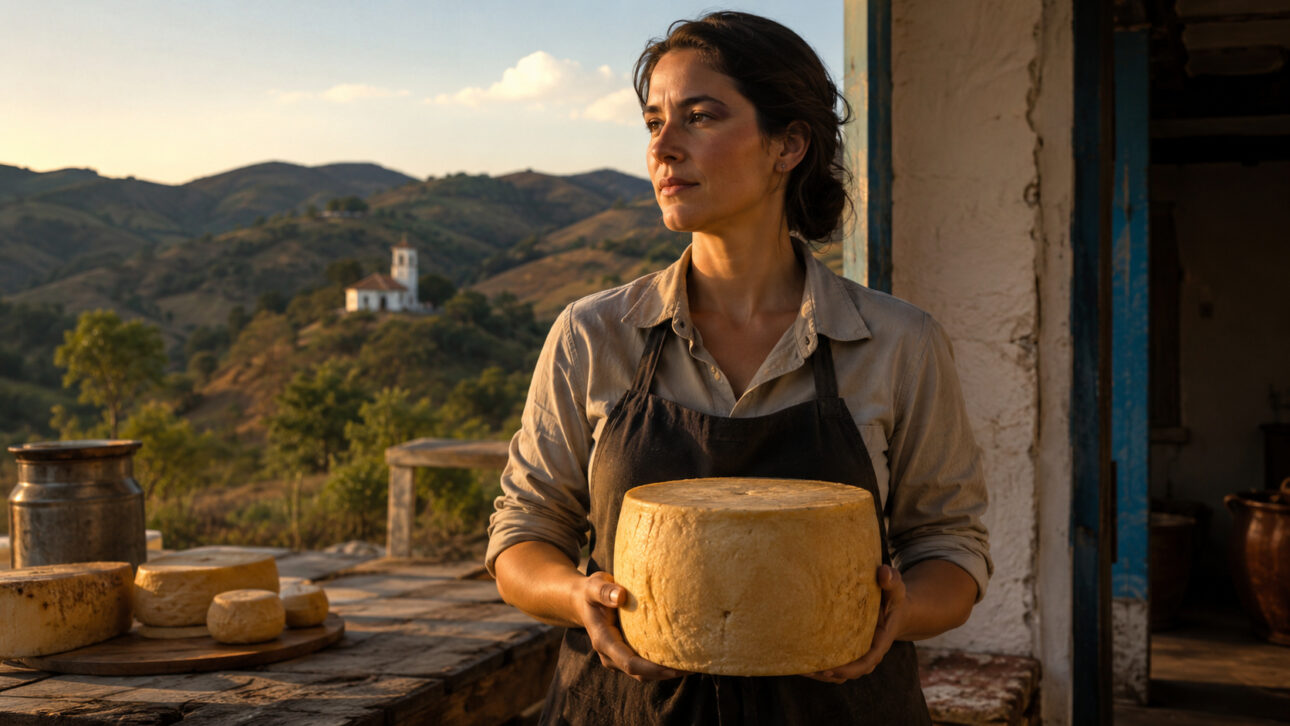
The results appeared concretely. According to Sebrae Minas, Queijo Maria Nunes won one gold medal and three silver medals at the Mondial du Fromage in France. In the edition mentioned by the entity, 250 judges evaluated 1,640 cheeses, and the Minas Gerais product was recognized as the 17th best cheese in the world.
This international leap is significant because it shows how a small family production from the interior of Minas Gerais managed to move from mourning, restructuring, and local resistance to compete symbolically with some of the most recognized cheeses on the planet.
Queijo do Serro advances between tradition, territory, and family continuity
The story doesn’t end with Christiane. According to Sebrae Minas, she shares the farm’s management with her daughter Jady, which reinforces the family continuity around Queijo Maria Nunes. Succession, in this case, ceased to be merely the preservation of heritage and became a conscious project of continuity between generations.
This permanence matters because the strength of the artisanal cheese from Serro depends precisely on the survival of the producing families and the maintenance of the production method within the territory. Without succession, tradition, and permanence in the field, the cultural chain of the product weakens. With continuity, it renews itself without breaking its origin.

In the end, Christiane Brandão’s journey sums up three forces at the same time: the personal pain that brought her back to the farm, the reconstruction of a family property, and the affirmation of a cheese from Minas Gerais that today carries international prestige without abandoning the artisanal base that made it possible. even in the face of changes from new generations?





Be the first to react!