






 Portuguese
  Spanish


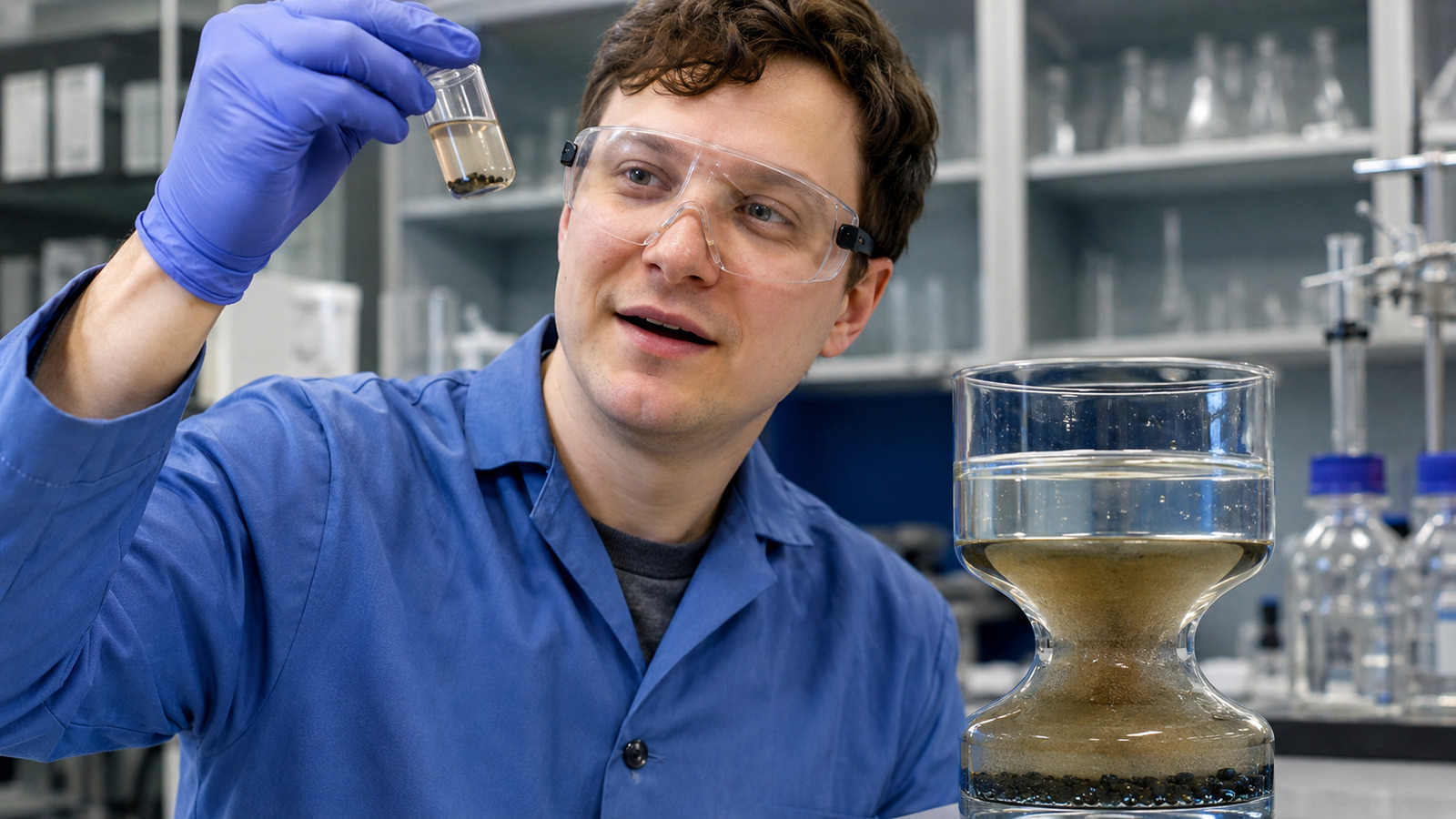


Accidental discovery at the University of Massachusetts Amherst showed a mixture of water, oil, and magnetized nickel particles that returns to the shape of a Greek urn after being shaken, raising new questions in the physics of soft matter
Last year, a shape-recovering liquid was accidentally created at the University of Massachusetts Amherst, USA, during an experiment with water, oil, and magnetic nickel nanoparticles. The mixture, described in the journal Nature Physics, repeatedly returned to the shape of a Greek urn, defying classical expectations of soft matter physics.
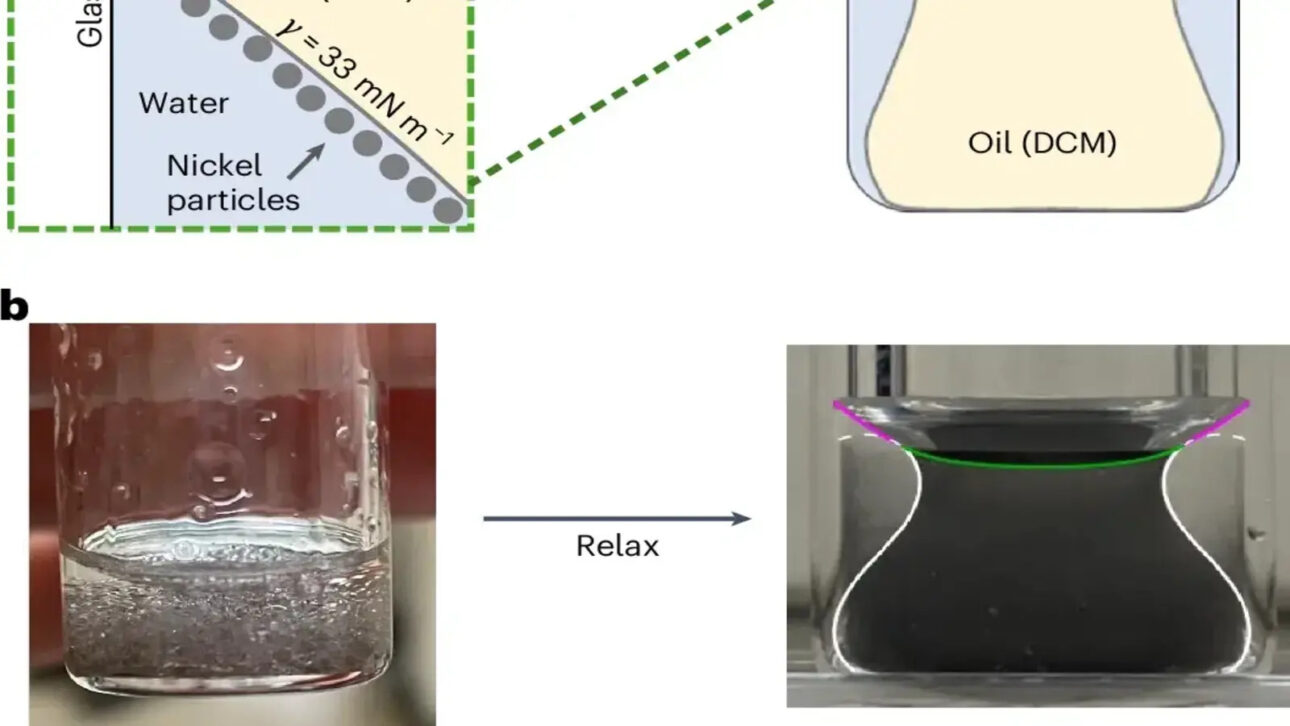
Mixture of water, oil, and nickel revealed unexpected behavior
The discovery began with Anthony Raykh, a graduate student in polymer science and engineering at the University of Massachusetts Amherst.
He was working with materials formed by magnetic particles and fluids when he prepared a mixture of water, oil, and magnetized nickel particles.
-
ChatGPT Alerts FBI to Prevent Planned Murder of 8-Year-Old in Brazil’s Espírito Santo

-
Scientists Discover 125-Million-Year-Old “Pregnant Fossil” with Preserved Embryos and Microscopic Larvae Inside Mollusk in England

-
17-Year-Old Justin Bernstein Develops Bacteria to Produce Glass on Arctic Ice to Reflect Sunlight, Wins $50,000 U.S. Scholarship

-
The 19-Meter Rocket-Helicopter: A Private Industry Prototype That Challenged Space Race Logic



Under normal conditions, water and oil tend to separate. When shaken, they can form a temporary emulsion, as occurs in a vinaigrette dressing. Over time, the mixture seeks to reduce the contact area between the liquids.
In this type of behavior, small spherical droplets usually emerge because the sphere reduces the surface area.
This result is expected by the laws of thermodynamics, which describe how physical systems tend to states of lower energy.
Raykh’s flask, however, took another path. Even after vigorous shaking, the content did not organize into simple droplets nor separate chaotically. The mixture returned to a curved and stable shape, similar to a classic Greek urn.
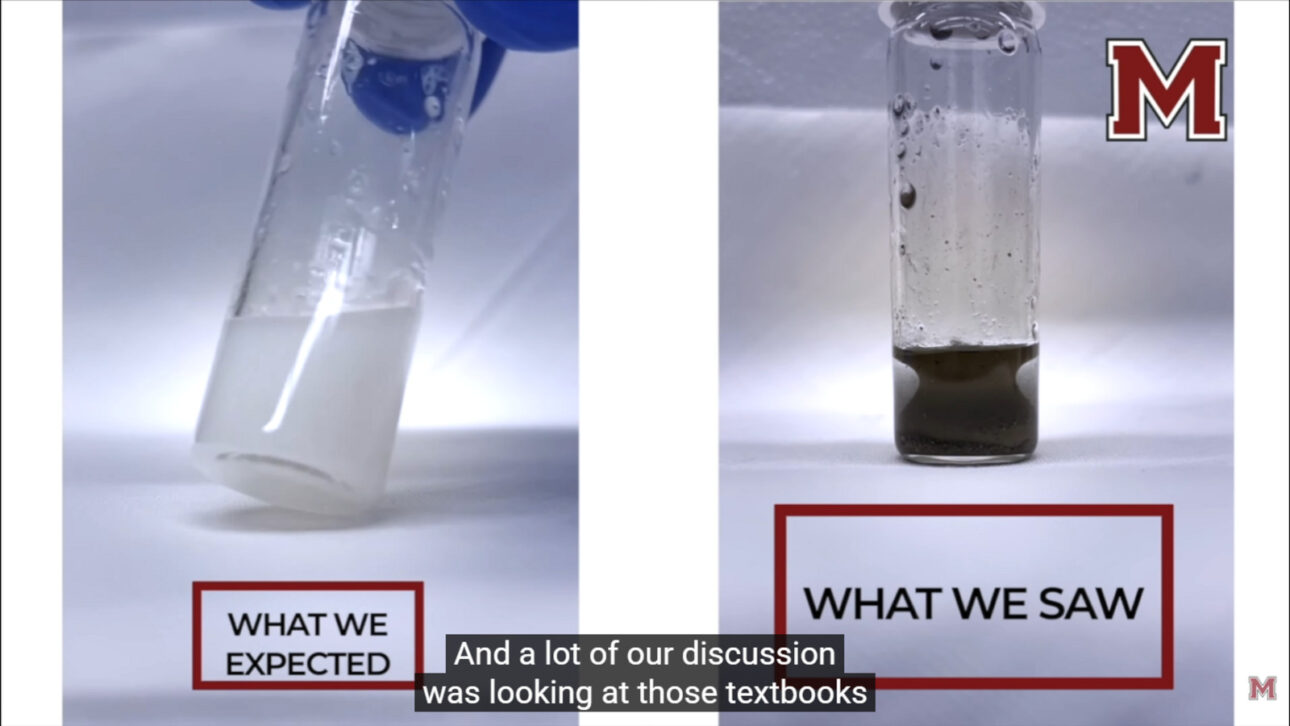
Urn format drew attention for defying expectations
The most intriguing point is that the urn shape has a larger surface area than that of a sphere. According to the traditional logic applied to oil and water mixtures, this design would not be the simplest state nor the one with the smallest area.
Raykh took the flask through the department corridors and showed the phenomenon to professors. In a university statement, he stated that the mixture formed “this beautiful and immaculate urn,” to his surprise.
The shape did not appear just once. The liquid reorganized into the same design even after repeated agitations, which indicated a stable behavior and not just a transient effect of the experiment.
The findings were published in the journal Nature Physics and described as a phenomenon not yet observed in the study of soft matter physics, an area that investigates deformable materials, complex fluids, emulsions, and similar systems.


Magnetism of particles changed the boundary between liquids
To understand what was happening, the UMass Amherst team worked with researchers from Tufts and Syracuse universities.
The group conducted experiments and computational simulations to analyze the organization of particles at the interface between water and oil.
The explanation found lies in the magnetism of nickel nanoparticles. In a common mixture, added particles can reduce the tension at the interface between the liquids, facilitating the formation of emulsions.
In this case, the effect was the opposite. The nickel particles were so strongly magnetized that they increased the interfacial tension. This change forced the boundary between water and oil to curve into a stable, non-flat shape.
The researchers attributed the mechanism to attractive dipolar magnetic interactions in the plane between the particles.
These interactions suppressed common emulsification and helped create a stable shape, different from the predicted pattern for the system.
David Hoagland, professor and senior author of the study, stated that closely observing the magnetized nanoparticles at the boundary between water and oil allows for details on how different shapes organize.
Discovery still has no practical application
The team reported that the discovery does not yet have a practical application. Even so, the phenomenon opens a new line of investigation to understand how magnetic particles can alter the behavior of fluids and interfaces.
Thomas Russell, one of the main authors of the article, summarized the scientific importance of the observation by stating that when something seems it shouldn’t be possible, it needs to be investigated.
For now, the shape-recovering liquid remains a laboratory curiosity. The value of the discovery lies in showing unexpected behavior in a simple system, formed by water, oil, and magnetized particles.
The research was funded by the U.S. National Science Foundation and the U.S. Department of Energy.
This article was prepared based on information from the University of Massachusetts Amherst and the journal Nature Physics, with data, numbers, and statements preserved as per the consulted material.


