Portuguese
  Spanish


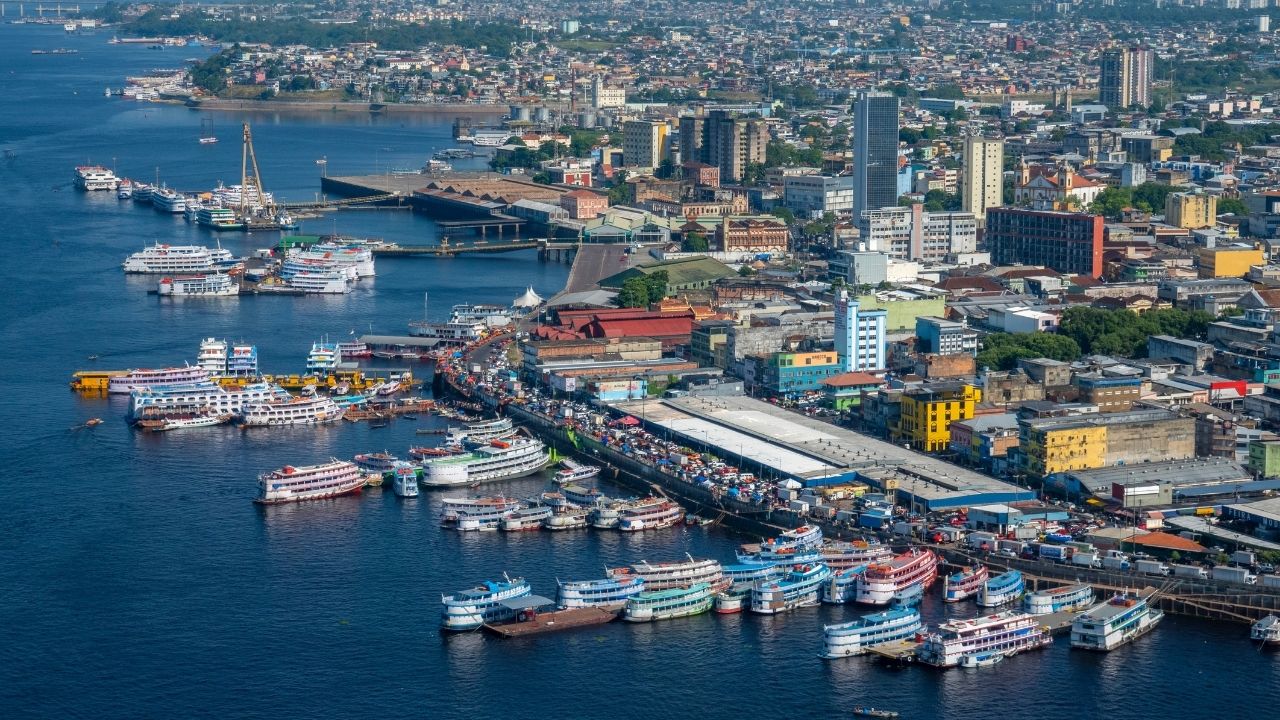

The 500 Companies of the Industrial Pole of Manaus (PIM) Provide Jobs to Over 100,000 People in the Amazon Region
São Paulo, May 11, 2022 – If you think the northern region does not significantly contribute to Brazilian development, you are very mistaken. After all, the Manaus Free Trade Zone, created in 1967 by the federal government, with its Industrial Pole, has 500 factories employing over 100,000 workers in various sectors. This is because the region has incentives that encourage the establishment and permanence of companies that bring innovation, such as Multilaser, and greater industrialization, while also preserving the Amazon.
Furthermore, Amazonas gained prominence on the Brazilian scene by raising nearly R$ 17 billion in 2021 and becoming one of the 8 states that most consolidate federal taxes. However, the region still accounts for only 0.6% of the Brazilian industrial park and does not offer competitiveness with the other states of the federation. But, it skillfully enables regional economic development.
Learn a Little More About the History of the Manaus Free Trade Zone in the Video Below


The Manaus Free Trade Zone is a Very Successful Model of Regional Development Created by the Federal Government
The Manaus Free Trade Zone (ZFN) was created in 1967 by Law Decree No. 288, which established various types of tax incentives for companies that set up in the region, as a way to stimulate local economic growth. In this way, the integration of northern Brazil with the rest of the territory occurred, contributing to industrial advancement, without neglecting the preservation of the Amazon.
-
Half of Brazilians Prefer Lower Taxes with Private Health and Education, While 44% Opt for Higher Taxes for State-Provided Services, Datafolha Survey Reveals

-
Brazil’s Most Expensive Toll Rises to R$ 40.60 on Route from São Paulo to the Coast, Nearly Matching Bus Fare to Santos

-
As Brazil Expands Social Welfare, Survey Reveals 40% Blame Poverty on Laziness, While 58% Cite Lack of Opportunities

-
China Tightens Control on Antimony, Driving Prices from $22,000 to Nearly $40,000 per Ton as U.S. Rushes to Bolster Strategic Reserves




What is most interesting is that this industrial advancement, contrary to what many would imagine, contributed to the preservation of 97% of the forest cover within the state of Amazonas, as it was linked to sustainable initiatives and compliance with obligations for the preservation of the Amazon. In addition, the region has been an essential source within the economy and development of the northern region, generating a billion-dollar market and thousands of jobs.
It is a very promising model as it returns to the federal government a good percentage that corresponds to more than half of the wealth produced in the region, around 54%. Furthermore, it stimulates the transfer or establishment of new companies in the region, since there is tax renunciation by the federal government.
The creation of the Manaus Free Trade Zone was a “masterstroke” and helped reduce social inequality in the northern region compared to the rest of the country, in addition to ensuring a significant migratory flow to the area. According to research by the Getulio Vargas Foundation, the per capita income of Amazonas was 7 times lower than that of São Paulo, which was reduced to 1.8 times in 2010. Additionally, today the city of Manaus has 2.2 million inhabitants, a figure 7 times higher than before the creation of the ZFN (300,000 inhabitants).
New Federal Decrees on Taxes for Industrialized Products (IPI) Create Deadlock for the Manaus Free Trade Zone
The creation of some federal decrees is worrying experts, who claim it is a problem for the development of the ZFN. After all, these decrees propose a 25% to 35% reduction in the Tax on Industrialized Products (IPI) throughout the national territory, which could jeopardize the attractiveness of the Manaus Free Trade Zone for investors and even the permanence of various companies in the region.
Therefore, some parties, such as Solidariedade, have moved direct actions of unconstitutionality (ADIs) as a way to seek to reduce the impact of the decree on the ZFN. Although the reduction of taxes is very favorable and necessary, especially in this moment of crisis, to stimulate economic growth, it must be done cautiously, considering a country of continental dimensions like Brazil. Therefore, a thorough evaluation must be conducted to benefit the expansion of the economy as a whole.