Portuguese
  Spanish


In Ahmedabad, India, Life Only Begins When the Sun Sets. Understand How Extreme Heat Forced Millions to a New and Radical Reality: Live at Night.
Extreme heat is reshaping urban life in Ahmedabad, India. With thermometers hitting unbearable marks early in the day, residents and merchants have found an ingenious and necessary solution: to live at night. The streets, once deserted under the scorching sun, now come alive with markets and nighttime activities.
What Is It Like to Live at Night in Ahmedabad
The heat in Ahmedabad, a metropolis with over eight million inhabitants, has become so intense that daytime life practically stops. By 10 a.m., it is not uncommon for temperatures to already reach 40°C. This reality forces people to seek shelter in enclosed spaces during the day.
As night falls, the city transforms. The streets gain a flow of people and vehicles, and the social and commercial life, once dormant due to the heat, awakens. It is a forced adaptation, but one that demonstrates human resilience in the face of extreme weather conditions.
-
Abandoned Factory in Rio’s North Zone Becomes Urban Hazard with Standing Water and Debris

-
The U.S. Navy Conducts Submarine Tests in Idaho Lake to Detect Underwater Noises Hidden by the Ocean

-
British Factory Transitions from Mechanical Parts to Producing 420,000 Electric Power Units Annually, Supplying 70% of Ford’s Electric Cars Sold in Europe
-
France Launches Network to Recycle 20 Million Cookware Pieces by 2027, Accepting All Brands for Aluminum and Coating Separation


Ahmedabad and Its Night Markets
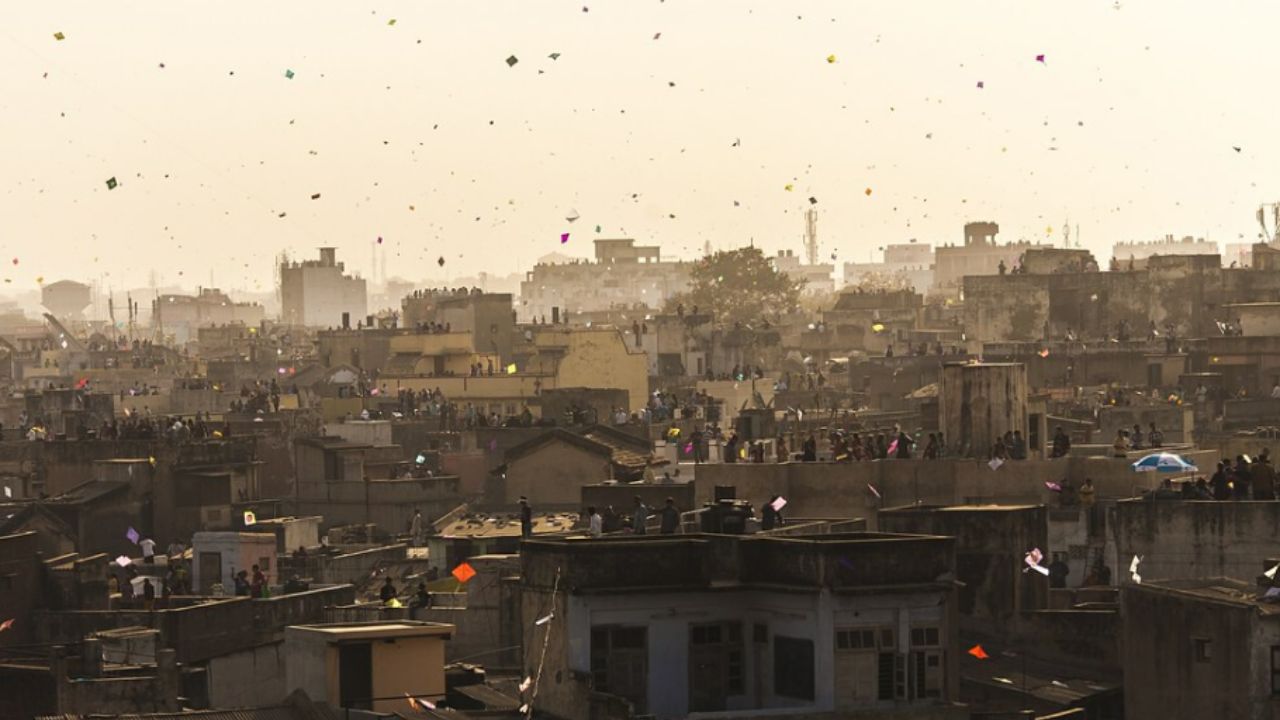
The main manifestation of this new routine is the night markets. The most famous, Manek Chowk, perfectly illustrates this change. During the day, the area operates as a jewelry market. By night, it transforms into a vibrant street food market, attracting crowds until dawn.
This adaptation is not just a choice, but a necessity. Clothing stores and other businesses also extend their hours, allowing people to shop in a more pleasant climate, ensuring the economic survival of local businesses.
The Economy of Living at Night as a Climate Response
The phenomenon in Ahmedabad is not just about parties or leisure. It is a reorganization of life to ensure that essential activities continue. The city is becoming a case study on how the economy can adapt to a warmer world.
Urban planners and local authorities are already thinking of solutions to strengthen this trend. The idea is to create more “oases of coolness” and public spaces that are pleasant and safe for nighttime use, encouraging the population to live at night.
A Global Warning from India
India is one of the countries most vulnerable to the effects of climate change. Deadly heatwaves are becoming increasingly frequent and intense. What is happening in Ahmedabad serves as a warning to the rest of the planet.
The experience of this Indian city demonstrates that adaptation is no longer an option, but an urgency. The strategies developed there may soon have to be considered by other cities around the world facing rising temperatures.
Challenges and the Future of Cities
Adopting a large-scale nighttime lifestyle presents significant challenges. It requires rethinking all urban infrastructure, from public transportation and lighting to safety and public services.
The trend of living at night may become the new normal in the near future. Ahmedabad’s adaptation is not just a local story, but a glimpse of how humanity may need to adjust to survive on a warming planet.
With information from Xataka.