






 Portuguese
  Spanish


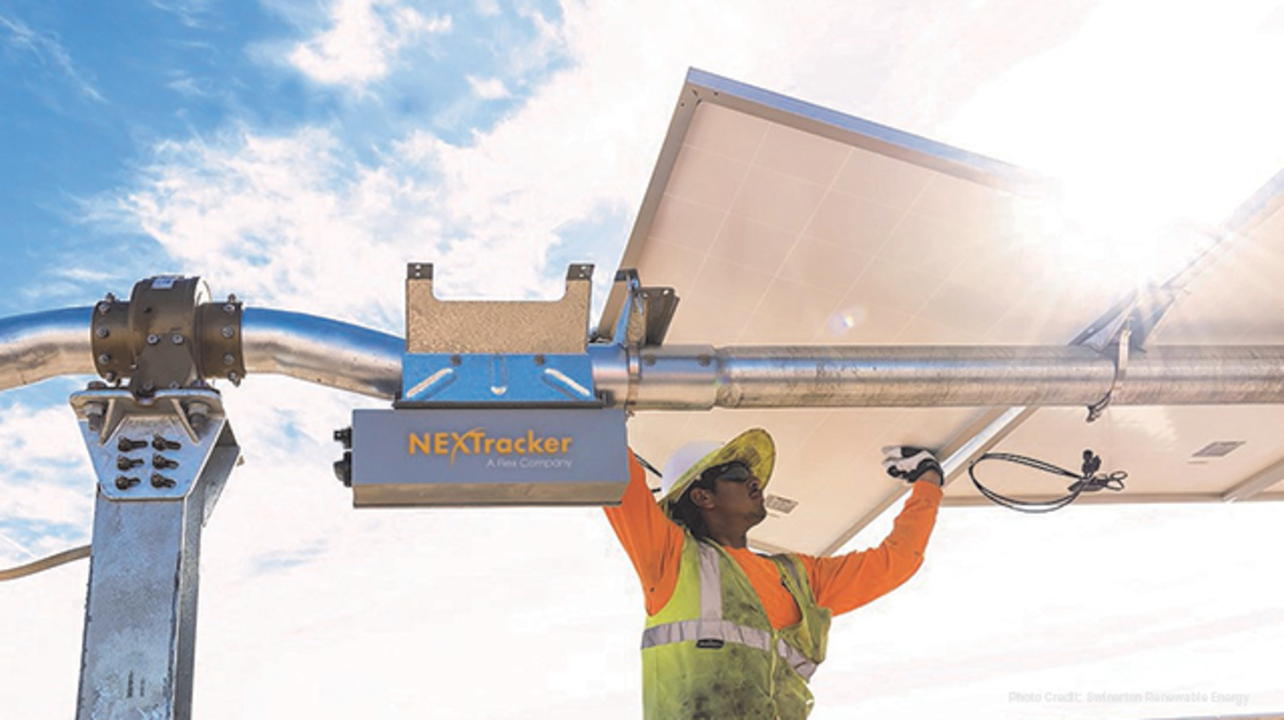

Solar Tracker Companies Accelerate The Photovoltaic Industry
Recently, eight leading global solar tracker manufacturers approved the compatibility of the new solar panel models, known as 210. The eight companies were: Arctech Solar, Array Technologies, GameChange Solar, IDEEMATEC, Nextracker, PVH, Soltec, and TrinaTracker (Trina Solar).
Read Also
These companies have successively issued compatibility approvals for 210 Ultra-High Power solar modules in recent months, no later than February 2021, significantly promoting smooth collaboration across the renewable industry.
Approval of Trackers
The compatibility approvals of solar tracker devices and modules from these global leaders in the tracker field demonstrate their recognition of the high value and strong support for 210 modules in terms of comprehensive collaboration to facilitate grid parity globally. On the other hand, compatibility with ultra-high power modules will also enhance the value of the tracker system and contribute to cost reduction in various scenarios.
-
Brazilian scientists are simultaneously advancing two research projects on clean hydrogen and driving solutions that could transform the energy matrix, enhance industrial competitiveness, and accelerate large-scale emission reduction targets.

-
Advancement in renewable energy: A R$ 150 million project launched by Petrobras and Finep aims to create state-of-the-art electrolyzers for green hydrogen, strengthening national research and preparing Brazil to compete in a billion-dollar energy market.
-
Illiterate or semi-literate grandmothers were trained to repair solar systems, open rural workshops, and light up homes that still depended on kerosene.
-
The world has bet on green hydrogen as the fuel of the future, but now faces the side effect: producing 1 kilogram requires about 9 liters of ultrapure water, and the largest projects on the planet are precisely in the driest regions of the Earth, where water is already scarce for people.





Specifically, modules with low-voltage design can accommodate a longer string, thus reducing the number of strings and the cost of DC PV cables, lowering the LCOE, highlighting energy generation gains and cost advantages of high-power modules.
Additionally, low-voltage modules facilitate reduced land requirements in system design, consequently reducing the BOS of the tracker. Moreover, labor costs can be reduced when the quantity of trackers decreases.
Ultimately, the combination of trackers and 600W+ modules provides high energy generation, low system costs, and minimized system loss.
Aside from increasing system value, the compatibility of trackers with 210 ultra-high power modules deepens the win-win industrial cooperation mechanism, which notably began a year ago when Trina Solar launched its first 210 modules, signaling a new era in the industry.
Trina Solar
Then, in June 2020, leading manufacturers of silicon wafers, cells, modules, inverters, tracker systems, materials, EPC, as well as design institutes and professional research institutions and solar power plants jointly established the 600W+ Photovoltaic Open Innovation Ecological Alliance, with more than 66 members to date.
Followed by recent complete product launches by major inverter manufacturers like Huawei, Sungrow, Sineng, SMA, and others that support 210 modules.
The compatibility of trackers is another strategic move across the industry that advances the application of 210 ultra-high power module products on the system side. As important links in the photovoltaic industry chain, the entry of inverters and trackers into the 210 era signifies ongoing collaboration within the 210 industry chain, a more mature photovoltaic ecosystem, and notable values for customers.





