Portuguese
  Spanish


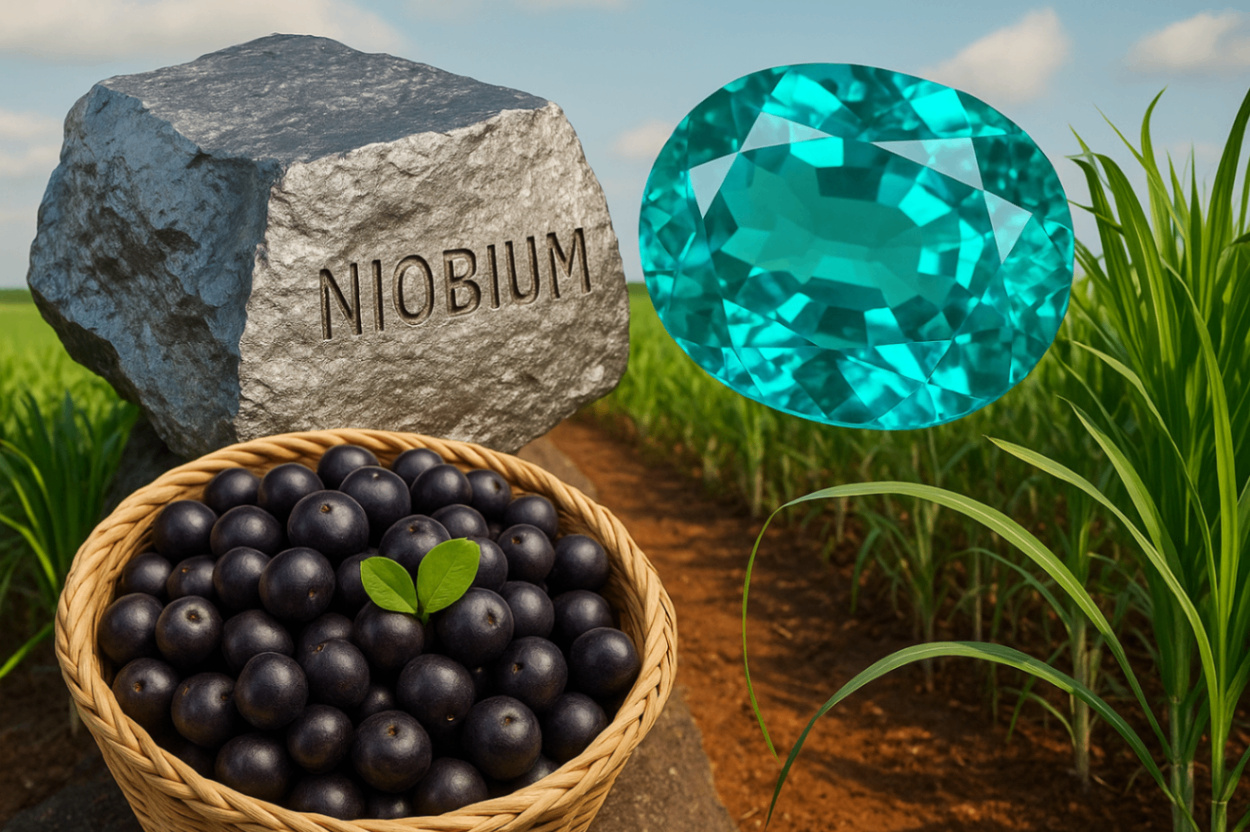


Our Country Is Much Bigger Than You Imagine and There Are Products That Only Brazil Produces! Do You Know What They Are?
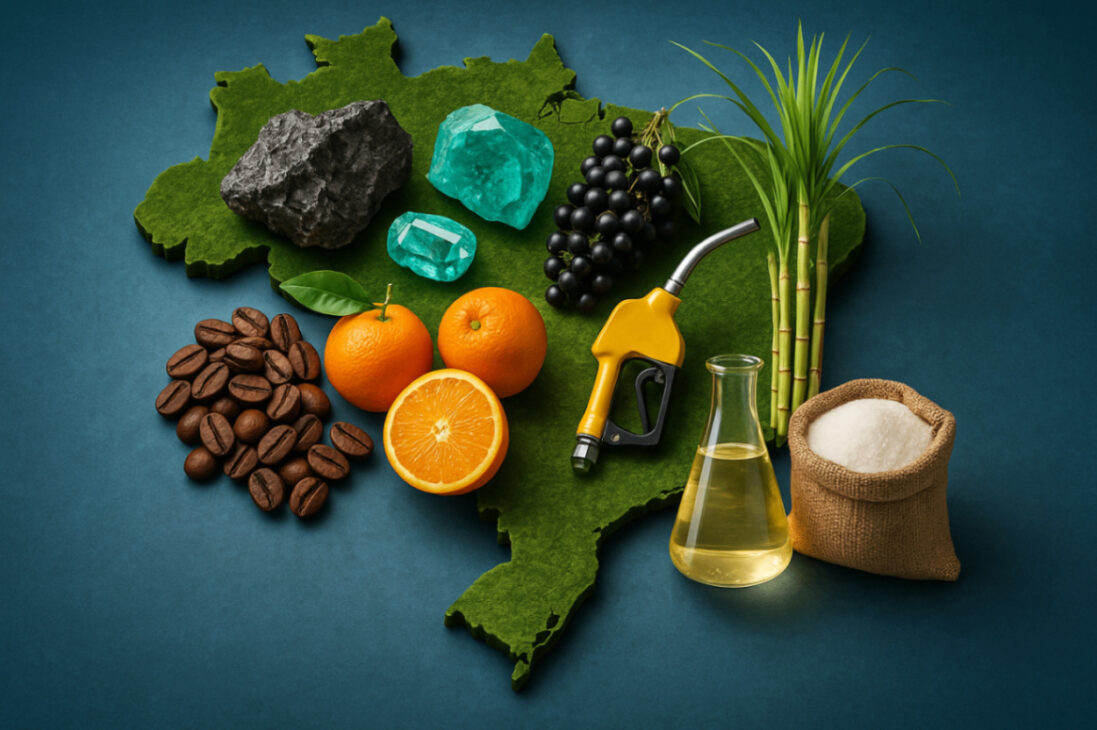
Did you know that Brazil is a producer and irreplaceable in various global markets? With a unique combination of fertile soil, favorable climate, and technological innovation, we are leaders in products that sustain economies worldwide, such as niobium, açaí, precious metals, coffee, ethanol, sugar, and more.
1. Niobium: 98% of Global Reserves Are Here
Brazil is almost the sole owner of one of the most strategic metals in the global industry.
Niobium is used in metal alloys to increase the strength of structures — from bridges and airplanes to nuclear power plant turbines. It is essential for the aerospace, railway, and automotive industries. The largest reserve in the world is in Araxá (MG), where the mining company CBMM leads the global market with cutting-edge technology.
-
Fisherman Catches 18kg Catfish Near Brazil’s Itaipu Lake, Among Largest Recorded in Recent Years

-
Wet phone: Apple and Samsung warn against using rice to dry it, as it may release particles and worsen USB port damage.

-
Despite Extreme Heat, Politicians Reject Air Conditioning to Protect the Environment

-
New Bridge Between Tocantins and Pará Transforms Daily Commute, Replacing Costly Ferry Crossings in Brazil


2. Açaí: The Superfood That Conquered the Planet
85% of all açaí in the world comes from the Brazilian Amazon.
This fruit has become a global sensation due to its antioxidants, healthy fats, and natural energy. In the US and Europe, it is consumed as a sports supplement or meal replacement. The production chain generates income for thousands of riverside dwellers and accounts for billions in exports.
3. Pink Tourmaline and Emeralds: Elite Precious Stones
The Pink Tourmaline is considered one of the rarest and most valuable stones in the world.
Its neon blue hue is unique, and a single carat can exceed 10 thousand dollars. Brazil is also the largest producer of emeralds outside Colombia. States such as Bahia, Minas Gerais, and Goiás house mines that supply major global jewelry brands.
4. FlexFuel: Brazilian Revolution in the Automotive Sector
100% Brazilian technology that has become a global reference.
The FlexFuel system allows vehicles to run on gasoline, ethanol, or a mixture of both. Commercially launched in 2003, the model dominated the national market — today, over 80% of light vehicle fleets are flex. Countries like the US and Sweden have already studied replicating the model.
5. Coffee: Brazil Has Led for Over 150 Years
Since 1840, we have been the largest coffee exporters on the planet.
Responsible for about 40% of global production, Brazilian coffee is mainly grown in Minas Gerais, Espírito Santo, and São Paulo. Varieties such as arabica and conilon stand out for their quality and tradition. Brazil is also the largest domestic consumer of the product in Latin America.
6. Ethanol from Sugarcane: Clean Energy Made in Brazil
Brazilian ethanol is a global reference in renewable energy.
Produced from the fermentation of sugarcane, it has low carbon emissions and is one of the most efficient alternatives to fossil fuels. Additionally, it generates by-products like bioelectricity and reduces dependence on oil. The model is exported as a sustainable energy policy.
7. Sugar: Largest Exporter in the World
Brazil accounts for about 50% of all sugar traded internationally.
With an extremely efficient production system, we primarily export to India, China, and Indonesia. Brazilian sugar is derived from the same cane that produces ethanol, which strengthens the sustainable cycle of agribusiness.
Orange: Juice Champions in the World
Almost 70% of the orange juice consumed on the planet is made in Brazil.
Production is concentrated in São Paulo, and the juice is processed and exported frozen to Europe and North America. Three Brazilian companies dominate the global market, with processing and logistics technology that ensures quality and scale.
Brazil Is a Powerhouse, It Produces!
From strategic minerals to food and biofuels, Brazil is not only a granary but also the brain of various production chains. And you, did you already know this?