






 Portuguese
  Spanish


After watching Terra da Gente, Grandpa Cindo wrote down a homemade bread recipe, made two loaves in the first batch, and started receiving orders from friends and family. According to Mais Caminhos, today he produces twice a week and makes deliveries personally around the city, in a local artisanal model.
The homemade bread became part of the routine for Grandpa Cindo after he watched a recipe on the Terra da Gente show, wrote down the step-by-step, and decided to test the preparation at home. According to a report by Pedro Alvim, published in Mais Caminhos on April 4, 2026, the first batch yielded two loaves.
From that test, conducted about five years before the publication, Grandpa Cindo decided to continue making his own bread. Over time, friends and family started placing orders, and the home production turned into a small order-based business.
Recipe shown on TV paved the way
The origin of the story lies in a homemade bread recipe presented on Terra da Gente. Grandpa Cindo followed the preparation, noted each step, and decided to replicate the process even without having much prior experience in the kitchen.
-
Drivers Struggle with Mud on Amazon Highway as Truck Skids and Blocks Road During Rainy Season

-
Former Brazilian street cleaner overcomes challenges to become a lawyer, now advocates for workers’ rights.
-
Retired Historian in Brazil Restores Over 100 Sewing Machines, Including One from 1875 New York Broadway

-
El Niño Set to Raise Temperatures Above 30°C in Southeastern Brazil by Late July as Cold Wave Ends




The central point is not a narrative of personal limits, but of practical learning. A recipe seen on television became a home test, and this test paved the way for an artisanal production that began to interest those close to him.
First batch had only two loaves
According to the source, the first batch produced two loaves. The result was enough for Grandpa Cindo to change the habit of buying ready-made bread and start consuming the preparation he made at home.
This small beginning helps explain the gradual growth of the activity. Before becoming an order-based business, the homemade bread became part of the family routine as a choice of self-preparation, without a large commercial structure or promise of rapid expansion.
Orders started among friends and family
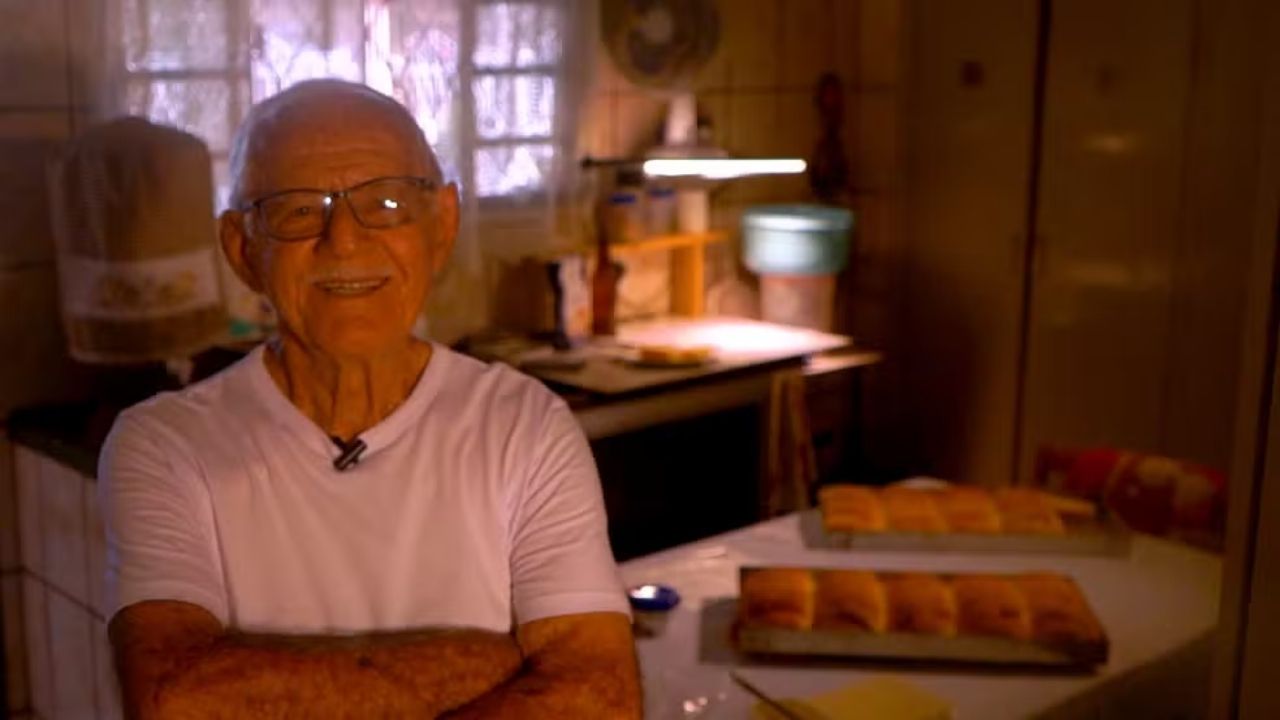
The report states that the hobby turned into a small business when friends and family started ordering the bread. Over time, the orders grew and became part of the production routine.
The source does not provide price, sales volume, formal company name, or address. Therefore, the case should be treated as an artisanal order-based business, relying on homemade production, local trust, and direct contact with customers.
Production happens twice a week
Grandpa Cindo produces bread twice a week, according to Mais Caminhos. This regularity shows that the activity has moved beyond just an occasional test and has gained a minimum level of preparation, baking, and delivery organization.
In the case of homemade food, frequency is an important part of the relationship with customers. Producing homemade bread regularly requires repetition of the process, attention to preparation time, and care with the final result.
Deliveries are made personally around the city
Another point mentioned in the report is that Grandpa Cindo personally makes deliveries around the city. The source text does not provide the name of the municipality, so this information should remain generic without adding unconfirmed location.
Direct delivery brings producer and customer closer. Those who buy receive the product from the person who prepared the batch, which reinforces the artisanal nature of the business and helps explain the loyalty mentioned in the report.
Homemade taste became part of the relationship with customers
According to Mais Caminhos, many customers get emotional when tasting the bread because they associate the flavor with childhood memories. This point broadens the interest of the story without turning it into personal drama.
The homemade bread appears as food linked to emotional memory, domestic preparation, and the feeling of home-cooked food. The strength of the story lies in this simple connection between recipe, flavor, and memory.
Age appears only as factual data
The source reports that Grandpa Cindo is 86 years old and maintains production twice a week. This data is part of the news but does not need to be treated as the emotional center of the story.
The safest approach is to present age as contextual information, without phrases like “age is not a barrier,” “example of overcoming,” or “proof that it’s never too late.” The editorial focus remains on homemade bread, artisanal production, and the small order business.
Small businesses can arise from simple learnings
The journey shows how a skill learned at home can turn into an organized activity. Grandpa Cindo saw a recipe, tested it, perfected the routine, and started serving people who liked the result.
Not every small business starts with a store, team, or high investment. In many cases, it starts with a recipe, a first batch, nearby orders, and regularity in delivery.
Terra da Gente was the origin of the recipe
Terra da Gente appears as the program that taught the initial preparation. It was from there that Grandpa Cindo noted the step-by-step and decided to test it at home.
This detail shows how culinary content shown on television can still have practical effects off-screen. A recipe taught on a local program turned into domestic production, orders, and direct contact with customers.
A story about recipe, production, and orders
Grandpa Cindo’s case draws attention because it starts with a simple action: watching a homemade bread recipe, noting the preparation, and making the first batch. The rest of the story came with the acceptance of friends, family, and customers.
Grandpa Cindo’s story works better as a story of artisanal cooking, practical learning, and a small local business, with regular production and deliveries made by the producer himself.
A batch that became routine
What started with two loaves of bread turned into a twice-weekly production routine. The Mais Caminhos report shows Cindo as someone who found in artisanal preparation a way to fulfill orders and maintain contact with customers.
Homemade bread is the center of the story: the recipe seen on TV, the first attempt, the orders, and the emotional memory of those who buy. Do you think homemade products still have more appeal to the public than industrialized versions? Leave your opinion in the comments.


