






 Portuguese
  Spanish


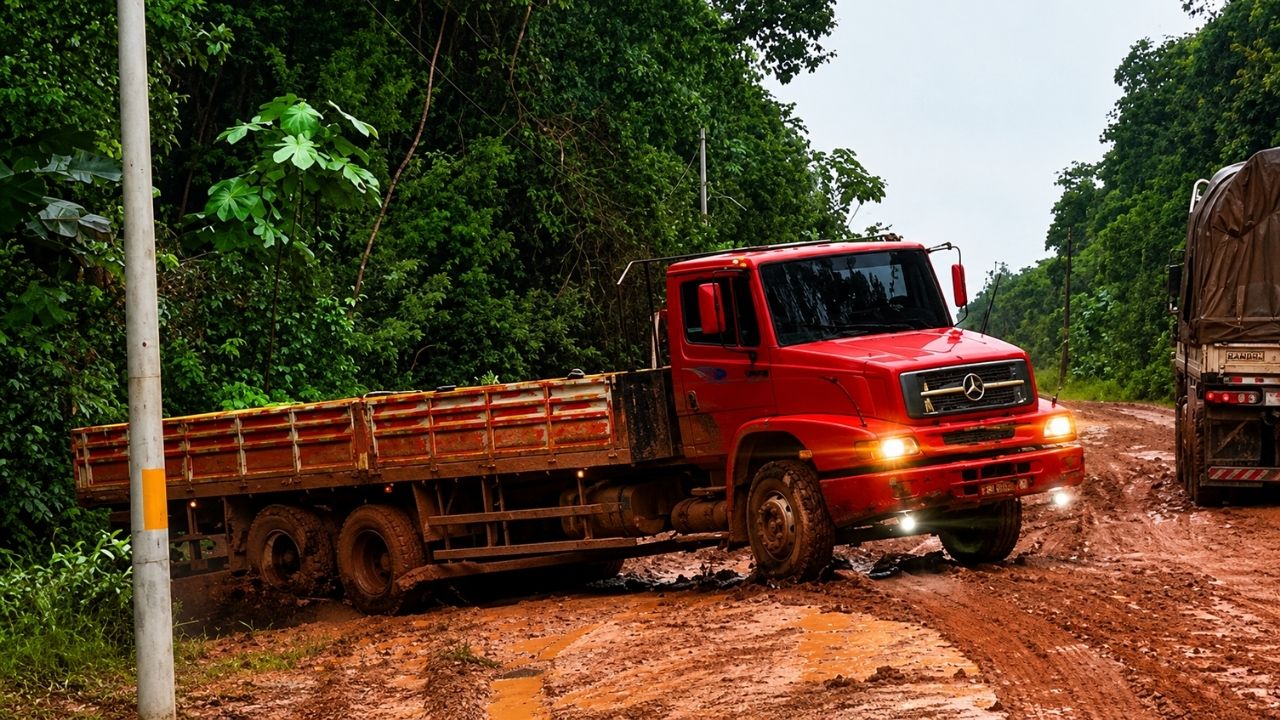

On BR-319, drivers faced slippery mud, a truck blocking the way, the risk of a ditch, and an improvised blockade while colleagues guided the steering wheel, pushed vehicles, and tried to clear the passage. The scene shows the stretch during the Amazonian winter, with buses, pickups, and trucks stuck on a road described by the drivers themselves as dangerous soap on the road.
Drivers faced a critical stretch of BR-319 covered in mud, where trucks, pickups, trailers, and buses struggled to advance without sliding off the side of the road. The scene occurred during the Amazonian winter, a period when rain turns parts of the highway into a smooth, heavy surface that is difficult to overcome.
In a video published on the Matheus Pereira channel on YouTube, in May 2026, the footage shows drivers trying to guide the steering wheel, block traction, push vehicles, and prevent a trailer from sliding into the ditch beside the road. The problem occurred at a particularly muddy point on BR-319, where the passage was compromised, and the drivers themselves began to organize the crossing, one at a time, amid nervous laughter, tension, and exhaustion.
Mud made the truck slide as if the road were soap
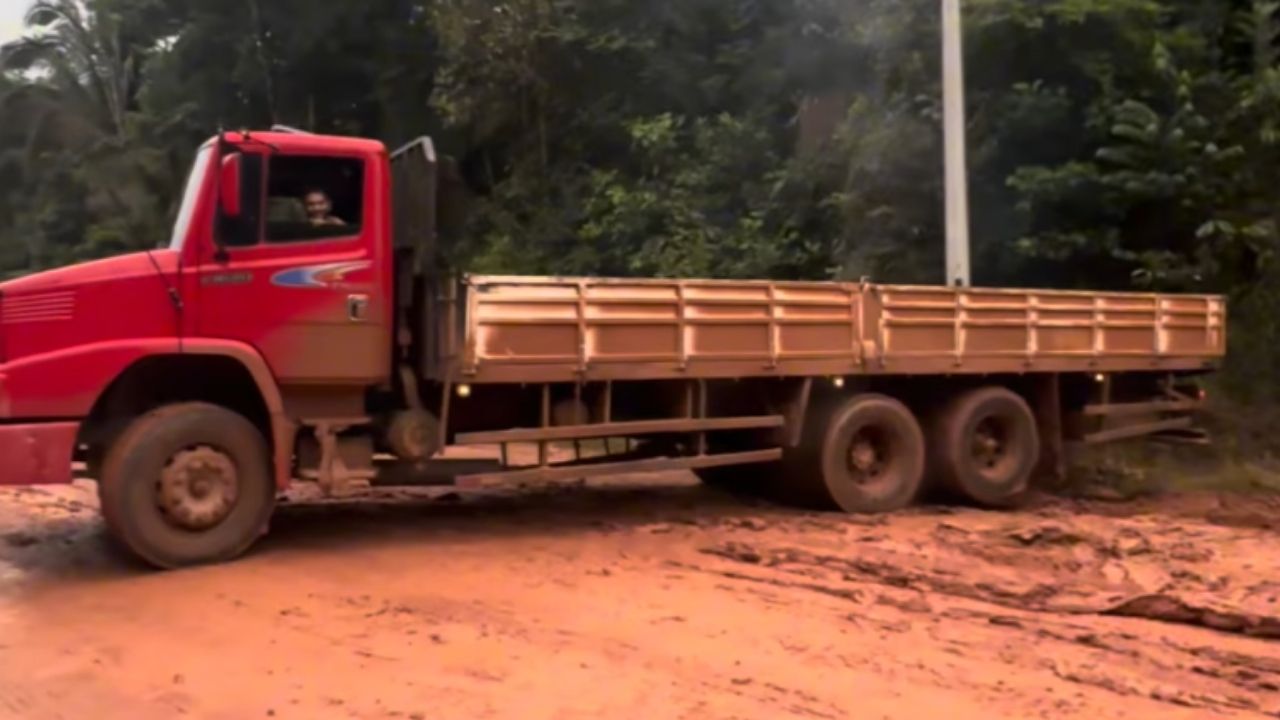
The stretch of BR-319 became so slippery that drivers compared the road to soap. The difficulty was not only in moving but in keeping the vehicle aligned. At times, the truck advanced only a few centimeters before sliding sideways, approaching the lower part of the road.
-
86-Year-Old Brazilian Man Starts Homemade Bread Business After Learning from TV Recipe

-
Former Brazilian street cleaner overcomes challenges to become a lawyer, now advocates for workers’ rights.
-
Retired Historian in Brazil Restores Over 100 Sewing Machines, Including One from 1875 New York Broadway

-
El Niño Set to Raise Temperatures Above 30°C in Southeastern Brazil by Late July as Cold Wave Ends


The tension increased because there was a slope on the sides. When a vehicle lost the correct line, colleagues warned that it could slide into the ditch and not stop until it tipped over. The risk was not just getting stuck, but completely losing control on a road with no grip.
Drivers tried to push and guide each maneuver
Unable to resolve everything just by accelerating, the drivers began to act as an improvised team. Some signaled for the driver to turn the wheel, others asked for calm, told them to take their foot off the accelerator, and tried to push the body to prevent the vehicle from sliding further to the side.
At various times, the guidance was to proceed slowly. Rushing could worsen the situation because accelerating too much made the truck shift weight to the wrong side. In the mud of BR-319, the maneuver depended more on patience, alignment, and control than on engine power.
Section blocked the passage and left vehicles waiting
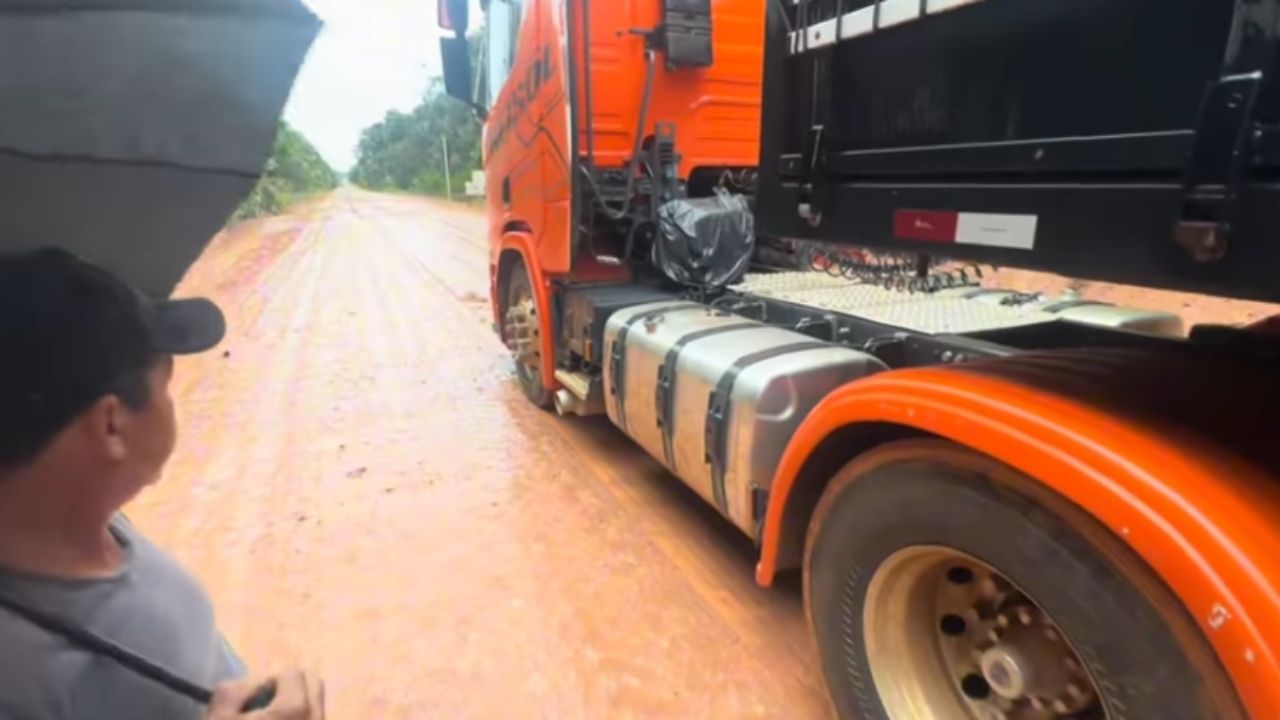
The situation became more complicated when the passage began to block. A vehicle stopped at the wrong point prevented others from advancing or retreating. At a certain point, the drivers themselves commented that no one could pass, creating an improvised line in the middle of the road.
Buses, pickups, trucks, and other vehicles waited while the drivers tried to clear the section. With each attempt, the risk shifted: sometimes the problem was the pickup going sideways, sometimes the truck needing to overcome the mud, sometimes the trailer threatening to descend to the lower part of the track.
Amazonian winter worsens critical points of the highway
During the Amazonian winter, the combination of rain, heavy traffic, and sections with poor grip can turn the travel routine into an operation of patience. On BR-319, the mud appears not just as dirt on the road, but as an obstacle that alters vehicle behavior and requires quick decisions.
When the ground becomes soaked, tires lose traction, wheels skid, and the weight of trucks and trailers starts to work against the driver. What seems like just a muddy section can become a trap when there are ditches on both sides and little space to correct the direction.
Pickup got stuck but didn’t sink in the mud
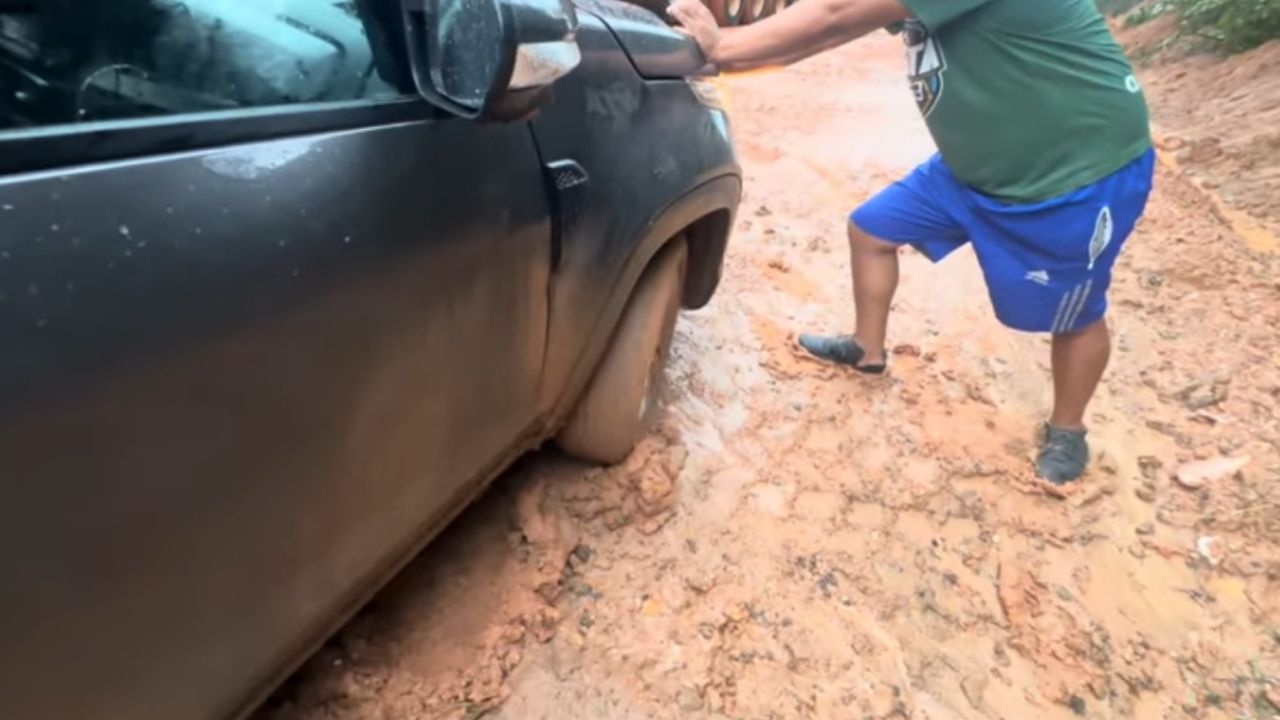
One of the drivers made a point to differentiate the situation: the vehicle was not necessarily stuck, but stalled. The explanation is simple: stuck would be when it sinks in the mud; stalled, in this case, was when the vehicle remained on the track but couldn’t move due to lack of traction.
This difference helps to understand the scene. Even without completely sinking, the vehicle was stuck because the smooth surface prevented progress. In practice, the driver could accelerate, turn the steering wheel, and try to correct, but the mud of BR-319 pushed the vehicle to where there was less safety.
The danger was on the side of the road
The biggest fear of the drivers was the lateral descent. The stretch seemed high on both sides, and any major slip could put a truck or trailer in a difficult position to recover. Therefore, colleagues tried to hold, guide, and prevent the vehicle from descending a few more centimeters.
In one of the statements, the concern was direct: if it descended a little, the vehicle might not stop until it tipped over. This type of risk explains why the crossing required collective help, even when it seemed possible to solve just with steering and acceleration.
Buses also needed to overcome the mud
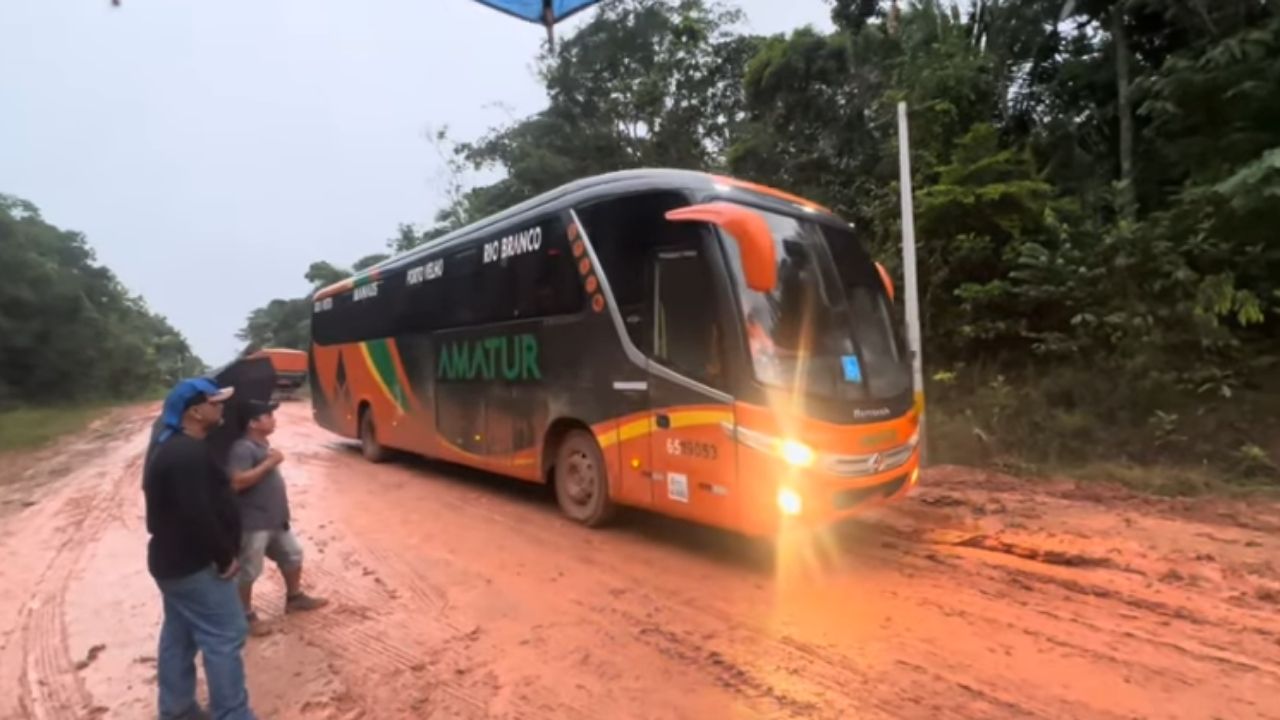
The scene did not only involve trucks. Buses also appeared as part of the line that needed to cross the stretch. The drivers watched attentively, commented on the experience of the drivers, and assessed whether the larger vehicles could pass without slipping.
The presence of buses increases the severity of the blockage because this type of vehicle transports more people and has less margin for error on a narrow and slippery track. In a muddy stretch like this, each maneuver needs to be calculated not to compromise the safety of those inside and outside the vehicle.
BR-319 once again exposes the harsh routine of those who depend on the road


The BR-319 is known for challenging drivers during rainy periods, especially in sections where mud dominates the road. For those who depend on the highway, the journey can involve waiting, improvisation, mechanical risk, physical wear, and the need to rely on other drivers along the way.
In the video, the atmosphere mixes tension and humor, but the situation highlights a real problem: when the road turns to mud, even experienced drivers need to slow down, observe the trail of the previous vehicle, and decide whether it’s worth trying to pass or waiting for help. The road stops being just a route and becomes an obstacle.
Collective help prevented the situation from getting worse
Despite the difficulties, the drivers’ reaction shows a common logic in isolated sections: those who are stuck help those who also need to pass. They guide, push, signal, hold, and analyze the terrain before the next attempt. On a mud-covered highway, collaboration becomes part of the journey.
This help does not eliminate the risk, but it reduces the chance of error. When someone from outside observes the wheel, the side, and the alignment, the driver inside the cabin can make better decisions. On the BR-319, in that section, passage depended as much on driving experience as on the strength and attention of those in the mud.
The scene on the BR-319 sums up the challenge of traveling on a mud-covered road during the Amazonian winter: truck sliding, trailer threatening to descend, pickup stuck, bus waiting, and drivers trying to clear the way with their hands and guidance. The episode draws attention because it shows a harsh, dangerous, and still very common routine for those who need to face slippery sections.
Do you think drivers should avoid this type of section during the rainy season, or for those who depend on the road, is there no real alternative? Tell us in the comments if you have ever experienced a similar situation on a dirt road, mud, or highway with unsafe traffic conditions.


