






 Portuguese
  Spanish


Professor Tom Licence from the University of East Anglia accidentally found 18 Iron Age gold coins with a metal detector in a field in Suffolk, England. The pieces, minted by the Trinovantes people about 2,000 years ago, went to auction and fetched 33,200 pounds, above the estimate.
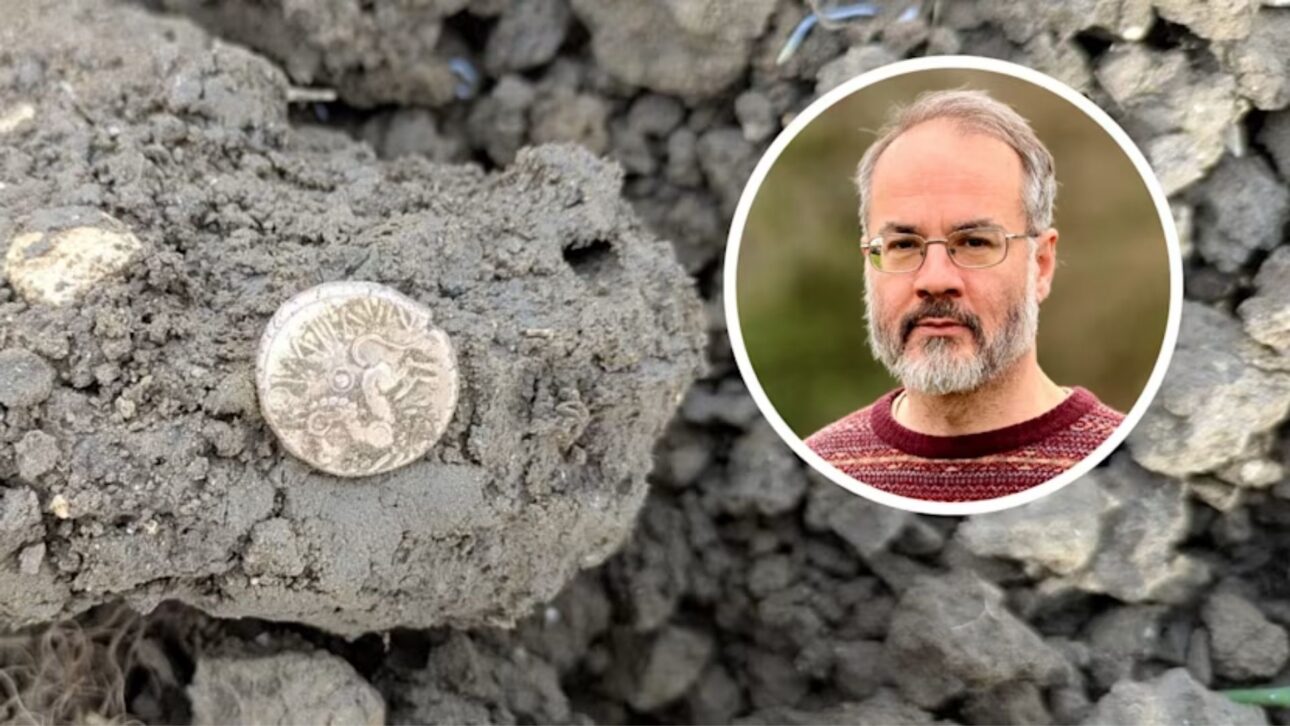
Someone who studies the Middle Ages ended up unearthing something much older. Tom Licence, 46, a professor of medieval history and literature at the University of East Anglia, England, accidentally found 18 gold coins from the Iron Age while using a metal detector in a field in Suffolk. The story was reported by ITV.
The find turned into money and history at the same time. The gold coins, minted about 2,000 years ago by the Trinovantes people, went to auction at Noonans in London in March 2026, and fetched a total of 33,200 pounds, above the estimate of 25,000. Known as the Bury St Edmunds treasure, the collection is described as the largest ever recorded from the period between 25 BC and 10 AD.
The professor who hunted with his niece
Credit: PA
The discovery was born from a family outing. According to the British press, Licence only had the metal detector in the field because his niece wanted to try the hobby, and he went to find a good place for the activity, near where she lived, in the autumn of 2024.
-
Chinese Farmer with No Formal Education Builds Over 60 Homemade Robots from Scrap Metal, Each Bearing His Surname

-
Telescope Set to Discover 100,000 New Planets Arrives at Launch Site, Ushering in a New Era of Astronomy

-
Humanoid Robots Transition from Demonstrations to Real Work in Factories
-
Anti-poaching patrol in Thailand accidentally discovers hidden cave with 2,000-year-old petroglyphs, geometric engravings, and mysterious three-finger patterns on sandstone walls.



What was meant to be a light activity turned into a historical find.
The professional irony is delightful. A specialist in the Middle Ages, the professor ended up stumbling upon much older gold coins, from the Iron Age, from a period that precedes by more than a thousand years what he usually researches.
It was chance, not expertise, that placed the treasure in his hands.
This type of luck is the dream of any detectorist. Passing a relatively simple device over a common field and hearing the beep that announces ancient gold is extremely rare.
For Licence, the casual outing with his niece ended in one of the most remarkable treasure hunting discoveries in recent England.
The 18 gold coins and how they appeared
Credit: PA
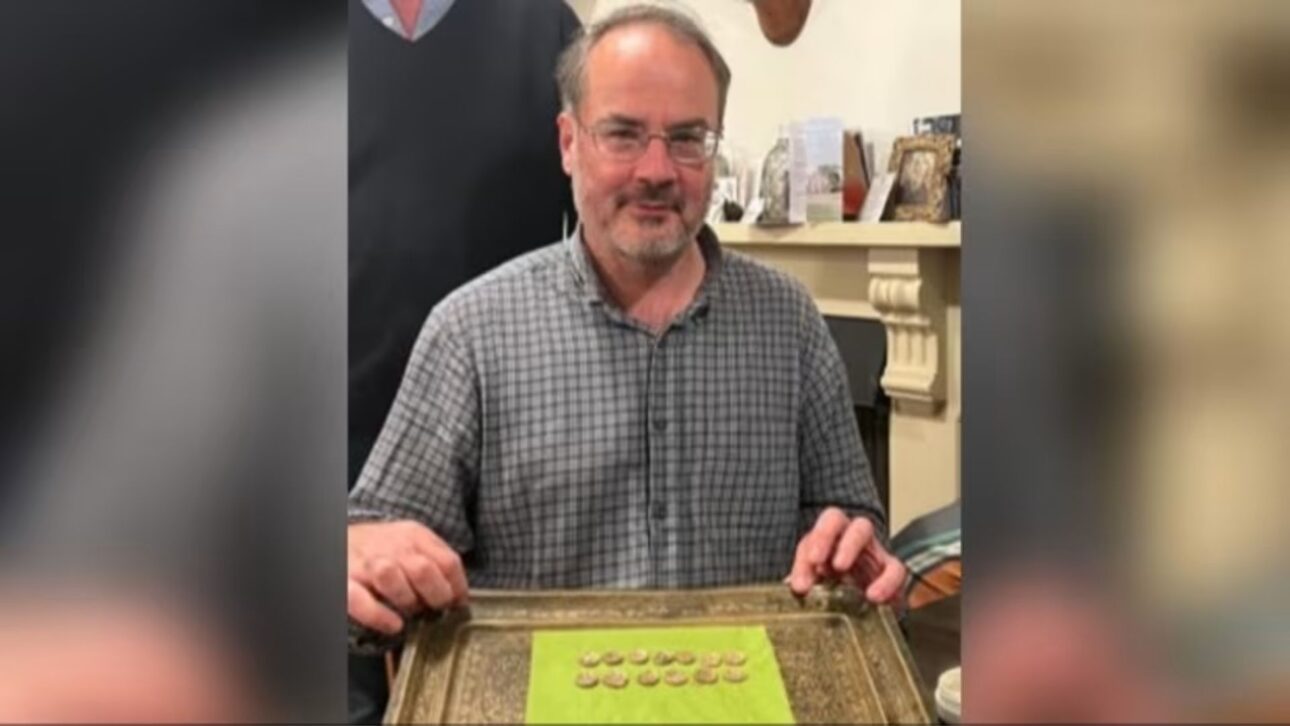
The treasure emerged gradually. The first time, the professor unearthed 17 coins: 16 whole gold staters and a quarter stater, as the coins of the time are called.
Later, he returned to the same field and found one more, completing the set with 18 gold coins.
The staters were not exchanged in daily life. These high-value gold coins were more for important payments, gifts among leaders, and demonstrations of power than for routine purchases.
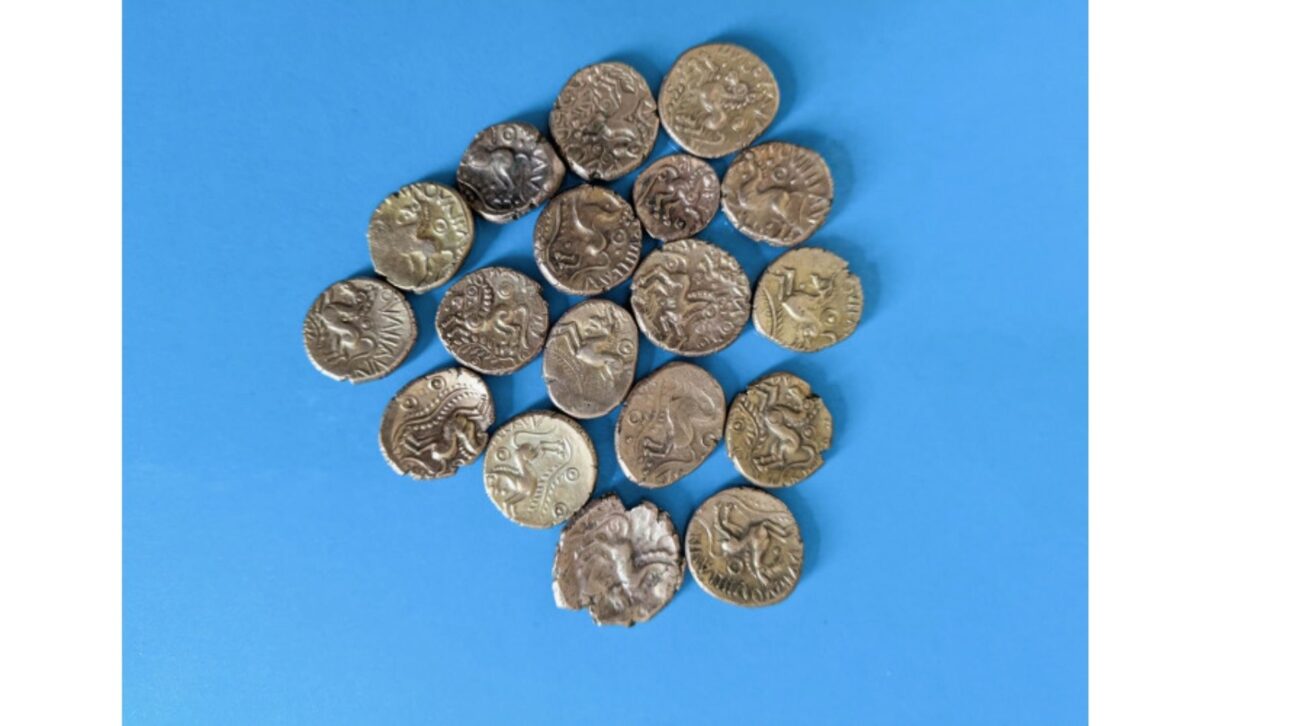
Finding so many together suggests that a small fortune from the Iron Age may have been hidden there.
Gathering 18 pieces like this is what makes the case exceptional. Isolated finds of an ancient gold coin are not so rare in England, but a large and cohesive group, like the Bury St Edmunds treasure, is an event to go down in the books. That’s why Licence’s metal detector made the news.
Who minted the coins: the Trinovantes
Credit: PA
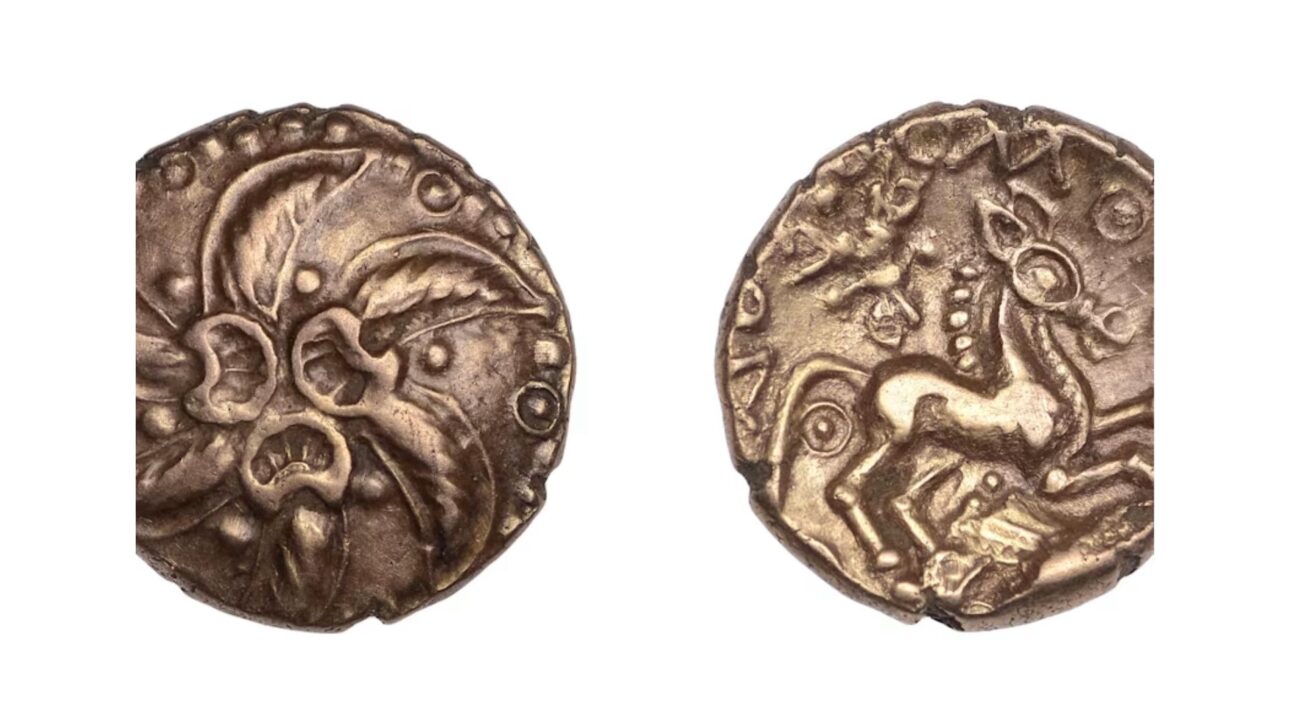
Behind the gold lies a forgotten kingdom. The coins were attributed to the Trinovantes, one of the Iron Age peoples who lived in eastern England before the Roman conquest.
Some pieces bear inscriptions related to the kings Addedomaros and Dubnovellaunos, who ruled the tribe between 25 BC and 10 AD.
These names help date the treasure. Since Dubnovellaunos reigned precisely in this interval, the gold coins allow us to place the collection at a specific moment in British history, on the eve of Rome’s definitive arrival. It’s history that is read not in books, but in the metal itself.
Hence the archaeological importance of the find. Being the largest known collection of gold coins from that period makes the Bury St Edmunds treasure a precious source for understanding the economy and power in the Iron Age.
Each statere is a clue about how these people lived and traded.
The £33,200 Auction
The transition from the field to the market was swift. The gold coins were taken to Noonans auction house in Mayfair, London, and sold in March 2026.
The estimate before the auction was £25,000, but the result exceeded expectations: the total fetched reached £33,200, more than 200,000 reais.
Not everything ended up in the hands of strangers. Professor Licence and the landowner where the treasure appeared chose to keep one coin each as a memento of the find.
The remaining 16 were offered individually at the auction, and each found a new owner among collectors.
The division follows the British custom for this type of discovery. When a detectorist finds a treasure on someone else’s land, the value obtained at auction is usually shared between the finder and the landowner.
This agreement is what turned Licence’s luck into a gain for both parties.
Sell or Keep in a Museum: The Old Debate
Finds like this always reignite a discussion. Some argue that historical treasures should go straight to museums, rather than being dispersed among private collectors at auction.
The case of the Suffolk gold coins did not escape this debate, common whenever an Iron Age rarity hits the market.
The professor himself defended the collectors. Licence stated that it was an honor to see specialists taking the coins into their care and reminded that much of the research on ancient coins is done precisely by the collector community.
For him, the auction is not the opposite of science, but an ally of it.
This is a point that divides experts to this day. On one side, the public access guaranteed by a museum; on the other, the role of collectors who study, preserve, and sometimes publish about their pieces.
The Bury St Edmunds treasure entered this age-old conversation about the fate of heritage.
Why England is Full of Buried Treasures
The case reinforces a well-deserved reputation. England is one of the places where the most treasures are unearthed with metal detectors, a result of millennia of occupation that left coins, jewelry, and objects buried under fields now used for grazing and planting. The east of the country, in particular, is rich in Iron Age gold.
Local rules help bring this to the surface. The United Kingdom has a system that organizes the registration of valuable finds and provides for the division of profits between the finder and the landowner, which encourages detectorists to declare what they find instead of hiding it.
The result is a constant flow of discoveries.
In Brazil, the scenario would be different. Here, pieces of archaeological value are protected heritage and cannot be freely sold, so a story like Licence’s gold coins would hardly end in an auction.
Even so, the desire to go out with a metal detector in search of treasure is the same anywhere in the world.
And you, have you ever imagined finding a treasure like this?
Tom Licence’s story shows how a stroll with his niece can make headlines: 18 Iron Age gold coins found with a metal detector in a field in Suffolk, England, and sold at auction for 33,200 pounds, above the estimate. All of this minted by the Trinovantes people about 2,000 years ago.
And you, would you have the patience to scour a field with a metal detector in the hope of finding gold coins from centuries ago? Tell us here in the comments if you think such a treasure should go to a museum or if it’s okay to auction it to collectors.


