





 Portuguese
  English
  Spanish
  4 min of reading
  0 comments


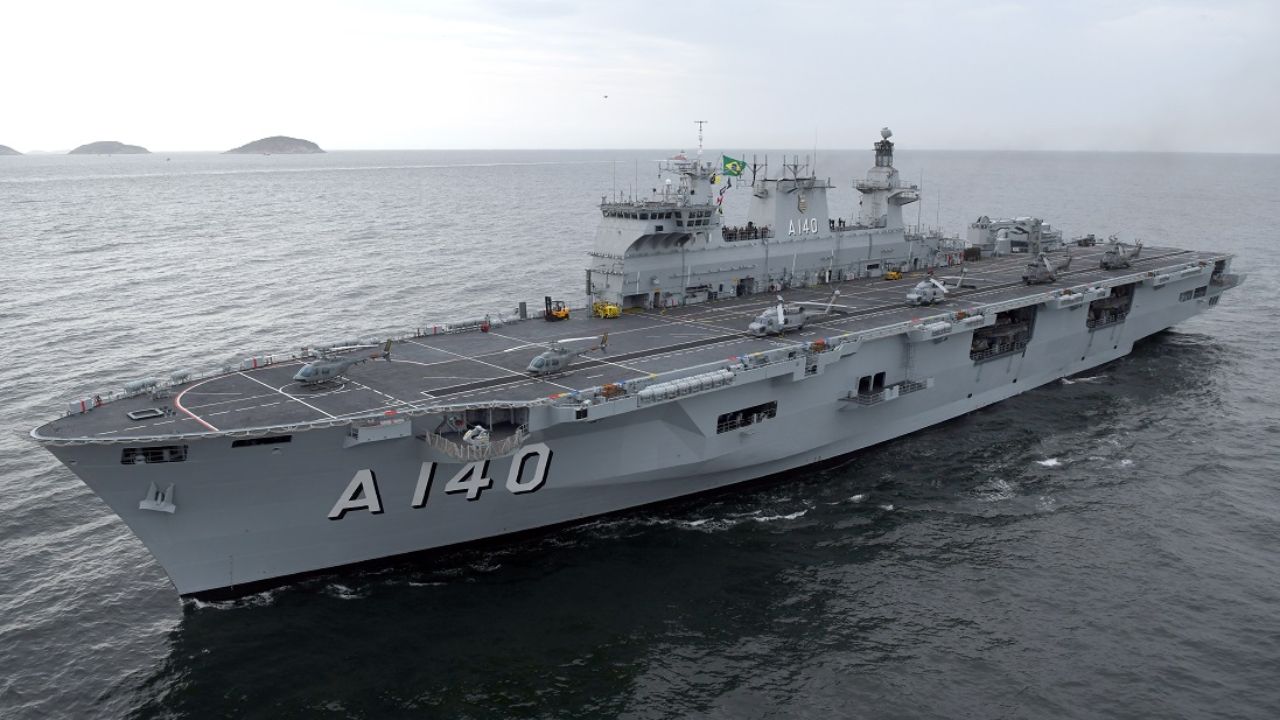
With 203 meters in length, a capacity for up to 1,200 crew members, and a structure for war, rescue, and peace missions, the NAM Atlântico is the largest ship in the Brazilian Navy — and houses everything from a hangar for helicopters to a full surgical center, all operating 24 hours a day.
If you thought a military ship was just tanks and soldiers marching, get ready to rethink everything. The NAM Atlântico, current flagship of the Brazilian Fleet, is simply the largest ship in the Brazilian Navy, and it impresses not only in size. This floating colossus is like a mobile “headquarters” capable of operating helicopters, carrying out humanitarian missions, rescuing disaster victims, and even performing emergency surgery in the middle of the ocean.
Built in the 1990s, the ship was originally named HMS Ocean by the Royal Navy of Great Britain. It only arrived here in 2018, after a major refurbishment, and since then has been operating at full capacity, or as Commander Mozart likes to say, with “continuous and aggressive attack”.
A Multi-Purpose Fortress Ready for Anything
The NAM Atlântico is not just a ship. It is a logistical monster. Designed for maritime control and power projection, it also plays a crucial role in peacekeeping and humanitarian operations, such as those that have already taken place in the Caribbean, Kosovo, Libya, and even Sierra Leone, when it still operated under the British flag.
-
China begins construction of the world’s largest LNG ship, a 344-meter giant capable of supplying 4.7 million homes for a month, carrying 271,000 m³ of gas, and placing QatarEnergy in the largest naval order ever recorded in world history.

-
China is designing a container ship with a thorium nuclear reactor that will operate for 40 years without refueling, and the 25,000-container giant from Jiangnan Shipyard will cross oceans without emitting carbon in an industry that burns 300 million tons of fuel per year.

-
An entire boat came out of the 3D printer without a mold and without seams: CEAD’s giant robot creates hulls up to 12 meters in a single piece, replacing months of shipyard work with code and putting shipbuilding on the brink of a turning point that seems like science fiction.
-
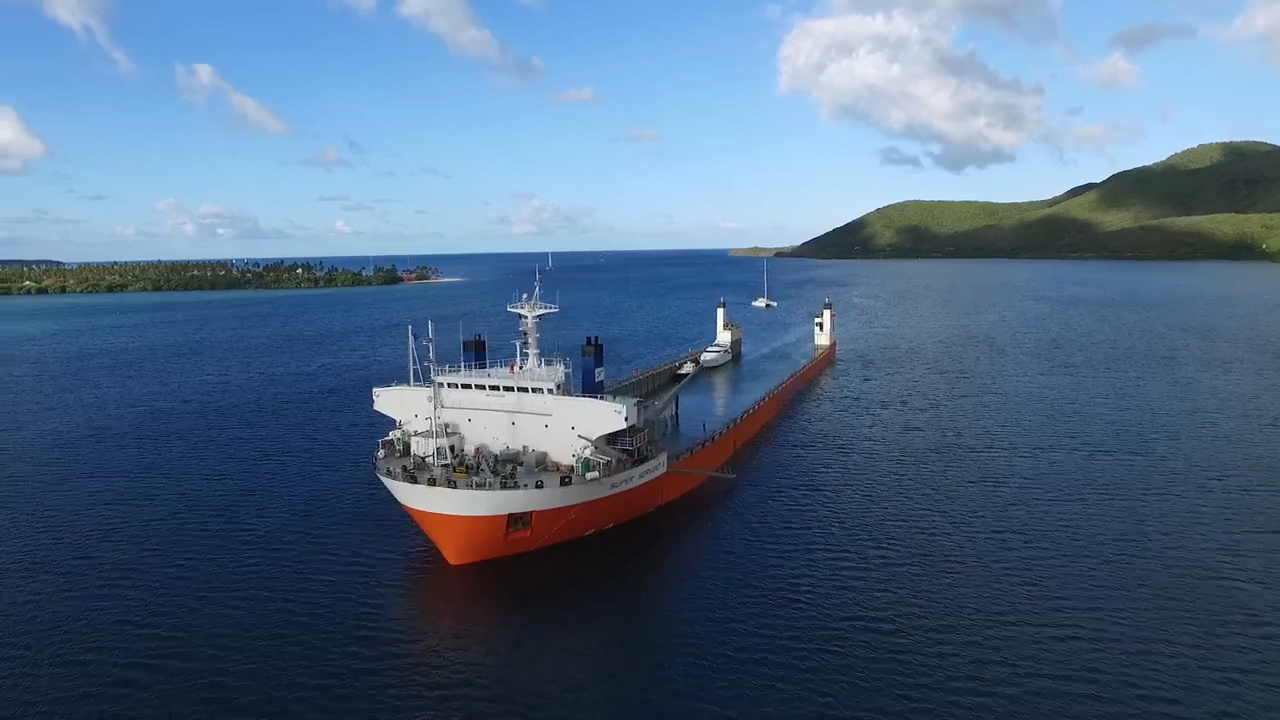
The “dock ship” that deliberately sinks to swallow superyachts like toys: Yacht Servant is 214 meters long, 46 meters wide, has a 6,380 m² deck, and uses float-on/float-off operation to transform maritime luxury into a semi-submersible parking lot.



During daily operations, up to seven helicopters can be on the flight deck. They don’t stay up there all the time: they have specific times to take off, and when they are not flying, they are stored in an underground hangar. And it’s not just any hangar; it works with elevators that lower the aircraft to the lower level, all in a pushback process, quite similar to an airport.
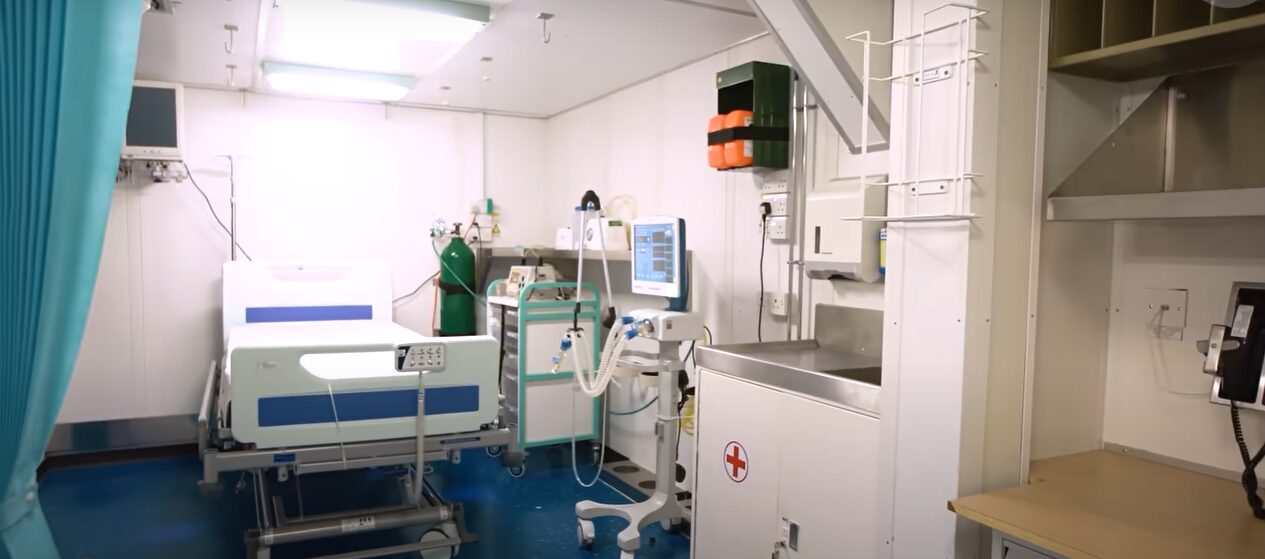
But one of the most interesting parts is the medical center. Equipped with an operating room, ICU, X-ray, and laboratory, the complex can operate as a field hospital or evacuate patients directly by helicopter. In other words: the ship is practically a floating hospital.
What It’s Like to Live On Board for Several Days


Staying aboard the NAM Atlântico for days at sea is an experience that few people have. But the good news is that Canal Aero documented everything in detail. From the corridors to the industrial kitchen, they showed what goes on behind the operations.
To feed about 1,200 people, the kitchen structure looks more like a factory. There are more than 5,000 meals prepared per day, including pizza made to perfection and pasta produced right on the ship. There are over 60 people just in the food service team.
The cabins vary according to the function: there are single dormitories for officers, shared dormitories with a shared bathroom, and even internal lines for communication between cabins. In the corridors, there’s no fancy covering: everything is exposed to facilitate maintenance and avoid greater risks in case of fire. After all, we are talking about a warship, right?
Missions, Technology, and the Future of NAM Atlântico
Even with over 25 years of use, the ship still has a lot to give, and plenty of it. The company Babcock, which took care of maintenance when it was British, is still involved in updating the system. And don’t think that the NAM Atlântico is stuck in the past: there are plans for it to also operate with drones (SARPs) in the future.
With over 21,000 tons, the NAM Atlântico represents a significant strategic advantage for Brazil. It can bring the entire structure of a military base wherever it is needed, with flexibility and permanence, whether to defend the coast, provide assistance, or support large joint operations.
Can You Visit NAM Atlântico? Yes, and You’ll Want To After Reading This
Thinking all of this is amazing? Well, you can indeed visit the NAM Atlântico! At certain stops in Brazilian ports, it is open to public visitation. It’s a rare chance to see up close this gigantic structure that looks more like a cross between an airport, hospital, barracks, and floating hotel.
As shown by Canal Aero in its video series, every corridor, every room, and every deck has a specific function, and seeing this live is a unique experience. The ship, which is docked in Guanabara Bay, Rio de Janeiro, occasionally makes stops in other states.






Be the first to react!