Portuguese
  Spanish


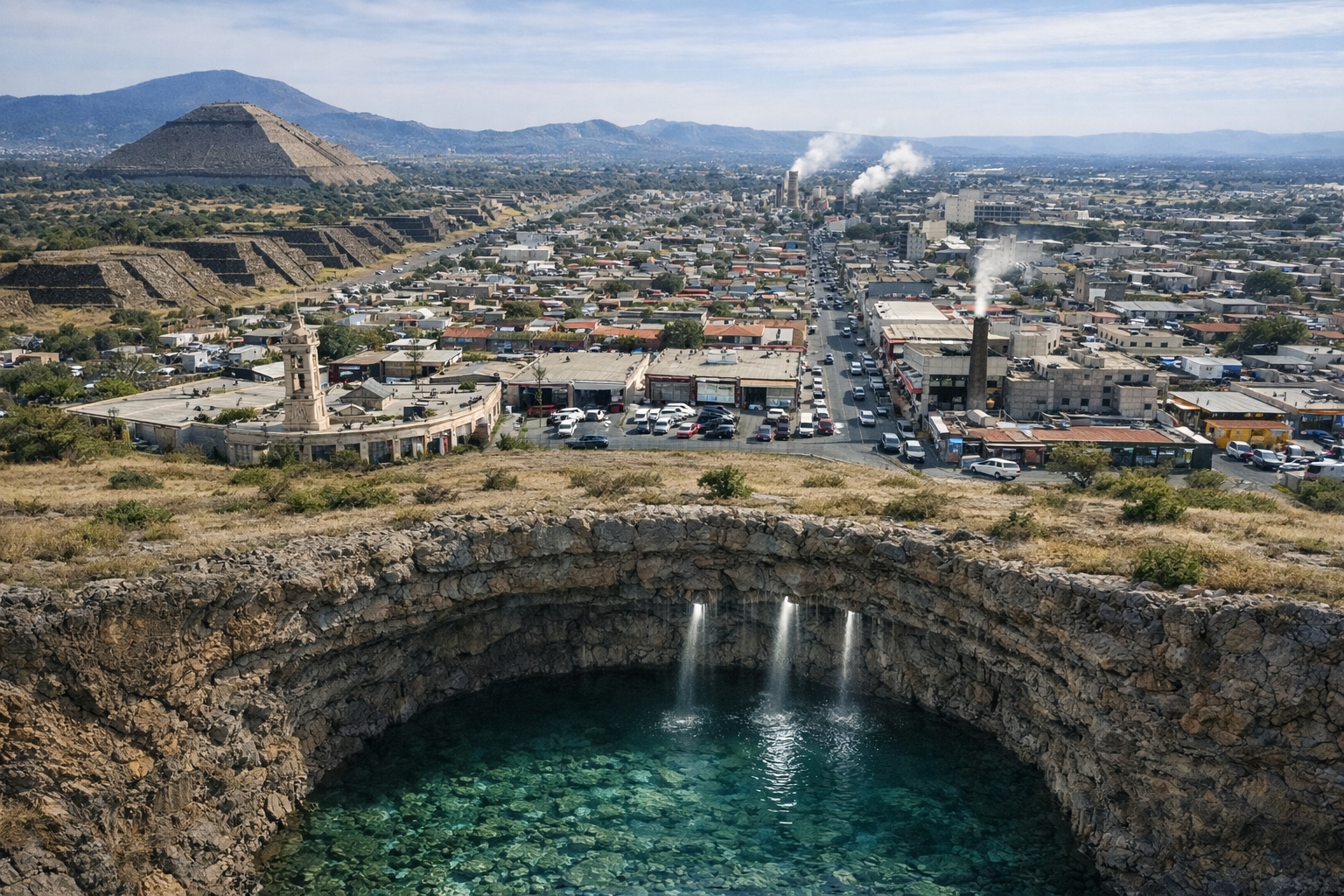


One Of The New Seven Wonders Of The World: Chichén Itzá, The City That Served As An Industrial And Religious Hub Of Mesoamerica, Used Groundwater As A Strategic Advantage And Left An Uncomfortable Clue About Power, War And Social Technology
Water Rules. In Chichén Itzá – one of the new seven wonders of the world, it not only sustained a city, it defined who ruled and for how long. In southern Mexico, on the Yucatán Peninsula, the Maya built a place that evolved from mere settlement to a significant political, economic, and religious center.
The silent engine behind it all was the Sacred Cenote, a large water sinkhole that gave the site a rare advantage in a territory marked by supply challenges.
And it was at this very point, where survival turned into power, that intense religious practices flourished, including offerings of precious objects and human sacrifices in search of rain and good harvests.
-
Mother Who Called Herself a ‘Pinterest Failure’ Learned Wood Furniture Restoration from Videos, Now Earns Around $15,900 Monthly

-
Denmark Constructs World’s Largest Immersed Tunnel to Connect with Germany, Sinking 217-Meter Concrete Sections in the Baltic Sea
-
Low-Cost Concrete Panel House Goes Viral: Investor Reveals Prefabricated Kit Structure for Around $1,500, Assembled in 30 Days, with Plans for Rental and Resale Income

-
Polymeric Mortar Revolutionizes Brazilian Construction with Efficient, Clean Application and Uniform Finish




The Real Challenge In The Yucatán Was Not Just Building Temples, It Was Mastering Water Where It Determines Who Lives, Who Negotiates And Who Obeys
Chichén Itzá likely emerged between the 5th and 7th centuries of the Christian Era. The name, “mouth of the well of the Itzá,” already reveals the logic of the place.
When water becomes a strategic asset, it also becomes political currency. The Sacred Cenote was not a mere landscape detail; it was natural infrastructure and a point of social control.
Those who moved through the area saw a center that made the region move. The presence of permanent water favored permanence, attracted people, expanded trade, and sustained a system of authority.
But along with utility came symbolic weight. The cenote was treated as a sacred space, and the practices of offering and sacrifice demonstrate how far the city would go to reinforce the idea of order and divine favor.
When Chichén Itzá Goes From Local To Regional Hub, Money Enters, War Enters, And The City Begins To Function As A Cog In A Larger Economy
At the height of the late Classic and post-classic periods, Chichén Itzá grew and transformed into a hub that concentrated merchants, priests, and warriors from a vast region.
This changed the game. A place like this does not survive solely on faith; it begins to operate as a meeting point for routes, alliances, and disputes.
The city began to take on a central character. When a territory acknowledges a nucleus, it starts to revolve around it, whether out of convenience or pressure.
And then rivalry emerges that is not visible on tourist signs. A strong center always creates discomfort in other centers. No one loses space in silence, especially when there is religious prestige and economic circulation in the same package.
Starting In The Tenth Century, The Influence Of Tula Emerges And Architecture Becomes A Signature Of Power, Almost Like A Brand Fusion Among Elites
By around the 10th century, Toltec influence was felt in Chichén Itzá. The idea of elites tied to the thought and symbolism of Tula arrives as a shock of style and message.
The result is a fusion that captures the attention even of those indifferent to history. Classic Maya temples begin to coexist with elements of strong Toltec inspiration.
Among the most striking signs are columns shaped like warriors and representations of feathered serpents, associated with Kukulcán and Quetzalcóatl.
This is not just aesthetics. In centers of power, architecture communicates. It shows who is in charge, where the influence comes from, and what type of force is being displayed, whether through religion, war, or politics.
The Decline Between The Thirteenth And Fifteenth Centuries Does Not Erase The Weight Of The Place; It Just Changes The Type Of Control And Keeps The Sacred Cenote As A Point Of Reverence
Chichén Itzá entered a decline between the 13th and 15th centuries. Conflicts between city-states, migrations, and political changes reduced its central role.
The most curious thing is that the site did not vanish from the collective memory. Even losing prominence, the site continues to be revered as a sacred place.
The Sacred Cenote remains a symbolic heart. This reveals an important distinction between political decline and cultural permanence.
A center can lose command and still maintain influence. When a place concentrates myth, water, and memory, it does not become an ordinary ruin; it becomes a reference.
The Rediscovery In The Nineteenth Century Sparks A Race For Interest, Restoration, And Tourism, And The Site Transforms Into A Global Cultural Asset
Only in the 19th century was Chichén Itzá rediscovered by explorers and archaeologists, which sparked international fascination and led to extensive restoration campaigns.
The site gained formal recognition as a UNESCO World Heritage Site and also appeared among the New Seven Wonders Of The World.
From that point on, the city entered another logic, that of a global symbol. What was once a center of regional power became a showcase of ancient engineering, ritual, and historical enigma.
And that explains why the subject always resurfaces. Chichén Itzá is not just the past. It has become a mix of social technology, natural infrastructure, and recorded influence chiseled in stone.
Chichén Itzá attracted attention because it clearly shows, without romanticizing, how water, power, and religion mingled to create a regional center, and how that center fell while remaining respected, keeping the fascination alive to this day.
And for you, what intrigues you the most? The use of water as a strategic advantage, the fusion of styles influenced by Tula, or the ritual aspect that still unsettles many people? Share your thoughts.