





 Portuguese
  English
  Spanish
  3 min of reading
  0 comments


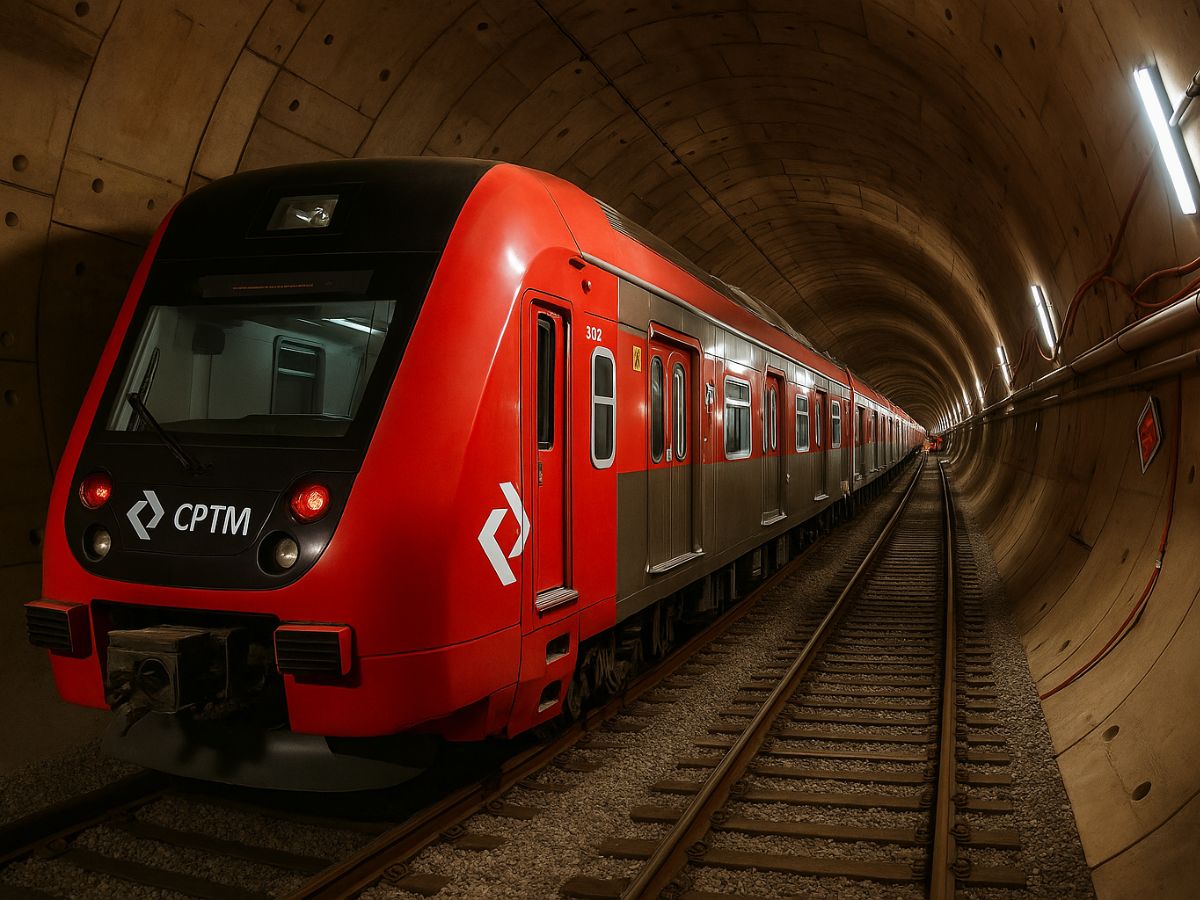
With Tunnel Digging Completed in 2025, the Project Enters the Final Phase of Finishing and System Installation, Promising to Transform Mobility in the Largest City in Brazil with Partial Operation Starting in 2026
The Line 6-Orange of the Metro emerges as a vital infrastructure project for São Paulo. This undertaking, one of the most important of the current expansion of the São Paulo metro, will not only create a new high-capacity transport artery but also establish new engineering records, positioning itself as the deepest metro line in Latin America.
Understand the advancements in the work in 2025, the technology used, the challenges overcome, and the impact this new line will have on the lives of millions of Paulistanos.
What Is Line 6-Orange, the Universities Line?
Line 6-Orange is a crucial project in the expansion of the São Paulo metro. With a length of 15 kilometers and 15 entirely underground stations, it will connect the Brazilândia region in the North Zone to the São Joaquim Station in the city center, on a route that currently can take hours.
-
Mathematician who claims to have predicted the last three champions points out the winner of the 2026 World Cup, and the name that came out of the model surprised many people.

-
Archaeologists opened intact Roman tombs in the heart of Rome with food offerings and objects kept for 2,000 years.

-
Supermarket in Bahia faces administrative proceedings after grinding meat at night to sell the next day, raising an alert about the “Ground Meat Law”

-
Between 1 and 2 million people live in vehicles in the United States according to estimates, and a Brazilian spent a day testing how they bathe, eat, and sleep given the high cost of rent.


Nicknamed “Universities Line”, it will pass by several educational institutions, such as PUC-SP, FAAP, and Mackenzie. The projected demand is 600,000 passengers per day. The line will be operated by LinhaUni and will have 22 modern trains from Alstom, equipped with driverless train control technology (CBTC).
The Advancement of Works in 2025 Regarding the Expansion of the São Paulo Metro
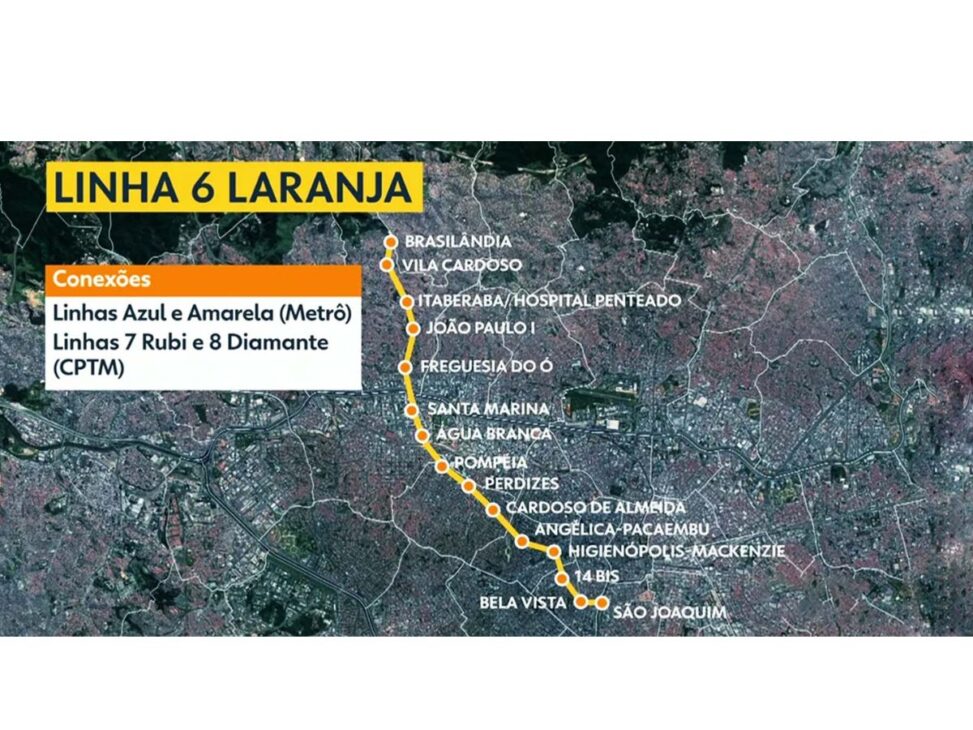
The year 2025 marked a fundamental transition in the project. In February 2025, the excavation of all tunnels was completed, a milestone that concluded the most complex phase of underground civil engineering. The project as a whole had already surpassed 55% overall completion in September 2024.
The focus now shifts to the installation of tracks, power systems, signaling, and communication, as well as finishing the stations. Some stations, like Perdizes, have already reached an impressive advancement of 82.4% in June 2025.
The Technology Behind the Drilling of the Expansion of the São Paulo Metro
Tunnel excavation was carried out by two gigantic tunnel boring machines (TBMs), known as “tatuzões”. The boring machine Maria Leopoldina (South Tatuzão) and its counterpart, the North Tatuzão, were the stars of this phase.
Each machine weighs 2,000 tons, is 109 meters long, and has a digging diameter of 10.6 meters.
These TBMs are true self-sufficient underground factories, equipped with a cafeteria, infirmary, and conveyor belts.
The project utilized BIM (Building Information Modeling) methodology and a Tunnel Boring Machine Control Center (CCT) to optimize operations, allowing for millimeter-accurate drilling.
The Deepest Metro Line in Latin America
Line 6-Orange will establish itself as the deepest in Latin America. The Itaberaba–Hospital Vila Penteado Station will reach 65.71 meters deep, nearly double the current Brazilian record holder. The Higienópolis–Mackenzie Station will reach 64.86 meters.
The need to reach such depths is imposed by São Paulo’s complex geology and the requirement to pass beneath the Tietê River and cross other metro lines.
Overcoming these obstacles required the use of state-of-the-art tunnel boring machines and specialized construction methods, making this project a new paradigm for underground engineering in Brazil.
Challenges, Overcomes, and the Final Schedule for the Expansion of the São Paulo Metro


Like any megaproject, the expansion of the São Paulo metro with Line 6-Orange faced challenges. Issues of expropriation and unexpected incidents, such as the breaking of a sewage pipeline in 2022, led to adjustments in the schedule.
The updated official forecast is for partial operation to begin in October 2026, with full operation of the line to the São Joaquim Station by 2027.
With the excavation phase completed, the project is now accelerating towards operational readiness, promising a modern and efficient mobility legacy for the largest city in Brazil.





Be the first to react!