Portuguese
  Spanish


The account of a Brazilian content creator Eduardo Fernando (@edukof) shows the day-to-day life of those who live in their own car in the United States, from gyms used as bathrooms to parking lots where sleeping has become a problem. The exact number is uncertain, and the author himself concludes that the routine is hard.
It is estimated that between 1 and 2 million people live inside vehicles in the United States, a contingent that is growing due to the increasingly high cost of rent. To show what this routine is like, a Brazilian content creator spent an entire day testing the solutions these people adopt to bathe, eat, and sleep without having a home. The author of the account notes that there is no exact number, and the range of 1 to 2 million is just an estimate.
According to the account, those living in this situation are divided between people in financial difficulty and others who choose to save money, refusing to pay what they consider expensive rents. In addition to regular cars, many live in motor homes, and the author states that it is increasingly common to find people sleeping inside vehicles or planning to do so. The experience was conducted by the Brazilian Eduardo Fernando, who in the end draws his own conclusions about what it means to live this way.
Bathing as the first challenge of the day
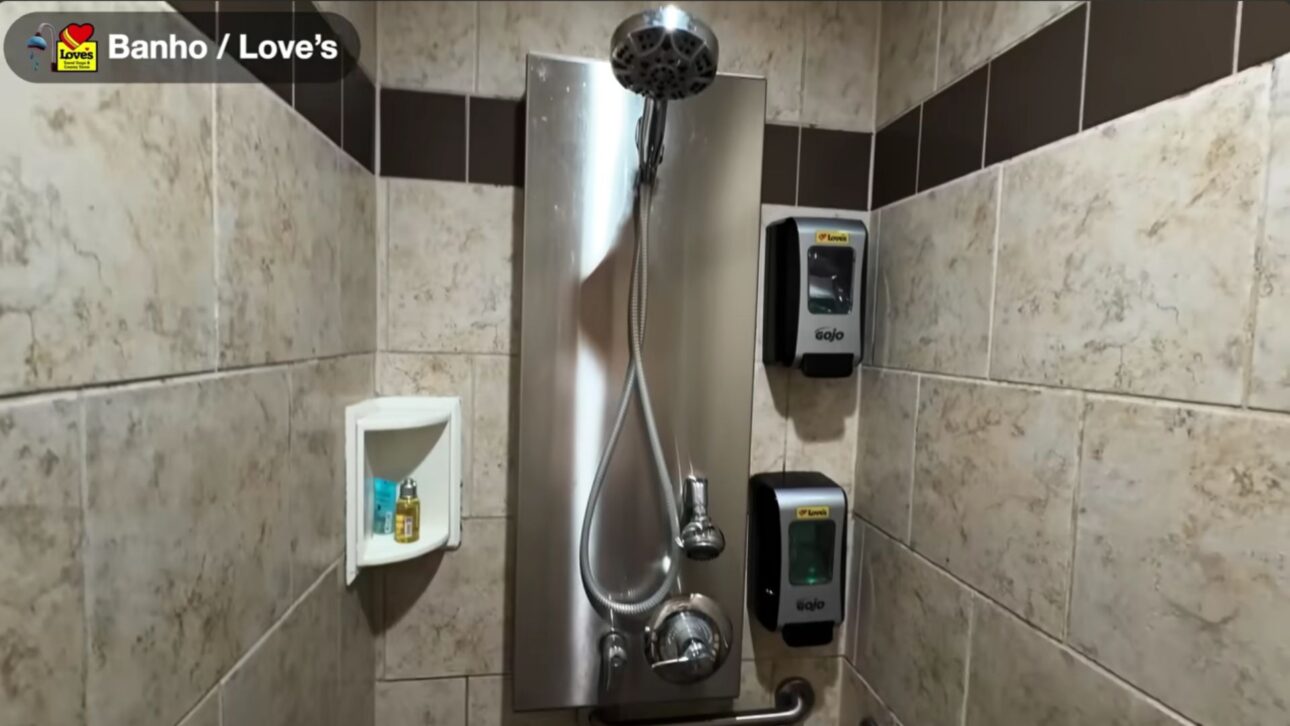
According to the account, many things have substitutes in life without a home, as it is possible to cook on the street or buy ready-made food, but bathing inside a vehicle is not feasible.
-
At 54, Brazilian Artisan Turns Textile Waste into a Successful Handbag Brand, Earning Over $6,000 Monthly

-
Brazilian Entrepreneur Sells $50,000 Monthly in Sustainable Luggage Made from Recycled Bottles, Eyes International Market
-
Chinese Man Transforms Home into 10-Story Pyramid Over 8 Years, Defying Authorities Before Demolition

-
Faced with College Costs, Brazilian Student Lived in a Minivan for Nearly Two Years to Graduate Debt-Free

Therefore, people resort to specific places that offer showers, such as certain gas stations that also serve as truck stops.
At these stations, it is possible to rent a bathroom with a shower for a period, paying a fee and receiving an access code.
The author describes a private and spacious bathroom, with a shower, soap, shampoo, sink, and towels provided.
The service, however, has a high cost for a single shower, which he compares to a luxury bath.
Regarding sleeping in these places, he notes that there are signs limiting the length of stay and requiring the person to be a customer, under the risk of the vehicle being towed.
Eating Cheap Without a Kitchen
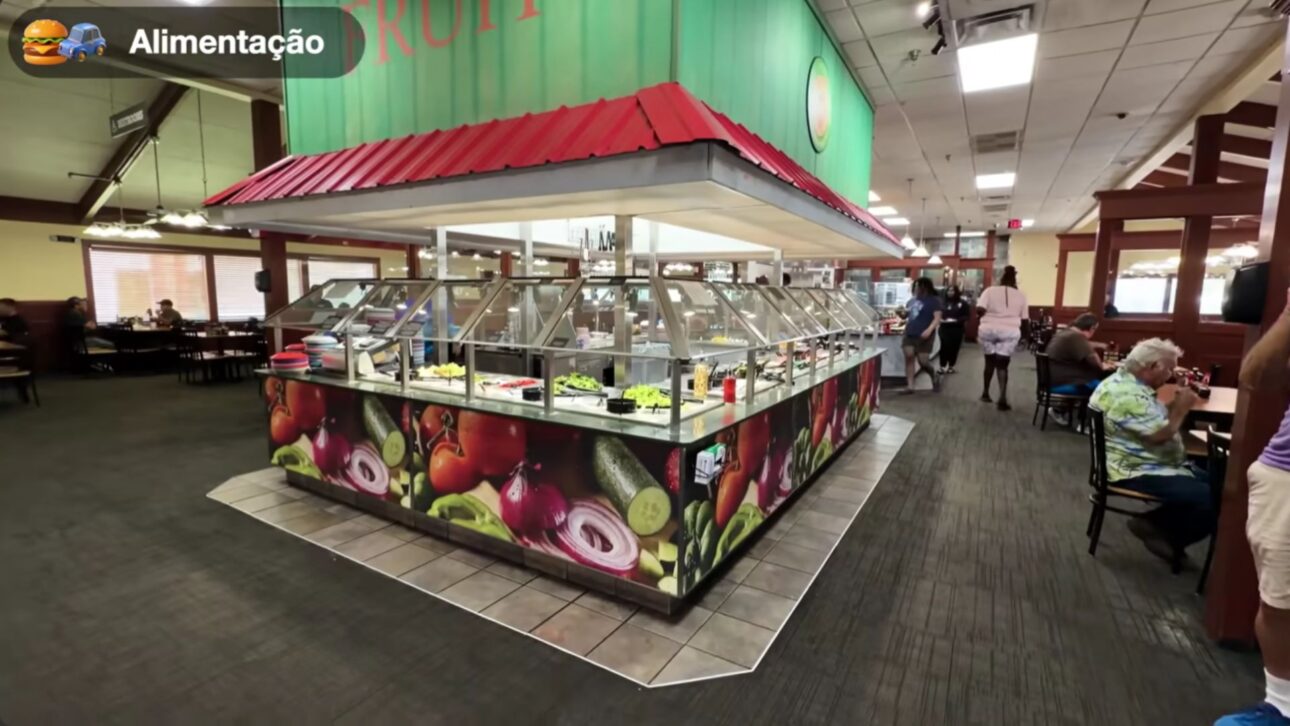
According to the account, the first option that comes to mind is usually fast food, which indeed allows for savings, but the author considers it unhealthy and tiresome when consumed for several consecutive days.
The search, then, is for more varied yet still cheap alternatives.
One of the options mentioned is all-you-can-eat buffet restaurants, where you pay a fixed price and eat as much as you like.
The author mentions a well-known chain in the United States where the buffet would cost, in the reported case, around a few dollars, including salads, hot dishes, and meat prepared on the spot.
He notes, however, that in some of these restaurants there is an additional fee to use the tables, which leads some customers to take the food outside.
The Problem of Where to Sleep
Housing is the most sensitive point of the account, starting with the calculation that leads people to this choice.
According to the author, renting a simple studio in Orlando would be in the range of over a thousand dollars per month, and even sharing a room with others, a common practice among younger people, would have a significant minimum cost.
Given this, living in the car becomes, for many, the feasible financial solution.
The next challenge is finding where to park for the night without being expelled.
According to the account, large parking lots in Florida do not allow people to sleep on the premises, and some tolerate only one or two nights before asking the person to leave.
The author recalls that a large retail chain was once known for allowing overnight stays but changed its policy starting in 2020, due to the increase in people living in cars, now maintaining security patrolling the parking lots.
Campgrounds, gyms, and the solutions of those who live like this


Among the more structured alternatives are motor home campgrounds, which offer more comfort but at a high cost.
According to the account, in these places it is possible to connect water, have sewage, and even rent cabins with bathrooms, in addition to using facilities like a pool and laundry.
The problem, the author points out, is the cost of daily rates, which when added up would be close to a rent, deterring those who live in their car precisely to save money.
The most used solution for bathing, according to the account, is chain gyms with showers.
The author highlights a popular chain for being cheap and present throughout the country, so that the plan contracted in one state is valid in the others.
Thus, those who live in their car always have a place to shower, with the advantage that the monthly fee is much lower than what is charged for a single shower at gas stations, in addition to allowing the use of exercise facilities.
The honest conclusion about a difficult routine
At the end of the experience, the author avoids romanticizing life in a car and acknowledges the harshness of this reality.
According to the account, even though there are people who choose this routine to save or gather money, those who truly live like this are usually those who have nowhere to sleep.
He describes the difficulty of not having a private kitchen or bathroom and recalls that simple needs become complicated when many public bathrooms require a password.
The account also shows the practical side of those who improvise a room on wheels, while acknowledging the limits of this.
The author tests an inflatable mattress specifically for the trunk of an electric car, bought at a low cost, and evaluates the space and comfort for sleeping.
Even so, he makes it clear that this is a delicate circumstance, and that most people who reach this situation have already tried other options before.
His experience lasts only one day, quite different from the routine of those who have no alternative.
The account of people living inside vehicles in the United States exposes, behind the curiosity, a portrait of the burden of housing costs.
From gyms used as bathrooms to parking lots where sleeping has become a reason for expulsion, daily life shows how much the lack of a home transforms simple tasks into challenges.
More than an adventure, the experience serves as a reminder that, for many people, living in a car is not a choice, but the only available option.
And you, what do you think about the increasing number of people living in vehicles due to housing costs? Comment if you were already aware of this reality in the United States, if you believe something similar could grow in Brazil, and how society could support those going through this situation. The conversation is open to debate, with respect for different opinions and the dignity of those living this routine.