Portuguese
  Spanish


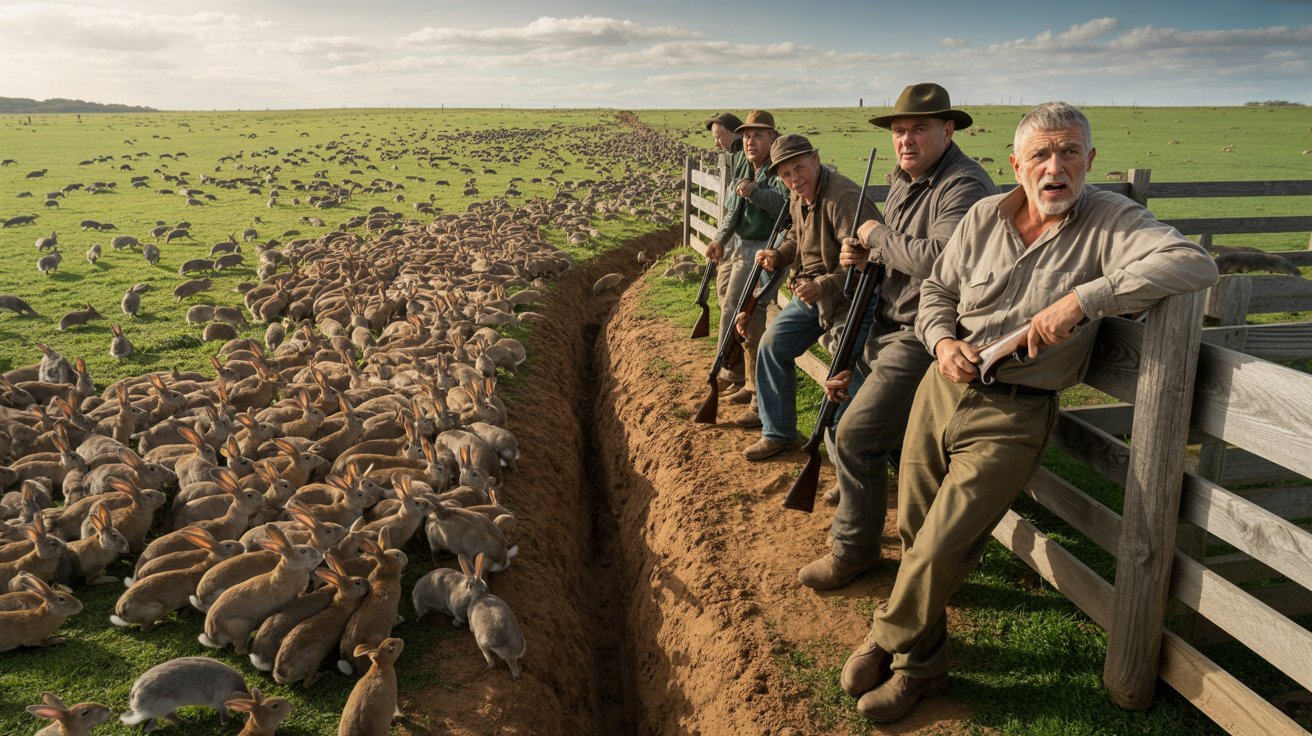


More Than 200 Million Wild Rabbits Are Devastating Farm Properties in Australia, Forcing Farmers to Adopt Desperate Tactics to Protect Their Crops and Pastures. Meanwhile, in Brazil, Giant Excavations Are Being Used as a Last Defense Against a Different but Equally Destructive Pest: the Wild Boar.
The rabbits were brought to Australia in the 19th century as game animals, but with no natural predators and favorable conditions, they quickly became one of the worst agricultural pests on the planet. It is estimated that today there are over 200 million wild rabbits, with direct impacts on the rural economy, native ecosystems, and soil structure.
The devastation caused includes the destruction of entire crops, erosion of pasture areas, damage to building foundations, and the extinction of dozens of endemic species. The pest directly affects farmers who, under Australian law, are responsible for local animal control, often without adequate resources or technology.
Faced with containment difficulties, the Australian government has already attempted physical methods, such as building 3,200 km of fences, and biological warfare strategies using viruses like myxomatosis and calicivirus. Nevertheless, the rabbits have shown resistance and adapted quickly, remaining present throughout almost the entire continental territory.
-
Brazilian Farmers with Basic Education Create Backyard Machines That Win National Invention Contest, Beating 242 Projects

-
Brazilian Farm Innovates with Cage-Free Chickens, Producing 3,300 Odorless Eggs Daily

-
From Selling Unsold Saplings to Creating Brazil’s Most Awarded Olive Oil Brand with 330 Accolades and a $12 Million Goal by 2026
-
China Builds 400-Hectare Irrigation System in Tanzania to Aid 1,000 Families Dependent on Rainfall


Biological Control Failed and Drones Monitor Rural Areas
In recent years, the country has invested in modern technologies, such as using drones to map infested areas and new genetic research to improve biological control. A national coordinator has been appointed to centralize public policies, but even so, the situation remains critical.
Recent reports from farmers in regions like Mornington show that the infestation remains active. In some cases, entire properties have been destroyed by rabbits, which consume roots, fruits, flowers, invade gardens, and knock down fences. The rapid reproduction of the species — with females producing up to 40 offspring per year — makes any control a continuous challenge.
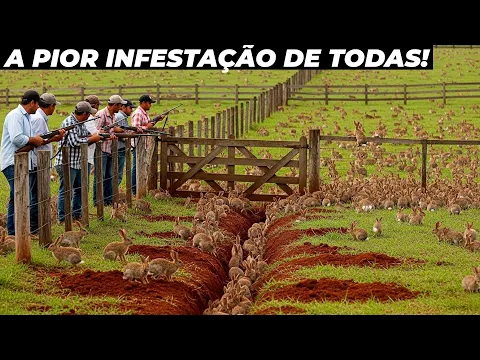

The most emblematic case dates back to 1859, when farmer Thomas Austin released 24 rabbits on his farm in Victoria. From this small group, the current invasive population originated, whose occupancy area is now 13 times larger than that of its original species in Europe.
In Brazil, the Threat Is the Hybrid Wild Boar and Its Control Requires Drastic Measures
Meanwhile, in Brazil, farmers face an equally concerning invasion: the wild boar. Also introduced for hunting and breeding purposes, the animal escaped, interbred with domestic pigs, and gave rise to the “javaporco,” an aggressive, highly fertile hybrid with great destructive potential.
Unlike the Australian rabbits, the wild boar poses a physical risk to the population, having already been responsible for attacks on people and domestic animals. Its control is even more challenging. In some regions of southern Brazil, farmers have resorted to digging deep trenches around crops and pastures to try to contain the animals, in addition to the authorized use of traps and controlled culling.
Situation Remains Out of Control Even After Centuries of Attempts
Despite decades of efforts, the infestation of rabbits in Australia remains one of the greatest examples of environmental disaster caused by the introduction of exotic species. The impacts go beyond the agricultural sector, seriously affecting native fauna and accelerating desertification processes in various areas of the country.
The information was disclosed by the channel Fatos Rurais, which highlighted the history of the pest and the accumulated damages over generations. Cases like this serve as a warning for responsible wildlife management and show how seemingly small human decisions can have permanent consequences for the environment.
And you, do you think Brazil is prepared to deal with rural pests like wild boars, or are we at risk of repeating the disaster of rabbits in Australia?