Portuguese
  Spanish


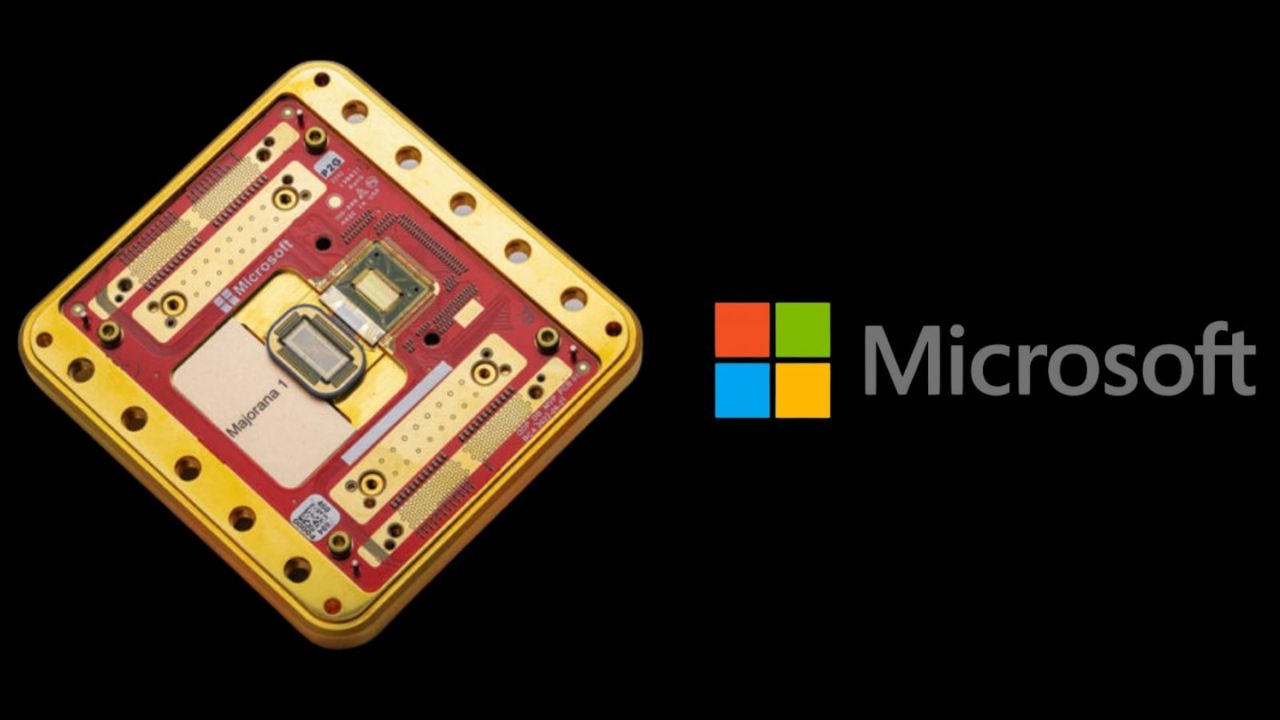


Microsoft Has Just Taken An Important Step In The Race For Quantum Computing. After 17 Years Of Research, The Company Revealed Advances In An Innovative Project That Uses Majorana Particles To Create A More Stable And Powerful Quantum Computer. This Approach Promises To Revolutionize Technology By Solving Challenges Previously Considered Impossible.
In 1937, Italian physicist Ettore Majorana theorized about a particle that had an incredible property: it was, at the same time, its own antiparticle. This means that, when interacting with its opposite copy, it does not annihilate, making it incredibly stable for technological applications. This characteristic makes Majorana particles one of the most promising materials for a quantum computer, as they offer greater security against errors and noise, one of the greatest challenges of this technology.
The Differentiator Of Microsoft’s Approach
Unlike other companies that explore qubits based on electrons or superconducting atoms, Microsoft has taken a more radical approach. The company spent 17 years developing a new material and an innovative architecture to make quantum computing more stable and reliable. According to Zulfi Alam, head of the division, the advances are “incredible and real”, changing the way we see the future of this technology.
The First Quantum Computer With Majorana Particles

The result of these years of research was the Majorana 1, the first quantum processor based on this technology. Instead of using common electrons, Microsoft’s chip uses a new material called “topoconductor”, which combines semiconductors and superconductors to allow control and manipulation of Majorana particles.
-
AI Security System in Brazil Aims to Cut False Alarms by Differentiating Pets from Intruders, Enhancing 24/7 Monitoring for Homes and Businesses

-
Archaeologists Discover 1,500-Year-Old Byzantine Mosaic with Greek Biblical Inscription in Israel, Uncover Ruins of 10 Buildings Near Kiryat Gat
-
Ohio Carpenter Finds 308-Gram Meteorite the Size of a Baseball After Dreaming of Its Location

-
Chinese Student Builds Humanoid Robot for $2,100 at Age 20, Now Leads Robotics Startup in China



This new material, made of indium arsenide and aluminum, allows for the creation of more stable qubits that are resistant to external interferences, solving one of the main challenges of traditional quantum computing.
Currently, the Majorana 1 features eight topological qubits, but Microsoft plans to expand this number to up to one million. This scalability means that, in the future, the processing power of the quantum computer from the company could surpass everything we currently know.
The Benefits Of Microsoft’s Quantum Computer
Advances in quantum computing promise to revolutionize various areas of science. According to Microsoft’s researchers, the Majorana 1 will allow for extremely accurate simulations, especially in chemistry and materials science.
This technology could eliminate the need for practical testing in laboratories, as scientists will be able to predict results with absolute precision, reducing costs and accelerating innovation.
The Impact On Different Sectors
With the ability to solve impossible problems for classical computers, Microsoft’s quantum computing could impact various industries:
- Medicine: Development of new drugs and personalized treatments.
- Materials Science: Creation of stronger and lighter materials for construction and electronics.
- Artificial Intelligence: Advancement in machine learning algorithms and decision-making.