






 Portuguese
  Spanish
  4 min of reading
  0 comments


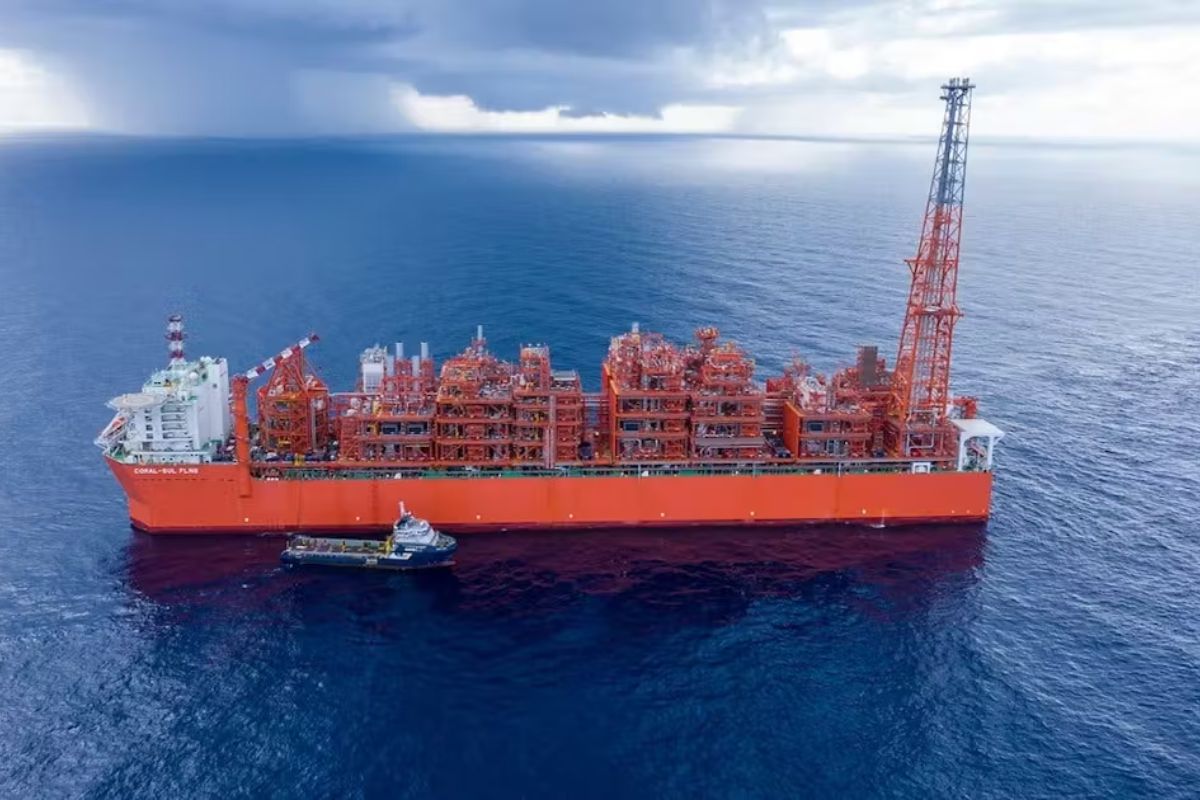
This Giant Floating Plant Cools Natural Gas to -162°C So It Can Be Transported, a Revolutionary Technology Led by Projects Like Shell’s FLNG Prelude Platform.
In the world of energy, one of the most complex and ambitious innovations is the FLNG platform (Floating Liquefied Natural Gas). Designed as a self-sufficient “factory ship,” this gigantic structure performs at sea a process that was previously only possible on land: the liquefaction of natural gas.
The solution created by this technology is to bring the factory to the gas reserves in remote locations, enabling projects that would not have been possible before due to the cost of a pipeline. By bringing the factory to the gas, the FLNG platform promises to revolutionize the transportation of energy. However, pioneering projects, like Shell’s, demonstrate that the journey is marked by monumental technical and financial challenges.
What Is an FLNG Platform and Why Is It Strategic for Stranded Gas?
An FLNG platform is, essentially, a complete natural gas processing plant mounted on the hull of a ship. It integrates all stages of the LNG (Liquefied Natural Gas) value chain in one location: extraction from the seabed, treatment, liquefaction, storage, and finally, transfer to methane carriers.
-
Japan called him a fool for using clover and straw instead of fertilizer, but 40 years later Masanobu Fukuoka’s fields equaled the most productive farms in the country, and his book was translated into more than 25 languages.

-
Bored at home, a 13-year-old teenager discovered tutorials on building studio apartments, raised $1,500, and turned the family’s backyard into a construction site.

-
Few remember, but a woman entered the basement of her own house, dug 9.1 meters underground, installed ventilation, created a mine cart, and became famous on social media before being stopped by authorities.
-
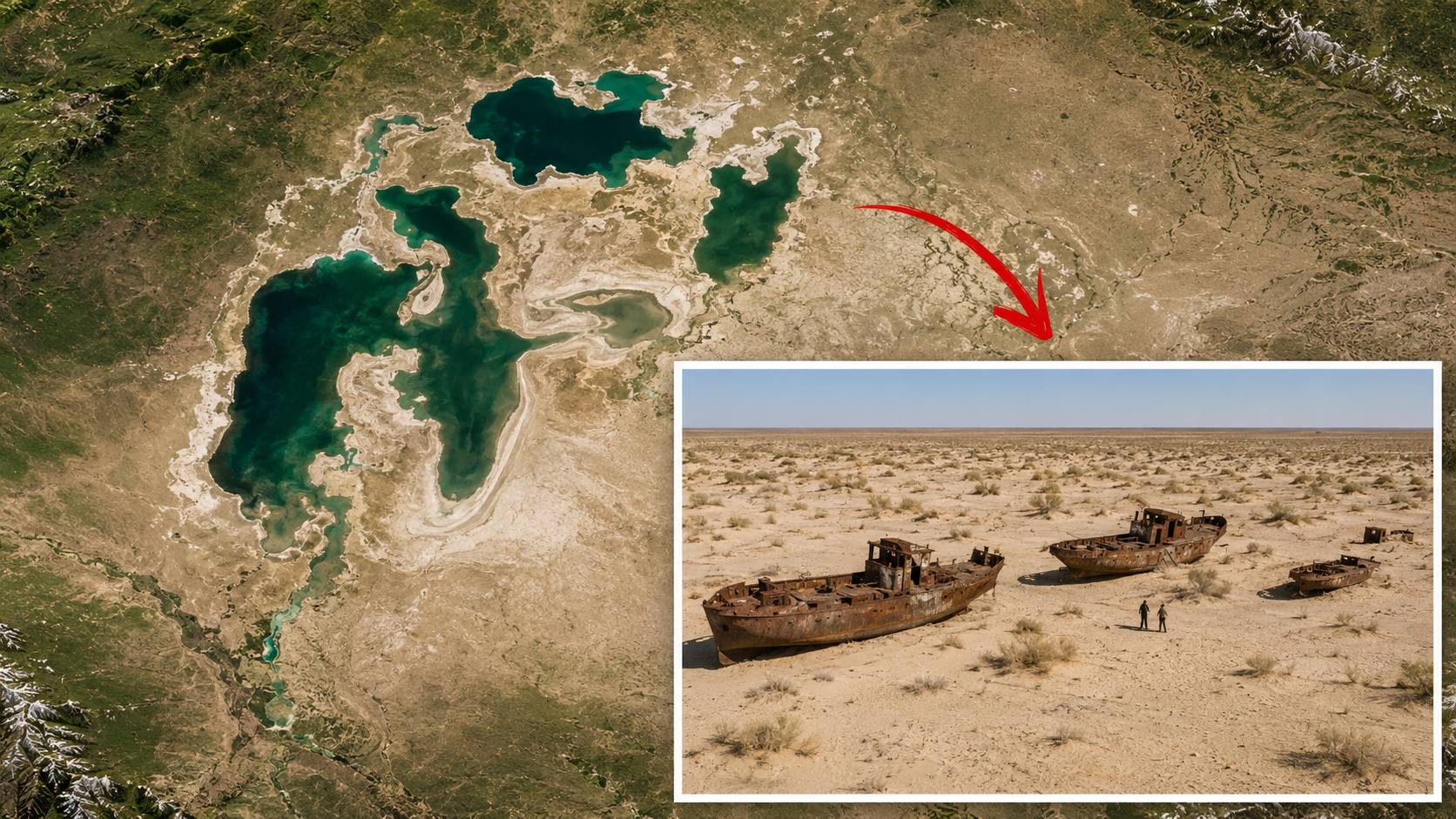
An entire sea disappeared from the map: the Aral Sea, formerly the fourth largest lake on the planet, lost more than 90% of its area in a few decades and left behind a toxic desert where fishing boats rust over 100 km from the water that once supported entire cities.



Its main purpose is to monetize what is called “stranded gas.” Many gas reserves are located in areas so far from shore or in waters so deep that building a pipeline to transport it would be economically unfeasible. The FLNG platform solves this problem by bringing the processing plant directly to the source, eliminating the need for expensive and fixed infrastructure.
The Process of -162°C: How Gas Is Cooled and Liquefied at Sea

The technological heart of an FLNG platform is its liquefaction system. The process is an engineering feat in cryogenics, performed in stages:
Extraction and Treatment: gas is extracted from underwater wells and brought to the platform. There, it undergoes a “cleaning” phase, where impurities such as water, CO₂, and sulfur are removed.
Liquefaction: the purified gas, now predominantly methane, is cooled to a temperature of -162°C. For perspective, this temperature is more than twice as cold as the lowest temperature ever recorded on Earth, causing the gas to contract and convert into liquid, reducing its volume by 600 times.
Storage and Transshipment: LNG is then stored in special cryogenic tanks within the hull of the platform, awaiting the arrival of methane carriers to be transported to consumer markets worldwide.
Shell’s Prelude: The Largest Floating Structure in the World and Its Operational Challenges
The most emblematic and ambitious example of this technology is Shell’s FLNG Prelude platform. Anchored off the coast of Australia, it is the largest floating structure ever built by man, measuring 488 meters in length and displacing 600,000 tons.
The project, however, is a case study on the risks of mega-scale innovation. With a final cost exceeding US$ 17 billion, far above initial estimates, Prelude has faced significant delays, and its unstable operational history, marked by chronic shutdowns, makes the return on this investment an even greater challenge for the company.
The High Cost and Risks of FLNG Viability
The viability of an FLNG platform is a complex equation. The initial investment is massive, and profitability depends on stable operations and global gas prices. Prelude’s case showed that, even with access to good quality gas, budget overruns and operational failures can severely compromise financial returns.
The complexity of packing an industrial plant onto a ship creates a high-risk environment, where a single failure in a system, such as power, can halt all production for months. The cost of an unplanned interruption can reach billions of dollars in lost revenue.
The Future of Gas Plants at Sea

Despite the challenges of Prelude, the technology of the FLNG platform continues to evolve. The industry has learned from pioneering projects, and the trend now points towards smaller, more standardized solutions with lower risk.
Companies like Petronas from Malaysia and Golar LNG have pioneered more agile models. Petronas has already demonstrated the ability to redeploy its FLNG platform from one field to another, and Golar specializes in converting existing methane carriers, a process that is faster and cheaper than building from scratch. The era of solitary titans, like Prelude, seems to be giving way to a new era of agile ‘factory ships’ fleets that prioritize flexibility and financial security over monumental scale.





-

2 people reacted to this.