






 Portuguese
  Spanish
  5 min of reading
  0 comments


The story of Luke Thill shows how a small house of 8.3 m² was born from internet videos, simple jobs, reused materials, and family help. The backyard project drew attention for combining curiosity, a tight budget, and practical learning.
A 13-year-old teenager got bored at home, discovered videos about tiny houses on the internet, and decided to build his own small house in the family’s backyard. The project came to life with $1,500, almost a year of work, and adult support in important stages.
The information was published by ABC News, a United States news network. Luke Thill lived in Dubuque, Iowa, when he started the project in the family’s backyard and turned a curiosity for compact constructions into a house of 8.3 m².
The story draws attention because it involves youth, manual construction, material reuse, and discipline. Nevertheless, the case requires caution: the experience had supervision and help, especially in areas that could involve risk, such as structure and electrical installation.
-
Few remember, but a woman entered the basement of her own house, dug 9.1 meters underground, installed ventilation, created a mine cart, and became famous on social media before being stopped by authorities.

-
An entire sea disappeared from the map: the Aral Sea, formerly the fourth largest lake on the planet, lost more than 90% of its area in a few decades and left behind a toxic desert where fishing boats rust over 100 km from the water that once supported entire cities.
-
Mother of 4 children started as a salesperson and became the owner of 4 franchises: Pamela Oliveira took over the first unit, saw the revenue more than double, and turned a busy routine into proof that motherhood and business can grow together with organization.

-
Majestic castles of Slovakia reveal UNESCO heritage, the setting of Nosferatu, and medieval legends





How a 13-year-old boy raised $1,500 to start the tiny house
Luke Thill did not receive the tiny house ready-made. He needed to raise $1,500 to fund the project. The money came from simple jobs, like mowing lawns and doing small tasks for neighbors and people close to the family.
This aspect made the construction more than just a backyard play. The teenager had to learn to manage a budget, choose materials, and respect the limit of the available money.
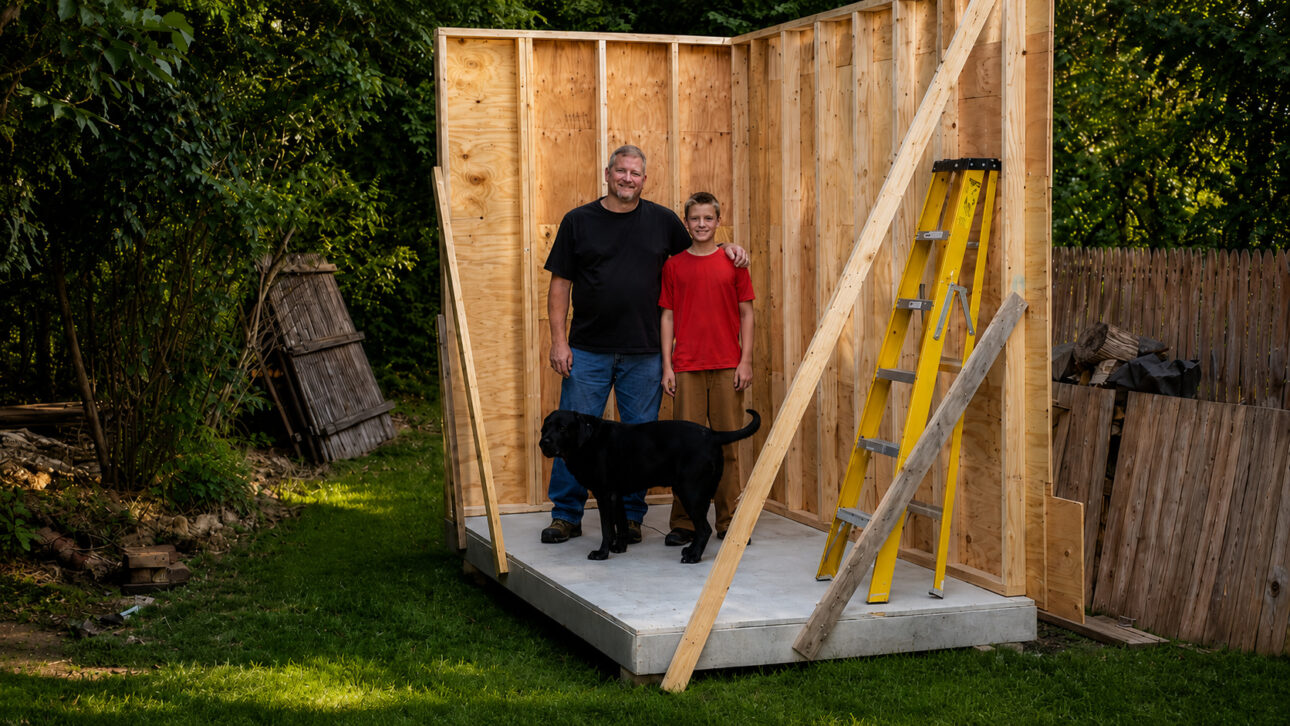
The family allowed the idea but placed responsibility on the process. Luke had to get involved with each stage, from planning to seeking help in parts that required more knowledge.
YouTube served as the gateway for the tiny house project
The interest began with videos about tiny houses. In Brazil, the idea might remind one of a compact studio apartment, but the structure usually focuses more on extreme space utilization and simple living.
Luke started watching content about building and organizing small houses. From there, he began to imagine what it would be like to set up his own space in the family backyard.
YouTube did not replace adult help. It served as a starting point for curiosity. The actual construction required tools, materials, guidance, and support from more experienced people.
The exchange of services helped Luke receive guidance without exceeding the budget
ABC News, a United States news network, detailed that Luke received occasional help from his father, mother, siblings, and neighbors. The small house was not built by him in isolation.
A notable example was the exchange of services for technical help. Luke cleaned the garage of a professional electrician neighbor, and the neighbor guided him on the electrical part of the house.
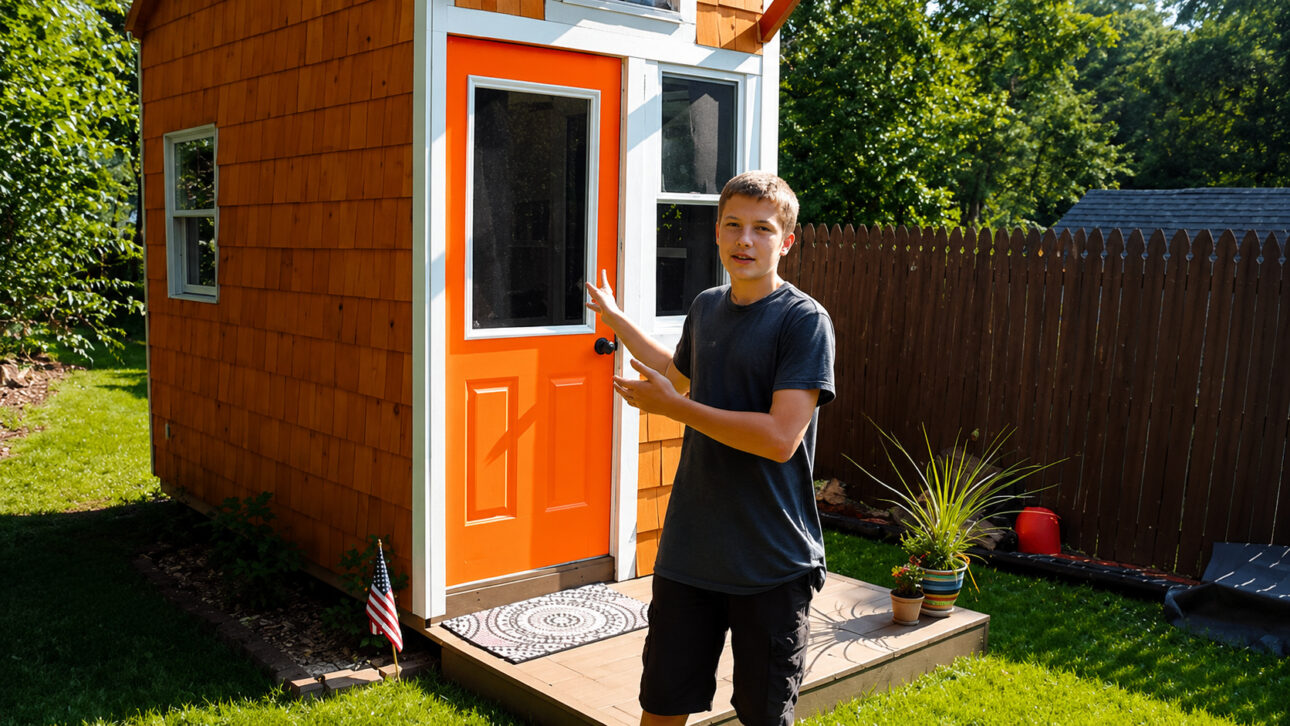
At another time, the teenager mowed lawns at apartment buildings to receive help with carpet installation. These exchanges helped keep the project within the US$ 1,500 budget.
What fit inside the 8.3 m² house built in the backyard
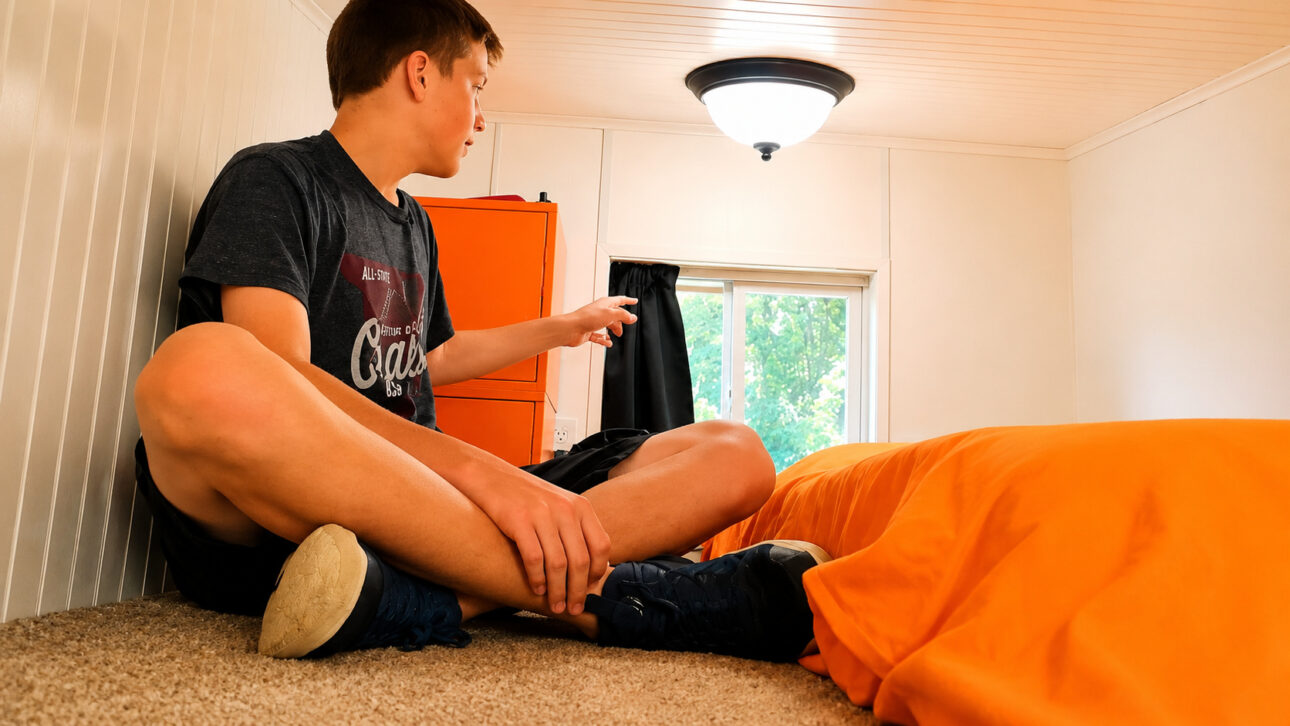
The studio apartment was about 8.3 m². Even though it was small, it was designed to function as a compact space, with furniture and objects chosen to take up little room.
Inside the house, there was a TV, mini-fridge, seating area, and a foldable dining table. Each item needed to make sense because the space was limited.
This type of construction draws attention precisely for this reason. In a few square meters, everything needs to have a clear function. There is no leftover space, and every corner becomes part of the project.
The project began in June 2016 and took almost a year of work
The construction began in June 2016. The process did not happen all at once, as Luke needed to save money to advance to the next stages.
Over the course of nearly a year, the family’s backyard turned into a small construction site. At each phase, the teenager learned something new about materials, tools, organization, and the limits of his own project.
This pace helps to understand why the story became known. The case does not involve a large or luxurious construction, but shows a teenager maintaining focus on a simple idea until it was completed.
Why small houses fascinate young people and go viral on the internet
Small houses spark curiosity because they seem possible to understand. For those watching the videos, each stage of construction becomes more visible, from the wood used to the way the internal space is divided.
For young people, this type of project can mix freedom, creativity, and a sense of achievement. In Luke’s case, the internet opened the door, but the learning truly happened through contact with the construction.
The story also shows a different relationship with technology. The video didn’t just stay on the screen. It became inspiration for a physical project, made with tools, time, effort, and family support.
Inspiration is strong, but safety must come before curiosity
Luke Thill’s journey is impressive, but it should not be treated as encouragement for children to build alone. Even a small house involves weight, cutting, wiring, assembly, and real risks.
The main point is learning with supervision. The teenager had help from family and people with experience in important parts of the construction.
The 8.3 m² studio built in the backyard was born from a rare mix: curiosity, work, economy, internet videos, and adult support. The result was a small house, but with a big story behind it.
The case shows that a simple idea can gain strength when there is responsibility and guidance. More than building his own space, Luke learned to plan, save, and ask for help when needed.
Do you think manual projects like this should be part of young people’s education when there is safety, supervision, and adult guidance? Comment and share this story with those who enjoy creative construction.





Be the first to react!