Portuguese
  Spanish


Sweden Recyles So Much That It Has Run Out of Waste: Less Than 1% of Waste Goes to Landfills and the Country Now Imports Tons of Waste to Generate Energy in Modern Plants.
While much of the world still struggles to reduce the amount of waste sent to landfills, Sweden has reached such an advanced level in recycling and waste reuse that it faces an unusual “problem”: it doesn’t have enough waste to keep its power plants running. Yes, the Nordic country is so efficient in its environmental policy that it has begun to import waste from other European countries to fuel its incineration facilities — turning waste into heat, electricity, and revenue.
A Country Without Waste: How Sweden Became a Global Reference
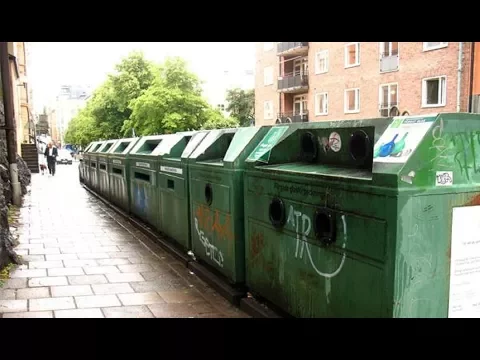

Since the 1990s, Sweden has heavily invested in environmental education, reverse logistics, advanced recycling and energy generation from municipal solid waste. The result? Since 2011, less than 1% of all the waste generated by its population ends up in landfills — an impressive number even among developed countries.
Today, more than 99% of Swedish waste is recycled, composted, or converted into energy, placing the country among the world leaders in urban sustainability.
-
Warm water hidden deep in the ocean has been moving towards Antarctica for 20 years, potentially accelerating glacier melting from below.

-
U.S. Offers Nearly $200,000 to Combat Invasive Mussels Threatening Waterways and Hydroelectric Plants
-
Cigarette Butts Pollute Brazilian Beaches, Sparking Debate on Coastal Environmental Protection Measures
-
App Drivers Unite in Major Solidarity Effort to Aid Venezuela Earthquake Victims, Mobilizing the Brazilian Amazon with Donation Campaign


This model is based on three pillars:
- Efficient Source Separation — Swedes are educated from an early age to properly separate paper, plastic, glass, organics, and electronics;
- Structured Public Logistics — the collection system is integrated, punctual, and widely used by the entire population;
- Energy Recovery from Waste — waste that cannot be recycled is burned in a controlled manner at WtE (Waste-to-Energy) plants, generating steam that heats buildings and produces electricity.
Waste Becomes Energy: The Plants that Heat Entire Cities
Sweden operates more than 30 waste-to-energy plants, located in different regions of the country. One of the most known is the Högdalen plant in Stockholm, which transforms about 700,000 tons of waste per year into enough energy to heat over 100,000 homes.
These waste-to-energy plants operate through controlled incineration. Non-recyclable waste is burned at high temperatures, generating steam that drives turbines to produce electricity and heat, which is then distributed through urban heating networks — a common system in Nordic countries.
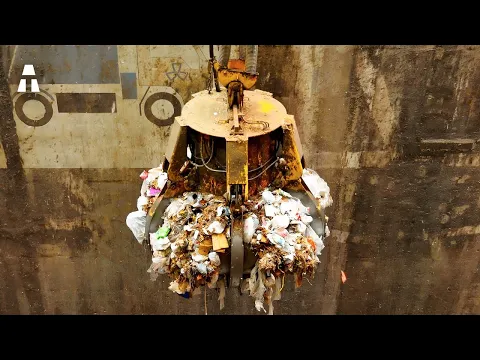
Energy efficiency is high, and environmental impact is mitigated by modern gas filtration systems and emission controls. Additionally, the ash generated from burning waste is treated, and the metals contained are extracted and reused. Only the toxic fraction of the ash (about 15% of the total) is sent back to the country of origin — when the waste is imported.
Sweden Imports Waste? Yes — and Charges for It
The success of the Swedish model has created a curious effect: the country has a waste deficit to keep its plants operating at full capacity. To avoid idleness, Sweden has made agreements with other countries, such as Norway, the United Kingdom, Ireland, and Italy, to import waste that would be destined for landfills.
Here’s how it works:
- Sweden receives waste that is already sorted and non-recyclable;
- Burns the waste in its plants and utilizes the energy generated;
- Charges exporting countries for the service;
- Sends back the toxic ashes for controlled disposal.
As a result, countries that export waste save landfill space and reduce methane emissions, while Sweden profits, generates clean energy, and keeps its circular economy running smoothly.
It is estimated that the country imports over 1 million tons of waste annually to feed its WtE system.
What Makes Recycling in Sweden So Effective?
Several factors help explain the exceptional performance:
- Environmental Education in Schools from the earliest years;
- Strong tax incentives for companies that use recycled materials;
- Prohibition of sending combustible waste to landfills since 2005;
- High taxes on the incineration of recyclable waste, which force efficient sorting;
- Cooperation among the public sector, private sector, and civil society.
Furthermore, the Swedish population has a strong culture of collective responsibility, which facilitates adherence to environmental programs.
A Replicable or Exclusive Model?
Despite being inspiring, the Swedish model faces criticism and limitations. Environmentalists warn that the incineration of waste, even with modern filters, still emits greenhouse gases and may discourage consumption reduction and complete material reuse.
However, Sweden has made it clear that it regards incineration as a last resort in the waste chain. Before burning any waste, the country exhausts all possibilities for reuse, recycling, and composting.
The challenge now is to find a balance between energy efficiency and waste generation reduction, in addition to encouraging other countries to adopt similar models, focusing on collection infrastructure, environmental education, and technological innovation.
While developing countries still struggle to implement basic selective collection, Sweden has already turned waste into an export product — or rather, a paid import. The country proves that, with planning, technology, and collective awareness, it is possible to reverse the logic of waste and create a system where waste generates energy, heats homes, and drives the economy.
And in the process, Sweden has become the country without waste — not because it has ceased to exist, but because it has learned to utilize it all the way to the end of the chain.