Portuguese
  Spanish


Without metal, without machines, and without prospecting, Chinese engineers transformed bamboo stems into cables capable of drilling rock and into pipelines to conduct gas under pressure. The most impressive thing is that parts of this system, considered a marvel of ancient engineering, were still functioning in the 1950s.
Long before the modern petroleum industry, a city in the interior of China already mastered the extraction of natural gas. About 2,000 years ago, the Chinese city of Zigong, in Sichuan province, was already operating a system of natural gas wells and pipelines using only bamboo, wood, and human power, and in 1835 drilled the world’s first well to exceed a thousand meters in depth, without steel, engines, or imported fuel.
This milestone was achieved by the Shenhai well, completed in 1835, during the Qing dynasty, which reached about 1,001 meters in depth. For comparison, the deepest wells in the United States at the same time reached about 500 meters. All this was done with bamboo tools, wooden towers, and human-powered drilling. Next, we explain how this ingenious city solved, with resources from its own forest, problems that seemed impossible for the time.
Salt, the treasure that was in the subsoil of the Chinese city
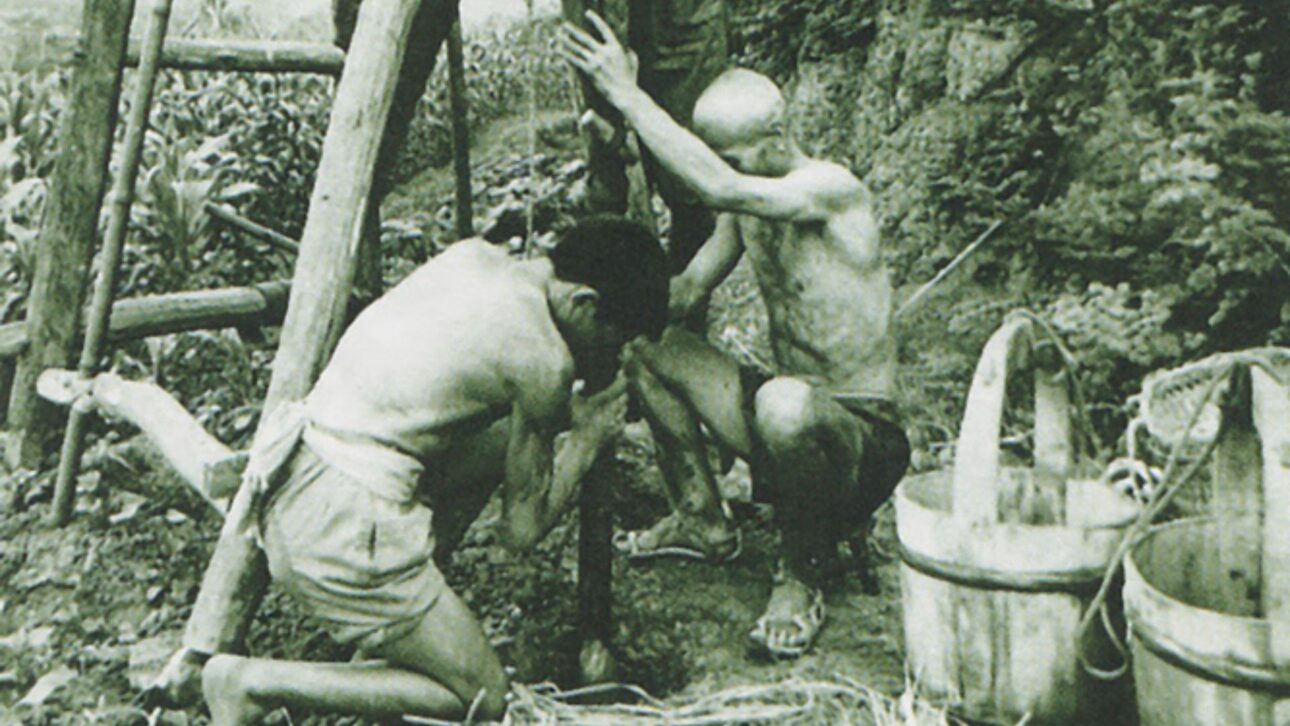
Surrounded by mountains and far from the coast, the region had no access to sea salt and had to seek brine in the subsoil, highly concentrated underground water in salt, a product that, in ancient times, was worth almost like currency, being essential to preserve food before refrigeration and even to pay armies.
-
Brazilian Couple Turns Property into Culinary Hub, Investing $400,000 to Build a Business Earning $800,000 Annually

-
Couple Quits Jobs, Converts 1981 VW Van into Home, Travels 80,000 Kilometers Across the Americas, and Wins Surprise Tickets to See Messi Make History at the World Cup

-
Rio de Janeiro School’s Listening Program Reduces Dropout Rates and Boosts Literacy, Set to Expand to 350 Municipal Schools
-
Five-Year-Old Turns Crayon Drawings of Colorful Socks into a Brand, Raising $200,000 to Aid Vulnerable Children



The extraction of brine in the region dates back to about two thousand years ago, during the Han dynasty, and was perfected over the centuries.
As the wells became deeper, the workers encountered something unexpected: an invisible force that sometimes caught fire, methane gas, which they nicknamed the yellow dragon.
Instead of fleeing from the phenomenon, the engineers of Zigong discovered how to harness it, in a leap that would change their entire industry.
A self-sustaining system
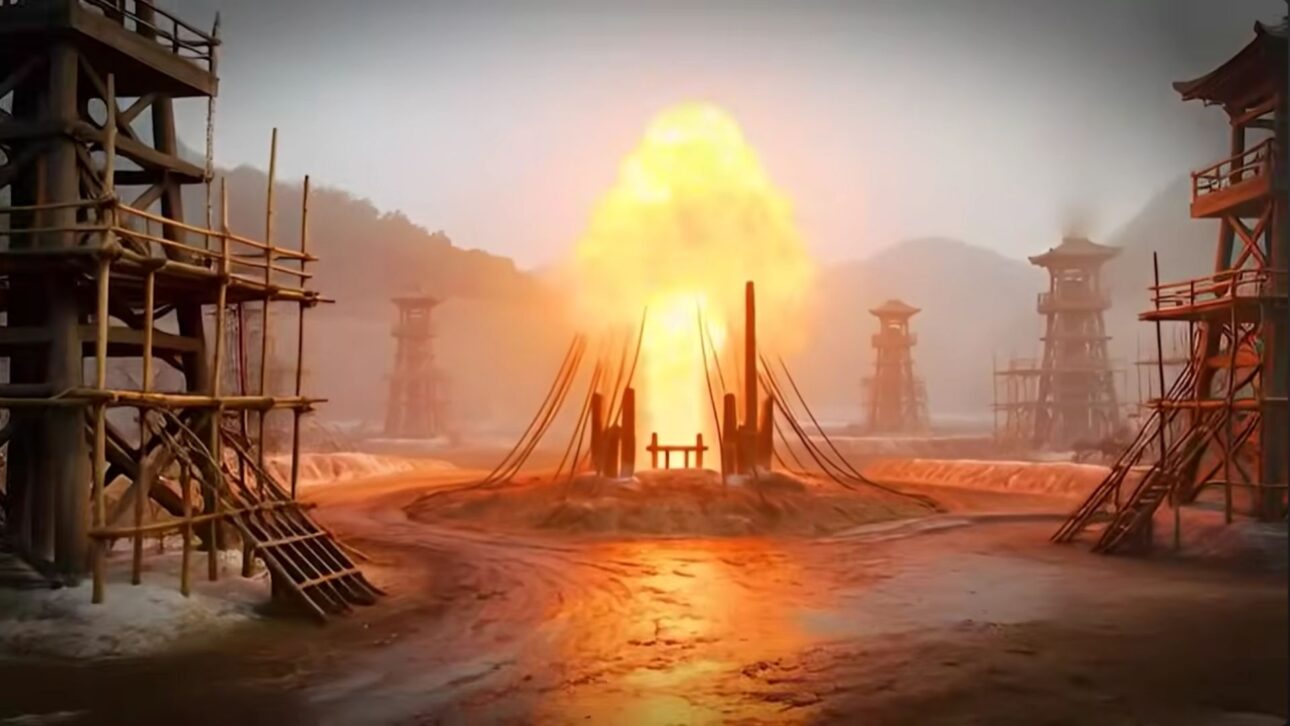
The geological formations that contained the brine also released natural gas, and the engineers of the Chinese city of Zigong began to use this gas as fuel to boil the brine itself in large iron pots, evaporating the water and crystallizing the salt, in a practically self-sufficient cycle, powered only by what the earth provided.
While Rome was still at its peak, that Chinese city was already operating a kind of closed-circuit industrial complex, where the same hole in the ground delivered the raw material and the energy to process it.
This ingenious arrangement allowed Zigong to become one of China’s major salt-producing centers, supplying Sichuan and much of the southwest of the country for centuries.
How to drill a thousand meters without machines
The biggest technical challenge was drilling the rock at enormous depths without any engine.
The solution was percussion drilling, which consisted of repeatedly lifting and dropping a heavy iron drill bit attached to a cable, gradually breaking the rock, in a process that could take years for a single well and was powered by teams jumping on a wooden lever to lift and release the tool.
The problem was that no known material was suitable for the cable: fiber rope broke under its own weight at great depths, and iron chain was too heavy to be lifted.
The answer came from bamboo.
Around the year 1050, engineers began using flexible cables made from braided strips of bamboo bark, a material that was lightweight and at the same time very resistant to tension, which drastically reduced the weight to be lifted and made it possible to reach greater depths.
The ingenuity of bamboo and leather


Bamboo was not only used for the handles, but for almost the entire system.
To remove the brine from the bottom, workers used long bamboo tubes with a leather valve at the tip, which opened with the pressure of the liquid on the way down and closed when pulled up, trapping the brine inside the tube, a simple mechanism with no metal parts that functioned like a manual pump.
To separate the gas from the brine on the surface, a sealed container known as the Kang Pen drum was created at the end of the 18th century, which used the difference in density to direct each product to its destination.
Interestingly, the behavior of gas that expands when pressure decreases, a principle that would only be formally described by scientist Robert Boyle in the 17th century, was already practically exploited by Chinese engineers long before it had a name.
Hundreds of kilometers of bamboo pipelines
Perhaps the most surprising part is the distribution network.
Zigong once had hundreds of kilometers of bamboo pipelines, which transported both brine and natural gas under pressure, with joints sealed by wrapped cords and a coating made of tung oil and lime, a mixture so waterproof and resistant that it was called liquid stone, capable of protecting the ducts for decades.
This plumbing was ingenious even in the details: the joints were cut with a small gap so that the pipeline could flex during earthquakes, common in the region, instead of cracking.
The result was a durable system adapted to the environment.
So durable, in fact, that when modern engineers toured the region in the 1950s, they found about 95 kilometers of these bamboo ducts still intact and in use, an impressive testament to the quality of that ancient engineering.
Why the technique was surpassed
In the face of so much ingenuity, the question remains: why did this system stop being used?
The answer lies in the advancement of modern industry, as rotary drilling with motorized equipment began to penetrate rock in weeks, not years, while steel pipes could withstand pressures and temperatures that bamboo could not, in addition to supplying cities of millions of people, a scale incompatible with natural materials.
Industrialization arrived forcefully in the region from the 1950s onwards and, in a few decades, replaced the traditional technique. This does not diminish the achievement: the Zigong system survived for centuries at a very low cost and with remarkable sustainability, using materials that grew locally.
More than just a historical curiosity, it shows how knowledge accumulated over generations can solve complex problems creatively, a lesson that remains valid for today’s engineering.
The history of the Chinese city of Zigong is one of the most fascinating in world engineering, revealing that, centuries before the petroleum era, there was already a natural gas network operating with bamboo, wood, and much human ingenuity.
The well over a thousand meters drilled in 1835, without steel or engines, is the ultimate symbol of this feat, now preserved as a museum.
More than celebrating the past, knowing these solutions reminds us that durability, creativity, and intelligent use of available resources never go out of style.
And you, had you heard about this incredible natural gas network made of bamboo in ancient China? What impressed you the most about this engineering story? Leave your comment, share your opinion, and help spread the article to those interested in history, science, and the great inventions of humanity.