Portuguese
  Spanish


China has decided to drill a hole up to 15 kilometers into the Earth, deep enough to reach rocks at temperatures that melt equipment and crushing pressures, in a project that aims to steal from Russia the record for the deepest hole ever dug by humanity, a mark that has stood since the Cold War.
The record to be beaten is legendary. The Kola Superdeep Borehole, drilled by the Soviet Union, reached just over 12 kilometers after almost twenty years of work and stopped due to unexpected heat, which exceeded 180 degrees and made it impossible to continue. For decades, this hole in the far north of Russia held the title of the deepest point ever reached by man.
Now it’s China’s turn. The country has launched an ambitious ultra-deep drilling program aiming for 15 kilometers, in an effort that combines cutting-edge technology, plenty of money, and the determination to lead yet another scientific frontier. And, contrary to what many imagine, the main goal is not oil.
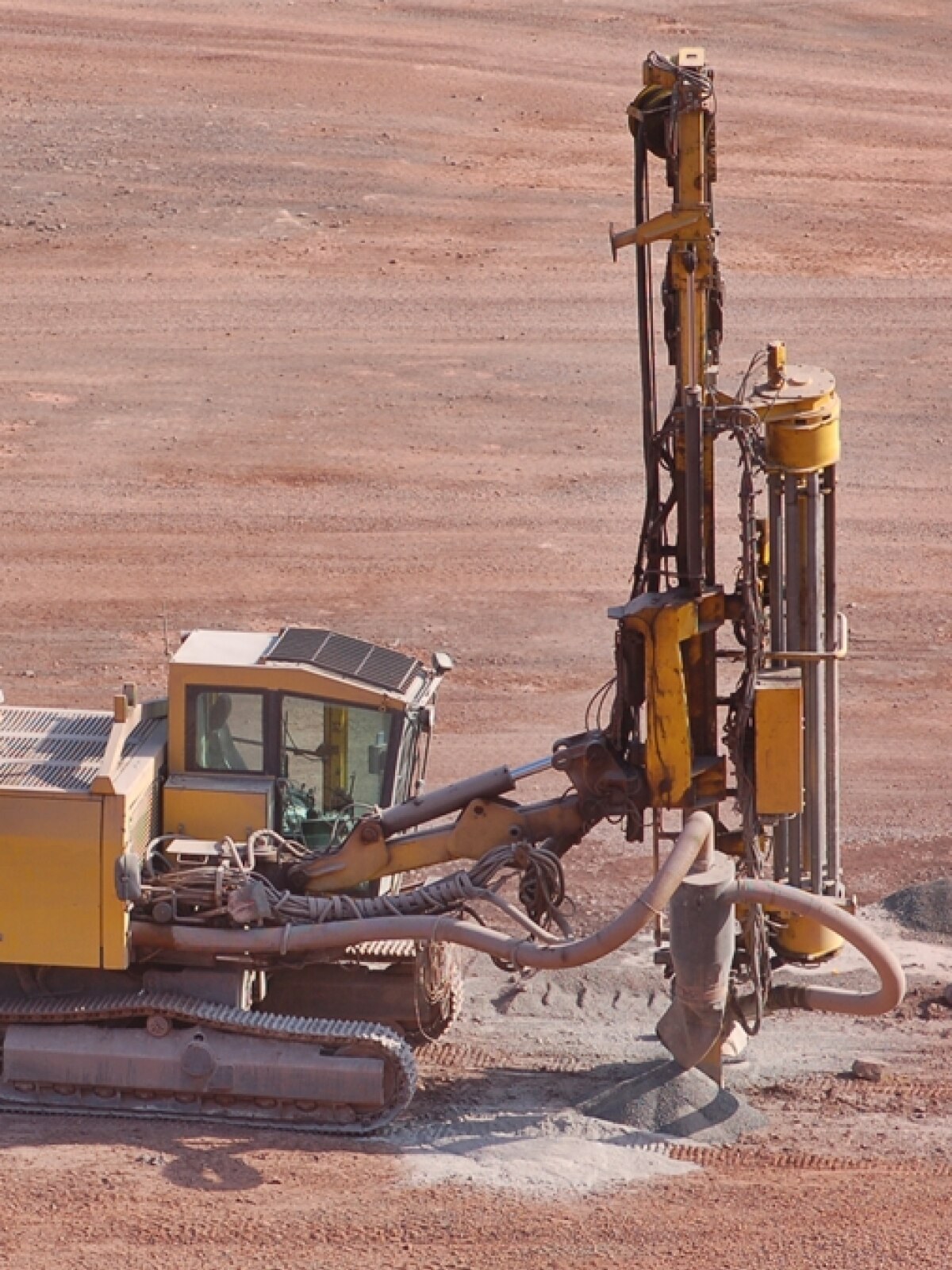
Why drill so deep
The motivation is largely scientific. Drilling kilometers of rock is like opening a window to the past and the interior of the planet. The layers crossed hold the record of hundreds of millions of years of geological history, and studying them helps to understand earthquakes, the formation of minerals, and the workings of the Earth’s interior, about which surprisingly little is still known.
-
Researchers Use Algae to Enhance 3D-Printed Walls, Boosting Strength by 25% and Speeding Construction by 33%

-
Drill Uncovers Freshwater Rivers Hidden Beneath the Ocean Floor

-
3,000-Ton, 81-Meter Attack Submarine Begins Sea Trials, Equipped with Heavy Torpedoes and Anti-Ship Missiles

-
Boat Made from 10 Tons of Plastic and 30,000 Discarded Flip-Flops Sails Along African Coast, Serving as a Floating Classroom on Ocean Pollution



There is also the practical side of resource prospecting. At great depths, there may be reserves of minerals, gas, and geothermal energy still inaccessible. Mapping what is down there gives China a strategic advantage in the search for resources that the world will compete for in the coming decades, even if extracting all this is still a distant challenge.
It’s curious to think that we know the surface of the Moon and Mars better than the ground a few kilometers beneath our feet. Every meter drilled down there is practically unexplored territory.
The hell down there
The obstacles are brutal. As the drill descends, the temperature rises continuously, and at a certain point, the heat exceeds 200 degrees, hot enough to soften steel and fry the electronics of the instruments. The pressure also increases colossally, threatening to crush the well and trap the equipment.
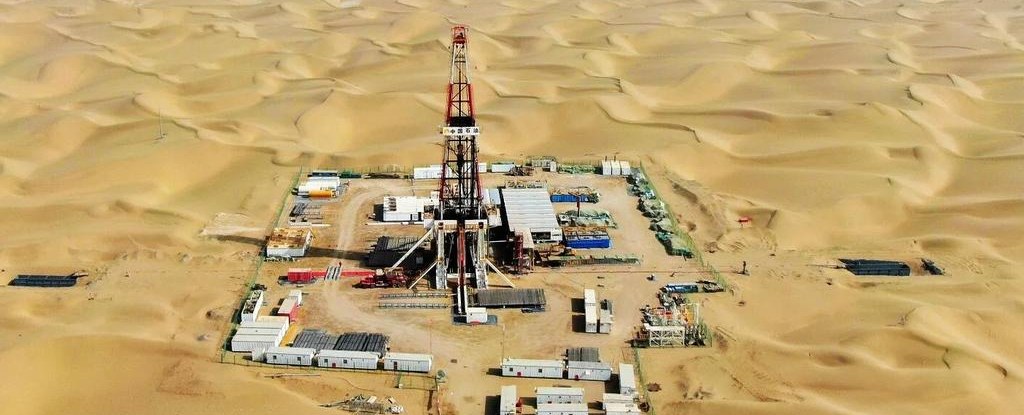
This is exactly what stalled the Soviets in Kola: the rock, in that heat, behaved more like plastic than solid stone, and the hole tended to close. Overcoming this hell requires special drills, drilling fluids that withstand the heat, and sensors capable of functioning where nothing should work. It’s engineering at the limit of possibility.
China has been developing this technology in several projects simultaneously, including wells in the Taklimakan Desert, and has accumulated rare experience in extreme drilling. This learning is what gives confidence to aim for a mark that no one has managed to reach.
What is found by drilling so deep
It may seem strange to spend fortunes to open a hole, but the scientific reward is enormous. Rock samples brought from several kilometers deep reveal how the planet was formed, help predict earthquakes, and show how microbial life survives in extreme conditions, without light and under brutal heat. Each rock core is a page of a book that we can barely read.
There is also interest in geothermal energy. Down there, the heat is so intense that it could, in theory, generate clean electricity in huge quantities, almost anywhere. Mastering ultra-deep drilling is also a step towards harnessing this infinite heat that exists beneath our feet, turning a scientific challenge into a potential energy source for the future.
A race for prestige and power
Breaking the Kola record would be more than a technical feat: it’s a demonstration of power. Just like the space race, drilling deeper than any other nation becomes a symbol of technological dominance, and China is keen to collect these symbols, from space to the ocean floor and now to the center of the Earth.
The project adds to a sequence of Chinese achievements in extreme engineering, from sea bridges to giant drilling ships. Each one reinforces the image of a country unafraid to face challenges that scare the rest of the world, and that has the industrial structure and capital to try.
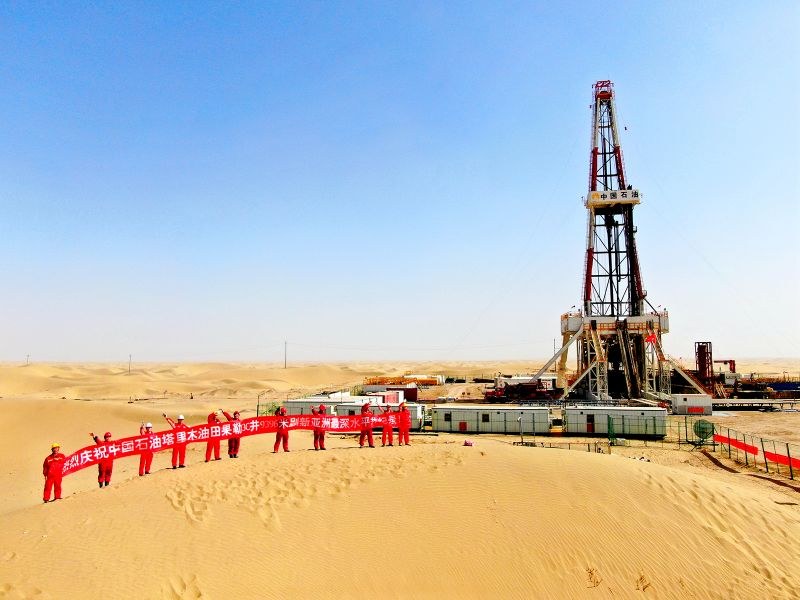
Caution is advised: announcing a 15-kilometer well is not the same as completing it, and the history of Kola shows that the Earth imposes hard limits on those who try to penetrate it. It may take many years, and there is no guarantee of reaching the promised mark. But the mere attempt already expands the frontier of what human engineering can tackle.
For Brazil, which dominates ultra-deepwater drilling in the pre-salt but explores little scientific drilling on land, the Chinese project serves as a reminder of how much there is still to know just below the surface, and how mastering this technology opens doors both for science and for the search for resources and energy.
If China succeeds, it will have planted another technological flag, this time kilometers below the surface, in a place hotter and more hostile than almost any other humanity has ever reached. And it will have proven, once again, that the frontier is not only up there but also right beneath our feet.
Will China really manage to drill 15 km, or will the Earth itself impose the limit as it did with the Soviets?