Portuguese
  Spanish



Oil Workers’ Strike Comes to an End. The Agreement Between Petrobras and Employees Provides That Half of the Striking Days Will Be Discounted and the Other Half Compensated
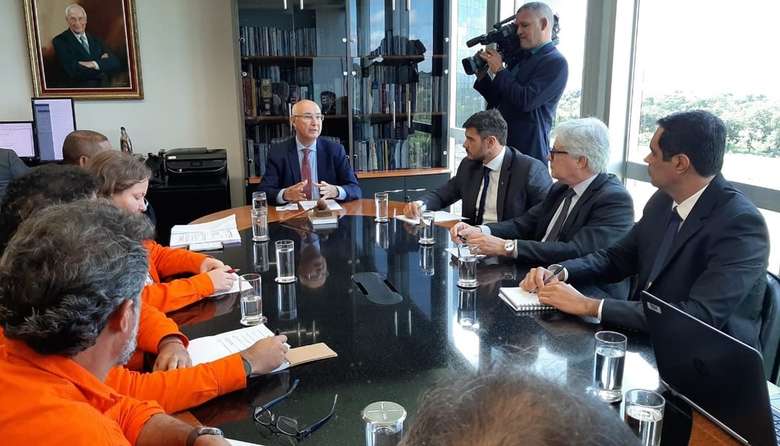
The oil workers’ strike comes to an end. Petrobras and the company’s workers reached an agreement on Friday that puts an end to the strike that lasted for 20 days. The agreement was announced and mediated by the Minister of the Superior Labor Court, Ives Gandra Martins Filho, after a meeting convened by him in Brasília. The French company Total licensed five oil wells in the Campos Basin
Also Read
- Petroserv Announces Job Opening in Macaé for Offshore Activities on a 14 x 14 Schedule
- For Offshore Contracts on a Flotel in International Waters, There Are Job Openings for Brazilians Today at the Multinational OSM
- Offshore and Onshore Contracts from Multinational Aker Solutions Demand Job Openings for Welders and Inspectors Today, February 21
Last Monday, Ives Gandra responded to a request from Petrobras and deemed the strike abusive and illegal. A day later, the minister announced that he would mediate the negotiations, provided that the workers suspended the strike. The category then decided to temporarily suspend the stoppage.
-
Over 2,000 Tons of Discarded Fishing Nets Since 2020 Repurposed into Durable Caps, Fins, and Parts

-
Seals and Sea Lions Lose Habitat and Food as Climate Change Advances, Impacting Ice, Prey, and Coastal Communities

-
Brazilian Innovator Uses 3D-Printed Device to Cool Two Rooms with One Air Conditioner
-
China Uses 432 Robots to Move a 7,500-Ton Historic Building in Shanghai, Preserving Architecture While Creating Space for Underground Center


The agreement stipulates that half of the striking days will be discounted and the other half compensated. Petrobras agreed to review the shift schedule, a demand from the category, to meet “the workers’ wishes.”
The state company will also withhold R$ 2.4 million from union dues as a form of fine. The original fine amounted to R$ 58.5 million.
Next Thursday, there will be a meeting to discuss layoffs at the Nitrogen Fertilizer Plant in Paraná (Fafen), a subsidiary of Petrobras, one of the reasons for the strike.
According to the state company, the plant has been showing recurring losses since it was acquired. The category’s stoppage began on February 1.
For the minister, the closure of the plant is unlikely to be reversed.
— The expectation is that we will be able to find a way to satisfy workers, solve the company’s problem, but now, it is unlikely that we can reverse the issue of the company resuming operations because it is truly deactivated — said Ives Gandra.
Damage Caused by the Strike
The strike dragged on since the beginning of the month and affected 16 state units in ten states. The movement was in response to Petrobras’ decision to close the plant in Paraná and lay off the 396 workers at the facility — nearly a thousand, counting the outsourced.
Petrobras says that the strike did not harm oil and fuel production and eliminated the risk of shortages. To ensure uninterrupted oil production and refining, the company mobilized contingency teams, with employees capable of replacing the strikers.
According to Petrobras, the damage caused by the strike, concerning overtime paid to contingency teams and temporary workers’ salaries, was estimated at R$ 55.9 million.