Portuguese
  Spanish


The Osaka Bay Is Sinking, And It Could Be The End Of Kansai Airport, The Most Modern In The World In Japan. Will The Airport Have To Be Closed?
End Of Kansai Airport? Located in Japan, Kansai Airport is one of the most modern in the world, capable of receiving 30 million people per year and valued at approximately 112 billion reais. However, the future of Kansai Airport is threatened, as the structure, situated in the middle of Osaka Bay, is sinking. This puts the continuation of airport operations at risk, raising concerns about the viability of this impressive engineering feat.
Kansai Airport Has 11 Km²
Also known as KIX, Kansai International Airport, considered the most modern airport in the world, is located on Honshu Island, about 40 km from Osaka, the second largest city in Japan.
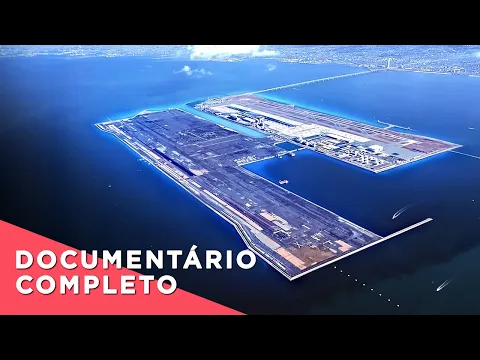

Built between 1987 and 1994, Kansai Airport is located on an artificial island of nearly 11 km², constructed from approximately 180 million cubic meters of sand and rocks taken from the bottom of Osaka Bay.
-
France Revamps 530 Social Housing Units with Large Balconies and Glass Facades Without Demolishing Existing Buildings

-
10-Year-Old Max Makes History with Paris Fashion Show, Launches Own Brand, Hires Staff, and Sets World Record as Youngest Runway Designer

-
Bolivian Female Construction Workers Form Association to Combat Discrimination and 38% Pay Gap in the Industry
-
Near Amsterdam, residents buy land and discover they must also build streets, manage drainage, handle waste, and grow food on half their plot.




It is worth mentioning that currently the creation of artificial islands is something common, especially in economic powerhouses of the Middle East. However, when Kansai Airport was inaugurated in 1994, this practice was less common.
To understand why Osaka Bay is sinking and could herald the end of Kansai Airport, it is necessary to analyze some details of the construction of this megaproject. Between 1987 and 1989, the execution of the work involved drilling the clay present in Osaka Bay. Of the 20 m excavated, 18 m were below sea level.
This process allowed for the drainage of 70% of the water from this deposit, something that solidified the clay and created a walled environment with 2 million mineral columns. This would be the foundation of the most modern airport in the world.
The Osaka Bay Is Sinking?
Even in the study phase of the site, the engineering team already anticipated the sinking of Kansai Airport by 5.7 m by 1999, five years after the project’s inauguration. However, the recorded figure that year was substantially higher, at 8.2 m, more than 67% above the initial estimate. By 2018, the sinking of the airport’s structure had already reached an impressive 11 m.
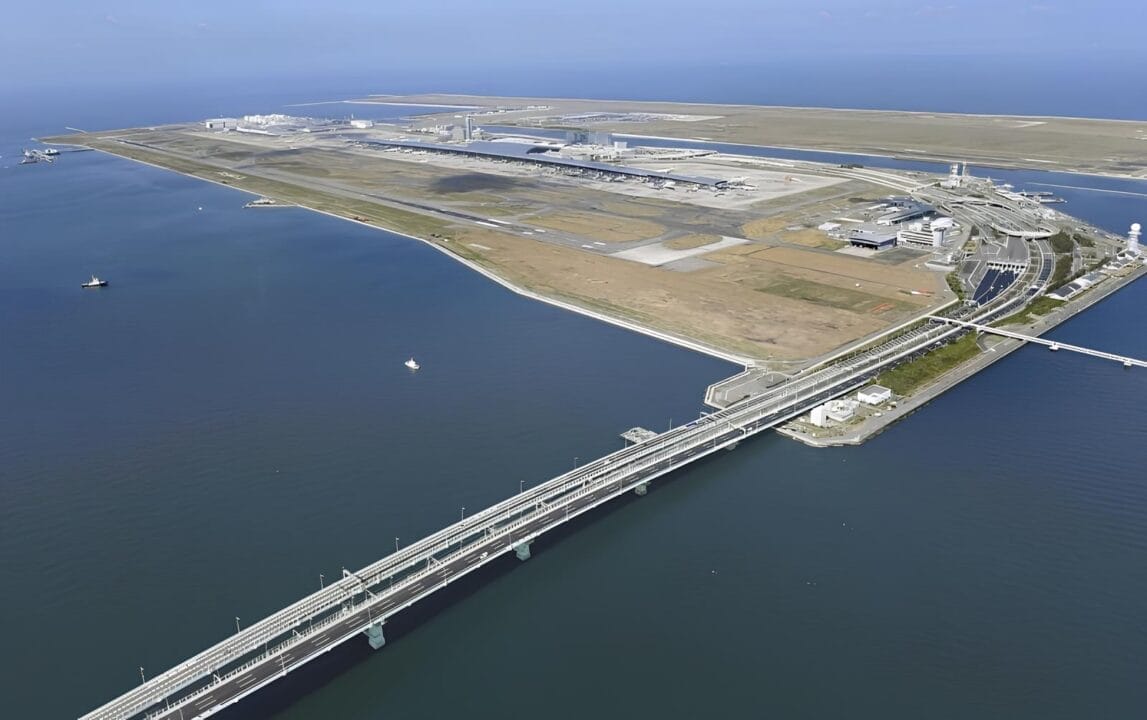
The end of Kansai Airport is a matter that involves various aspects. Built on an artificial island in deep water areas, the airport required the supporting soil to be compacted and stabilized. This was a significant technical challenge, as Osaka Bay is largely composed of soft and highly compressible clays. Over time, the heavy load of the artificial island and airport structures causes compaction and sinking, compromising the feasibility of the structure.
The weight of these structures of the most modern airport in the world, including runways, buildings, and other structures, contributes to the pressure on the underlying soil, accelerating the subsidence process. Furthermore, the underlying soil undergoes a consolidation process, where water in the pores is expelled and the soil compacts. A natural process that can take years or even decades to fully stabilize.
2056 Could Be The End Of Kansai Airport
The year that experts point to as the date for the end of Kansai Airport, given that Osaka Bay is sinking, is 2056. If the estimate holds true, the airport will have been operational for 62 years, but the fact is that the administration has heavily invested in projects to reverse or at least delay such an event.
Since the inauguration of the most modern airport in the world, there has been continuous monitoring of the sinking, and corrective measures are taken as needed. To compensate for the sinking of the island, adjustable columns were designed to support the terminal building.
These are extended by inserting thick metal plates at the bases. The airport administration has also invested more than 150 million dollars to raise the breakwater and thus reduce the chances of flooding.