Portuguese
  Spanish



Carrie summarizes the logic into five central categories: food, shelter, water, self-defense items, and emergency kits. From there, communication and energy reinforcements are added, which the couple considers indispensable in a context of prolonged failure of modern systems.
Why Communication Became a Central Part of the Stock

One of the most relevant points of their preparation is the concern with communication. The couple states that many people have started to realize how fragile current systems are, especially in crisis situations, and for this reason, they included equipment in their stock capable of functioning even without traditional infrastructure.
This group includes walkie-talkies, a satellite phone, and a solar-powered crank radio. The logic is simple: in an extreme scenario, having food and water is not enough. It would also be necessary to maintain some form of contact, information, and coordination if conventional networks stop working.
-
At 54, Brazilian Artisan Turns Textile Waste into a Successful Handbag Brand, Earning Over $6,000 Monthly

-
Brazilian Entrepreneur Sells $50,000 Monthly in Sustainable Luggage Made from Recycled Bottles, Eyes International Market
-
Chinese Man Transforms Home into 10-Story Pyramid Over 8 Years, Defying Authorities Before Demolition

-
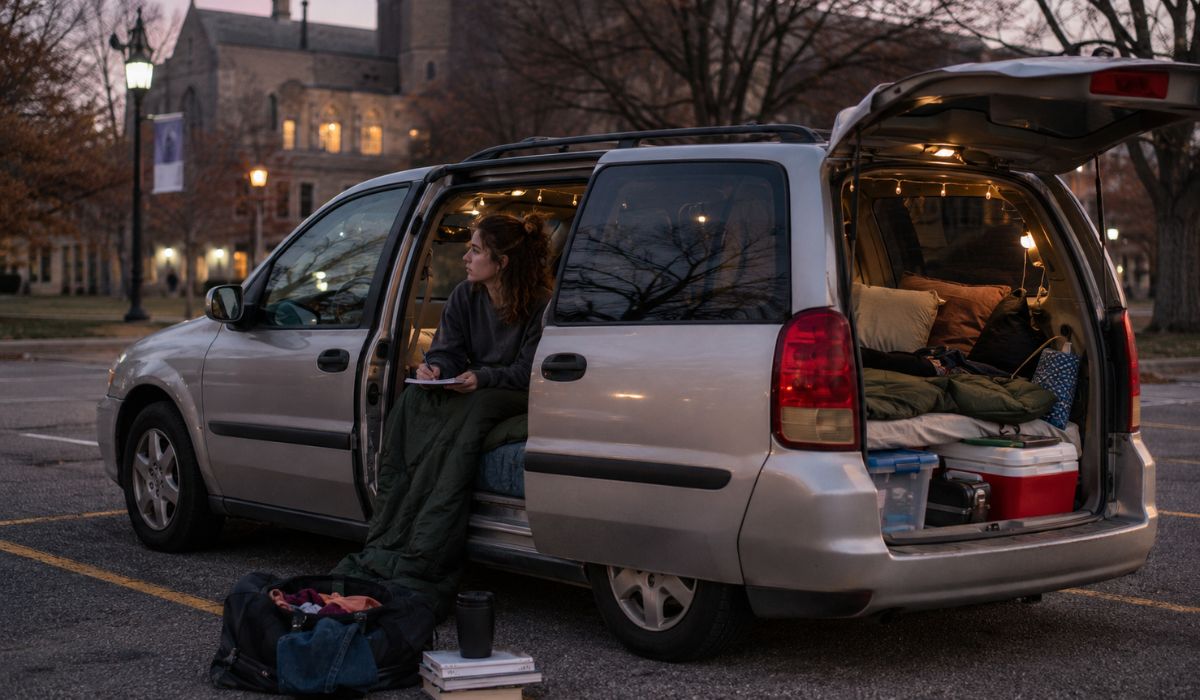
Faced with College Costs, Brazilian Student Lived in a Minivan for Nearly Two Years to Graduate Debt-Free

What changes in practice for those who want to start from scratch
Despite the size of their own stock, the couple says that the best way for those who are starting is not to buy everything at once. Their recommendation is to build the reserve little by little, without impulse and without turning preparation into a disordered expense.
Colton uses a simple example to explain this strategy: every time a person goes to the market to buy a package of rice, they can take one more. This logic of gradual accumulation, according to them, helps to assemble a survival kit without depending on a gigantic purchase all at once.
Even the family dog got an emergency backpack
The couple’s preparation reached a level where even the family dog was included in the plan. The Goldendoodle Sky also has an emergency backpack ready for use, should the family need to leave the house quickly.
This detail helps to show how preparation has been incorporated into the domestic routine. It’s not just about storing supplies on shelves, but about thinking about scenarios of prolonged stay at home and also sudden departure, with clothes, food, tools, and basic items already separated.
Why the couple says this goes beyond the fear of the apocalypse
Carrie makes a point of saying that preparation should not be seen only as a response to the end of the world. In her view, a survival kit is not only for war or global collapse but also for situations closer to everyday reality, such as job loss, natural disaster, or serious infrastructure failures.
This view broadens the meaning of the story. The couple treats preparation as a form of household management and a pursuit of self-sufficiency. Colton compares this behavior to insurance: you hope you never need to use it, but you want to have the structure ready in case something goes wrong.
What this story reveals about the advancement of self-sufficiency culture
The report shows how concern with global crises, political instability, and the fragility of modern systems is fueling a greater search for domestic autonomy.
Carrie states that they have received many questions from people interested in knowing where to start, a sign that interest in preparation has grown along with recent fears.
In their case, the survival kit ceased to be just a set of products and became a kind of lifestyle model focused on self-sufficiency. With food, water, energy, communication, and evacuation planned, the couple tries to reduce dependence on external structures and gain reaction time in the face of an extreme event.
If you had to assemble a basic survival kit for your home today, what would be the first essential item?
Couple’s Survival Kit in the United States Gathers Food for Up to 3 Years, Water for About 1 Year, Four Generators, and Solar Panels in a Routine Created to Withstand War, Power Grid Collapse, or Major Disasters
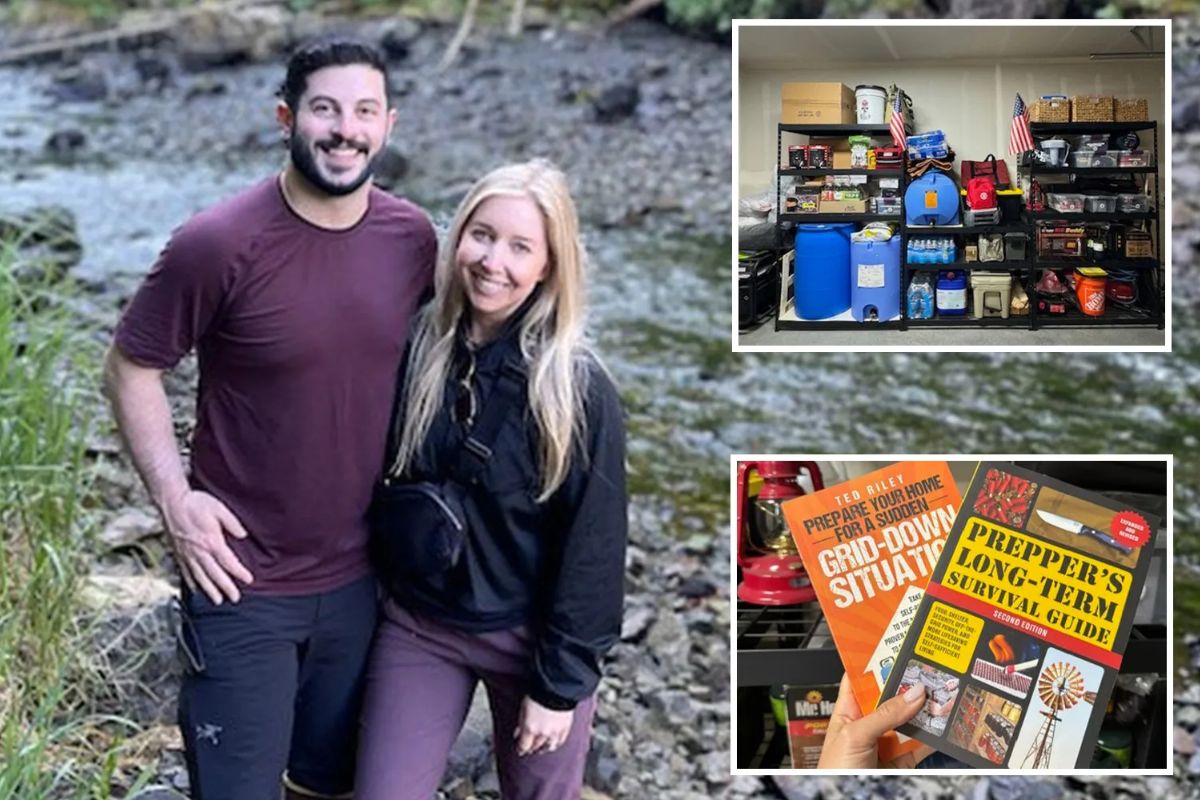
The survival kit assembled by Carrie and Colton Smith, residents of Gallatin County, Montana, has transformed emergency preparedness into a full-time life project. The couple claims to have accumulated enough supplies to face a severe routine collapse, such as a Third World War, a major blackout, or another disaster, with autonomy to stay at home for up to three years.
The story draws attention due to the size of the stock and the variety of resources gathered. According to the couple, the reserve includes food with a 25-year shelf life, 208-liter water drums, four generators, solar panels, a satellite phone, radios, flashlights, tools, and bug-out bags ready for quick departure. The purpose, they say, is not to live in panic, but to reduce dependence on systems they consider fragile, such as communication, energy, and supply chains.
What Led the Couple to Assemble the Survival Kit
Carrie and Colton say the turning point happened after a Chinese balloon flew over the United States in February 2023, before being shot down. The episode, according to their account, reinforced fears of global instability and made the couple decide they needed to take control of their own safety and home maintenance.
Since then, preparedness has ceased to be a one-off thing and has become a routine. The couple gradually began to build a home system capable of sustaining the family in the event of a sudden disruption of daily life, whether due to war, natural disaster, economic problem, or prolonged power grid failure.
The Numbers That Explain the Size of the Stock

The data presented by the couple helps to show why the story gained repercussion. They claim to have a food supply capable of lasting up to three years, in addition to a water system that, alone, could sustain the house for about one year.
Another striking number is the energy structure. The kit includes four generators, as well as solar panels and portable power sources. In addition, the stored food would have a shelf life of 25 years, which greatly expands the storage horizon and reinforces the idea of long-term preparation.
What Goes Into Their Survival Kit
The couple’s survival kit brings together items for food, supply, communication, energy, and evacuation. Among the equipment mentioned are a satellite phone, walkie-talkies, a solar-powered crank radio, flashlights, tools, generators, solar panels, and batteries.
In terms of food, the stock includes long-lasting foods, freeze-dried meals, milk, fruits, beef stew, and macaroni and cheese. The choice, according to Carrie, also takes into account the attempt to maintain a certain normality during stressful times, with meals that still feel familiar.
The Three Pillars That Support All Preparation
For Colton, the entire structure revolves around three main pillars: food, water, and a generator. In his view, the rest of the system is built upon this foundation, which would be the minimum necessary to keep a house running in an emergency scenario.
Carrie summarizes the logic into five central categories: food, shelter, water, self-defense items, and emergency kits. From there, communication and energy reinforcements are added, which the couple considers indispensable in a context of prolonged failure of modern systems.
Why Communication Became a Central Part of the Stock
One of the most relevant points of their preparation is the concern with communication. The couple states that many people have started to realize how fragile current systems are, especially in crisis situations, and for this reason, they included equipment in their stock capable of functioning even without traditional infrastructure.
This group includes walkie-talkies, a satellite phone, and a solar-powered crank radio. The logic is simple: in an extreme scenario, having food and water is not enough. It would also be necessary to maintain some form of contact, information, and coordination if conventional networks stop working.
What changes in practice for those who want to start from scratch
Despite the size of their own stock, the couple says that the best way for those who are starting is not to buy everything at once. Their recommendation is to build the reserve little by little, without impulse and without turning preparation into a disordered expense.
Colton uses a simple example to explain this strategy: every time a person goes to the market to buy a package of rice, they can take one more. This logic of gradual accumulation, according to them, helps to assemble a survival kit without depending on a gigantic purchase all at once.
Even the family dog got an emergency backpack
The couple’s preparation reached a level where even the family dog was included in the plan. The Goldendoodle Sky also has an emergency backpack ready for use, should the family need to leave the house quickly.
This detail helps to show how preparation has been incorporated into the domestic routine. It’s not just about storing supplies on shelves, but about thinking about scenarios of prolonged stay at home and also sudden departure, with clothes, food, tools, and basic items already separated.
Why the couple says this goes beyond the fear of the apocalypse
Carrie makes a point of saying that preparation should not be seen only as a response to the end of the world. In her view, a survival kit is not only for war or global collapse but also for situations closer to everyday reality, such as job loss, natural disaster, or serious infrastructure failures.
This view broadens the meaning of the story. The couple treats preparation as a form of household management and a pursuit of self-sufficiency. Colton compares this behavior to insurance: you hope you never need to use it, but you want to have the structure ready in case something goes wrong.
What this story reveals about the advancement of self-sufficiency culture
The report shows how concern with global crises, political instability, and the fragility of modern systems is fueling a greater search for domestic autonomy.
Carrie states that they have received many questions from people interested in knowing where to start, a sign that interest in preparation has grown along with recent fears.
In their case, the survival kit ceased to be just a set of products and became a kind of lifestyle model focused on self-sufficiency. With food, water, energy, communication, and evacuation planned, the couple tries to reduce dependence on external structures and gain reaction time in the face of an extreme event.
If you had to assemble a basic survival kit for your home today, what would be the first essential item?