Portuguese
  Spanish


Sandra Portella went from odd jobs with dishcloths to her own brand of handmade bags in Rio de Janeiro, mixing crochet, reused fabric, and online sales; the business grew to 13 women on the team and gained strength after partnerships with textile waste suppliers
Sandra Portella was 54 years old when she saw her dismissal from a retail company turn into the start of her own business in the Campo Grande neighborhood, in the West Zone of Rio de Janeiro. What began with crochet, dishcloths, and linens shifted to focus on bags made with fabrics that could be discarded.
The revenue of more than R$ 30,000 per month was reported in an article published in 2023 by Só Notícia Boa, based on information from Revista PEGN. Therefore, the amount appears as data from the time of the report, not as a publicly updated financial statement.
The change did not come from a ready-made plan. Sandra was already making handmade items, but the craft stopped being a supplement when she realized there was real demand for the products. First came the dishcloth edges and linen items. Then, the bag became the main product.
-
Brazilian Entrepreneur Sells $50,000 Monthly in Sustainable Luggage Made from Recycled Bottles, Eyes International Market

-
Chinese Man Transforms Home into 10-Story Pyramid Over 8 Years, Defying Authorities Before Demolition

-
Faced with College Costs, Brazilian Student Lived in a Minivan for Nearly Two Years to Graduate Debt-Free
-
Tokyo Scientists Create First 18cm Biohybrid Hand Using Human Muscle, Capable of Scissor Gesture and Holding a Pipette

The difference was combining two simple things, but difficult to execute well on a small scale. On one side, the handmade crochet, with striking handles. On the other, reused fabrics, bought or received from suppliers who would discard still usable materials.
The dismissal opened space for the craft to become a fixed income
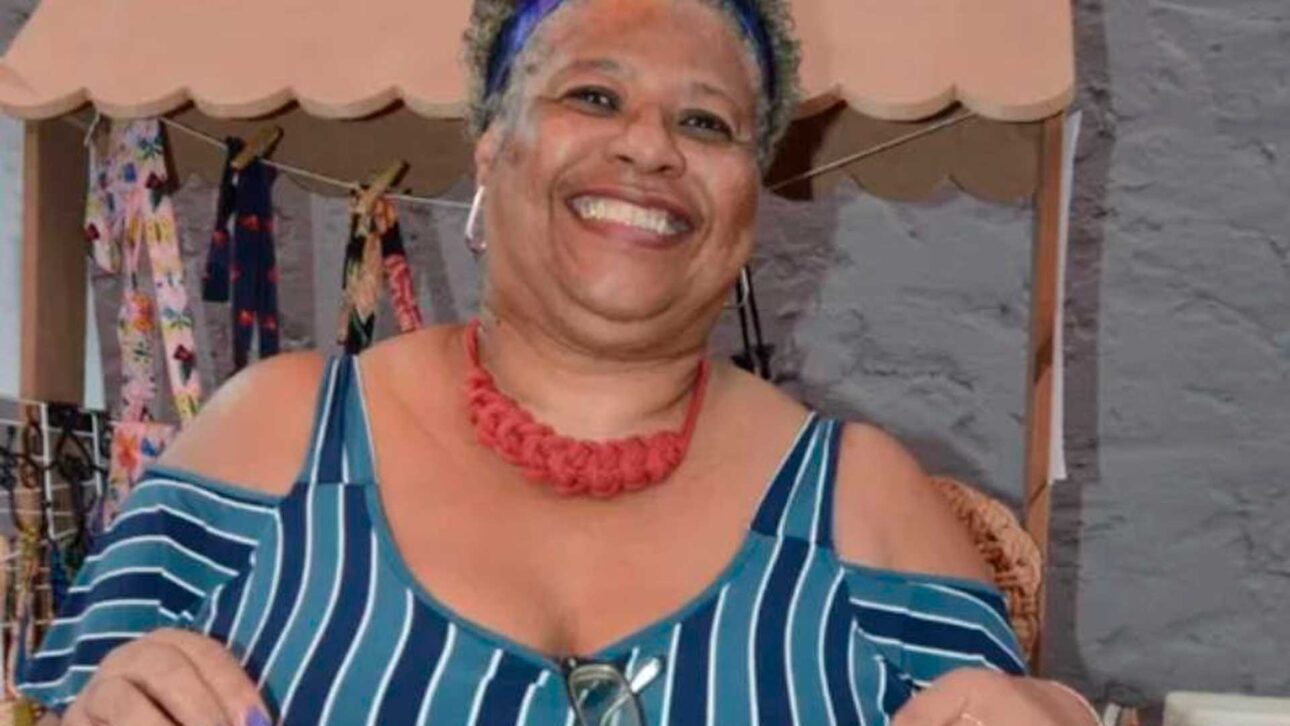
Before betting on bags, Sandra worked in retail. After losing her job, she started selling crochet pieces without initially treating it as a structured business. The income came gradually, through smaller orders and repeat customers.
The phase also had a family weight. According to the original report, Sandra lost her mother, who was a close presence and helped care for Leo, her son, who has cognitive disabilities and needs constant attention. The business grew amidst this routine, without the easy image of a “perfect turnaround” that often appears in entrepreneurship stories.
The brand took her own name, Sandra Portella. The choice came because customers did not associate the pieces with the artisan. The name on the label worked as a signature and as a way to show that there was a person behind each product, not an anonymous production bought ready-made.
The crochet bag scaled up when it met upcycling
Until 2018, Sandra was still producing trousseaus. The turning point came when she started developing bags that mixed fabrics and crochet, inspired by origami bag models seen on the internet. The shape resembled the Japanese folding, but the execution went through a Brazilian interpretation, with handmade handles and repurposed prints.
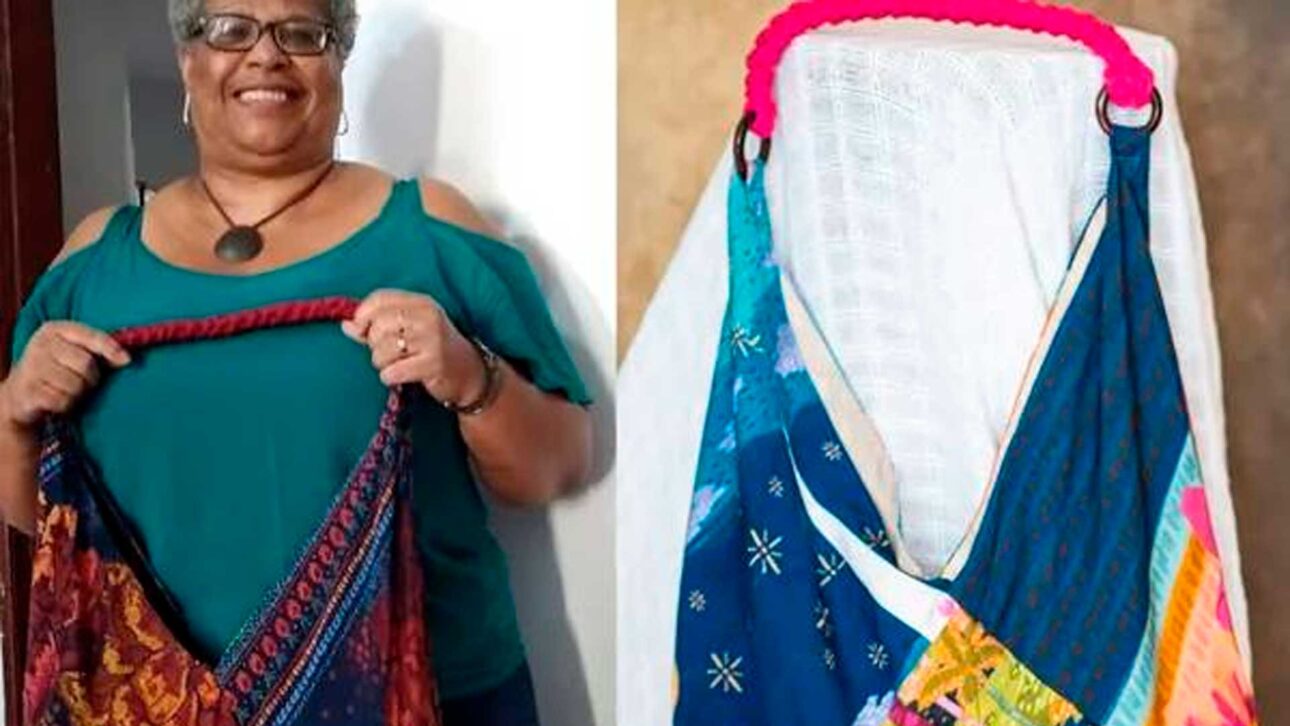
Upcycling helped the piece gain value. In practice, this model transforms materials that would be discarded into new products, without necessarily going through an industrial recycling process. Sebrae-SP describes the concept as the creation of fashion items from disposable or already existing materials.
In Sandra’s case, the fabrics donated by Farm were cited as one of the points that boosted the brand in 2021. From there, the bags began to circulate more, including through online sales and partner resellers.
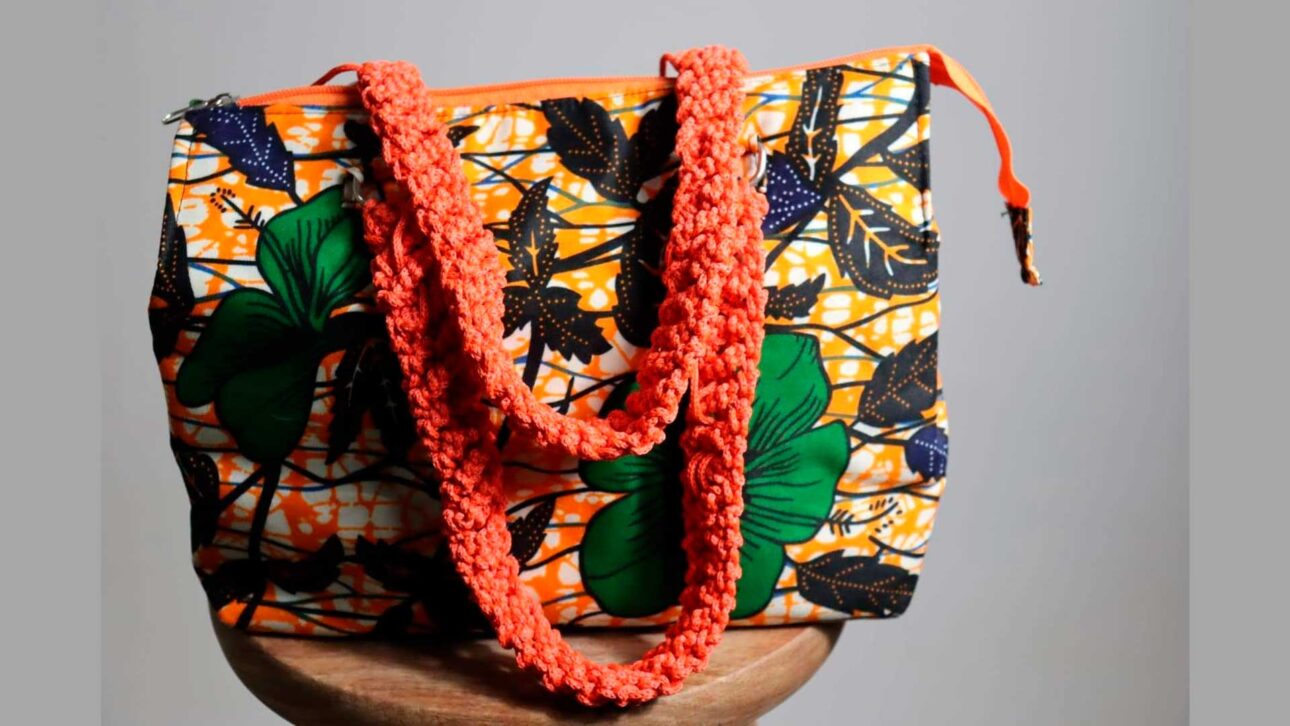
The product also escaped the appearance of “improvised craftsmanship.” The combination of printed fabric, manual finishing, and recognizable design helped position the bags as fashion accessories, not just as repurposed pieces.
What seems like leftovers becomes raw material for a larger chain
Sandra’s story enters a market that already moves large numbers in Brazil. Abit, the association representing the textile and clothing industry, reports that the sector comprises 25,700 companies in the country, employs over 1.34 million workers, and generated R$ 221 billion in annual revenue in 2024.
This size explains why fabric leftovers, scraps, and surpluses have become opportunities for small brands. What is left over in the production chain may be little for an industry, but enough for an artisan to create unique pieces in smaller batches.
A Sebrae bulletin on sustainable fashion points out that recycling or reusing fabrics helps give purpose to industrial leftovers, which can become fashion accessories and decoration objects. The same material cites recycled fibers, cotton, coffee grain sacks, and PET bottles among alternatives used in sustainable fabrics.
This point is central to understanding the case. Sandra doesn’t just sell a “beautiful” bag or just an “ecological” bag. The product combines aesthetics, reuse, and manual production, three elements that help justify price, identity, and repurchase.
The team grew with other women and showed where the bottleneck was
With the increase in sales, Sandra stopped working alone. The brand reached a team with 13 employees, all women, according to the 2023 report. This growth shows a common limitation in artisanal businesses. Demand can rise quickly, but manual production requires training, time, and a standard of finish.
Training was part of this process. In the same period that the bags gained strength, Sandra participated in groups of women entrepreneurs. This stage is usually decisive for those who move from informal work to dealing with price, stock, delivery, margin, and customer service.
The case also aligns with a broader movement in the country. According to a Sebrae survey based on Federal Revenue data, more than 2 million small businesses led by women were created in 2025, about 42% of the total MEIs, microenterprises, and small businesses opened that year.
Another Sebrae study points out that Brazil had 10.4 million women business owners in December 2025, the highest number in the historical series, after a 27% growth in ten years. Even so, women were 34.3% of business owners, although they represented 51.8% of the working-age population.
Sandra fits precisely into a group that gained prominence. In 2024, the female presence grew again among initial entrepreneurs, and Sebrae cited progress among women aged 45 to 54 in already established businesses.
Would you buy a bag made from reused fabric if it had good finish and fair price?
Sandra Portella’s story shows that fabric leftovers can become income, employment, and a brand of their own.
Leave in the comments if upcycling still seems like a small niche or if it has already become a real path for small businesses in Brazil.