Portuguese
  Spanish



Considering Atvos’ Current Production – Formerly Odebrecht Agroindustrial, the Group Believes That the Business Value Ranges Between 7.3 Billion and 13 Billion Reais.
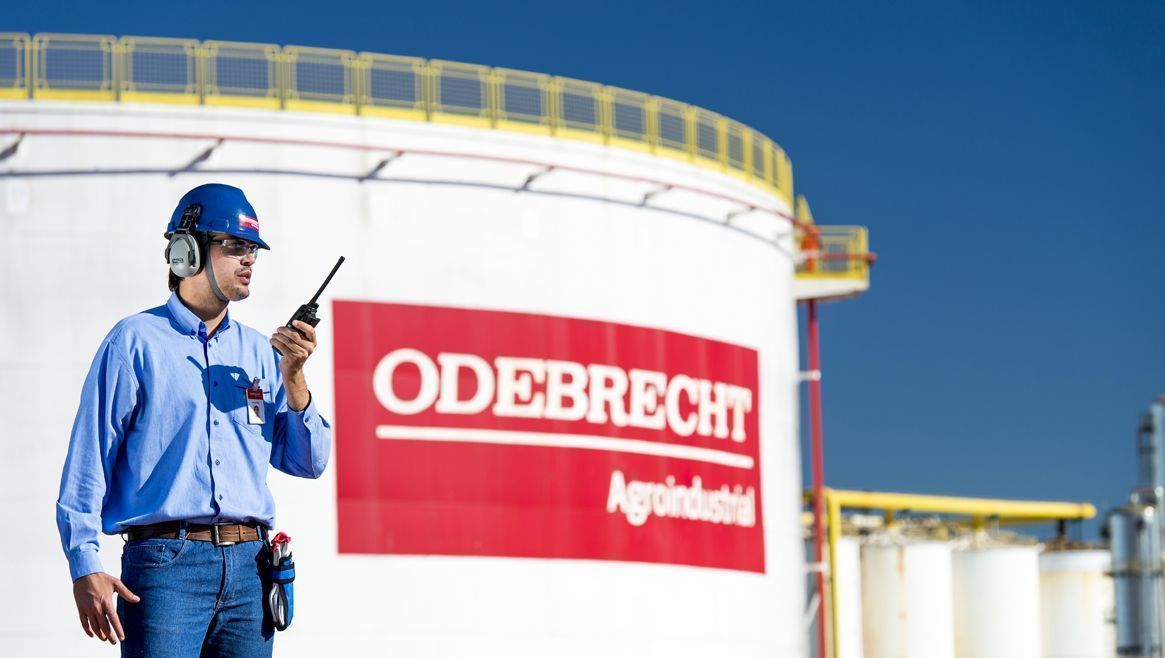
Atvos – formerly Odebrecht Agroindustrial – is one of the largest sugar-energy groups in Brazil, the company has nine units and a crushing capacity of nearly 40 million tons of sugarcane per harvest, the company is also the largest in the sector to face judicial recovery. Many Job Vacancies for Work at Petrobras’ FPSO P-50 Announced Yesterday, March 3.
Also Read
- Catering International from Macaé Calls for Elementary School Professionals Today
- Offshore Contracts in Rio das Ostras Demand Job Vacancies in Various Functions Today, March 4
- Metalworking Company Opens Selection Process to Address New Projects in Civil Construction Works
Atvos may be put up for sale soon, depending on the outcome of the company’s and its holding’s creditor assemblies. Initially, the vote for Odebrecht will take place on March 18, while the creditors of the sugar-energy company will meet on the 27th.
-
Half of Brazilians Prefer Lower Taxes with Private Health and Education, While 44% Opt for Higher Taxes for State-Provided Services, Datafolha Survey Reveals

-
Brazil’s Most Expensive Toll Rises to R$ 40.60 on Route from São Paulo to the Coast, Nearly Matching Bus Fare to Santos

-
At 35, Lawyer Leaves Corporate Career to Turn 1-Hectare Farm into Organic Supplier for Schools in Southern Brazil
-
Solar-powered agricultural robots operate 24/7, remove weeds with 8mm precision, and aim to cut herbicide use without fuel consumption in the fields.





The company’s executives believe that the business value should range between 7.3 billion and 13 billion reais. For the calculation, they considered the installed capacity and the company’s effective production, in addition to a minimum value of US$ 50 per ton of sugarcane.
However, this threshold may be above what has been seen in recent sector negotiations. In 2019, for example, Biosev sold two units for US$ 15 and US$ 29 per ton of installed capacity of sugarcane.
Atvos’ creditors have been requesting changes in the company’s control for some time. Last year, both the Lone Star fund and Castlelake – both creditors of the company – participated in discussions about the possibility of taking over Atvos’ command.
Now, the demand came from BNDES – National Bank for Economic and Social Development. The BNDES is the largest creditor of the former Odebrecht Agroindustrial, with over 4 billion reais to receive.
Atvos expected to secure a period of four to five years to sell the company. However, under the new proposal, the sale can be requested by the creditor banks at any time after the approval of the judicial recovery plan.
An alternative to the sale would be the creation of an investment fund structure (FIP), which could manage Atvos. The objective – both of the sale and the creation of the FIP – would be precisely to distance Odebrecht from the company’s administration.
According to sources consulted by Valor, the recovery plan is expected to stipulate that half of Atvos’ commitments remain as debt, while the other half will be converted into a hybrid instrument, with no maturity, that will function as a profit participation debenture (DPL).
The conversion of the debt into DPL, however, is not expected to happen immediately, being linked to the sale of the company or the creation of the FIP. In both scenarios, according to the report, Odebrecht will retain 10% of the amount attributed to the company’s shares.
In the case of a sale, Odebrecht receives at the time. In the scenario of a FIP, the holding would have a right to 10% of the future sale. It would also have been established that the company would have 2.5 years of grace on interest. This debt service will be added to the total commitment at maturity.
Additionally, if neither the sale nor the management transfer occurs within two years, half of the debt will be automatically converted into DPL.