






 Portuguese
  Spanish


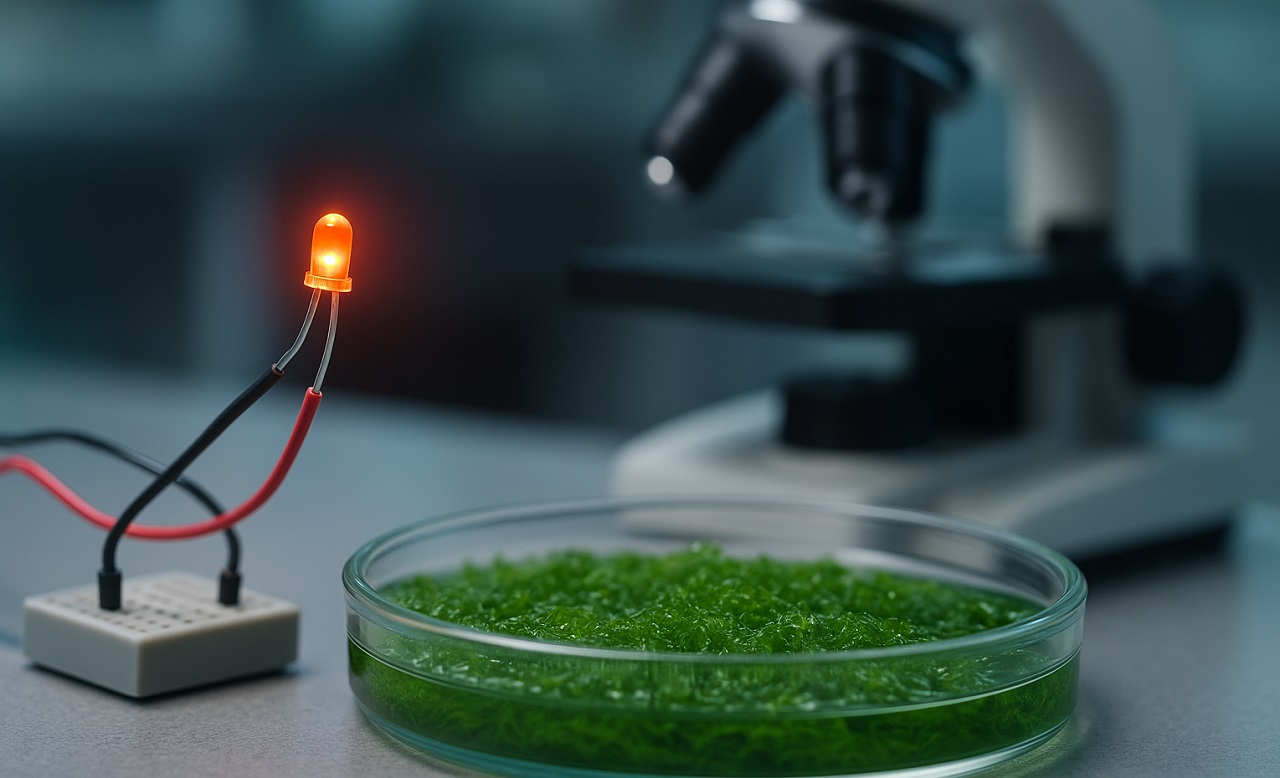
Scientists Study How To Generate Electricity From Seaweeds And Transform Green Sludge Into A Clean Energy Source. Understand How The Technology Works.
When we talk about energy from seaweeds, it may sound like science fiction, but this technology is starting to gain traction in laboratories and promises to open new pathways for clean sources in the future. In Santiago, Chile, researchers from the University of Santiago are diving headfirst into the study of seaweeds as an alternative for generating electricity sustainably — and the most curious thing is that the process starts with a material that many people see as waste: the green sludge that floats in the sea.
How Do Seaweeds Generate Electricity?
The secret lies in a field of study called biophotovoltaics. It works something like this: seaweeds, like any organism that performs photosynthesis, absorb sunlight and, during the process, manage to oxidize water.
By doing this, they release electrons, and these electrons are exactly what scientists want to capture. Using biophotovoltaic panels (which resemble the well-known solar panels), researchers spread the seaweeds over electrodes and harness the released energy to generate electric current.
-
Brazilian scientists are simultaneously advancing two research projects on clean hydrogen and driving solutions that could transform the energy matrix, enhance industrial competitiveness, and accelerate large-scale emission reduction targets.

-
Advancement in renewable energy: A R$ 150 million project launched by Petrobras and Finep aims to create state-of-the-art electrolyzers for green hydrogen, strengthening national research and preparing Brazil to compete in a billion-dollar energy market.
-
Illiterate or semi-literate grandmothers were trained to repair solar systems, open rural workshops, and light up homes that still depended on kerosene.
-
The world has bet on green hydrogen as the fuel of the future, but now faces the side effect: producing 1 kilogram requires about 9 liters of ultrapure water, and the largest projects on the planet are precisely in the driest regions of the Earth, where water is already scarce for people.





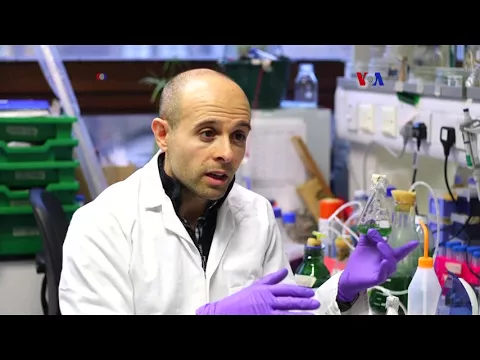

This process, known as electricity generation from seaweeds, is still in the experimental phase, but it already shows interesting results. According to Federico Tasca, the project leader in Chile, besides energy, the process also releases oxygen as an environmental bonus, which helps reinforce the ecological appeal of the idea.
Why Are Seaweeds Seen As A Promising Energy Source?
Until recently, most research in the area focused on microalgae, single-celled organisms that also perform photosynthesis. But now the focus is expanding to macroalgae, which are larger and multicellular — and this is where seaweeds come in as an energy source.
According to Tasca, these macroalgae are more resilient, easier to harvest, and work with in experiments. This means that in the future, they could be a more viable option for generating energy on a small scale.
Of course, there is still much to improve. The efficiency of biophotovoltaic panels with seaweeds is far from being sufficient to supply a house or an industry. For now, research indicates modest applications such as lighting a lamp, powering some LEDs, or small electronic devices. But every great advancement starts this way: small and full of potential to grow.
What Does The Future Hold For Seaweed Energy?
Despite still being in its early stages, the idea of generating electricity from seaweeds is catching the attention of scientists and environmentalists. This is because seaweeds are abundant, grow quickly, and do not compete with agricultural land, unlike some other renewable energy sources.
As researcher Alejandra Moenne reminded, seaweeds are a true treasure chest hidden at the bottom of the sea. They hold genes and molecules with potential not only for generating energy but also for medicinal and technological applications that we can barely imagine.
The coming years should bring advancements in how to increase the efficiency of these systems and, who knows, transform what today seems limited into a real alternative for clean energy for isolated communities, small devices, or even areas where other sources are unviable.
Why Is This Type Of Research Important For The World?
The search for new forms of renewable energy has never been so urgent. The planet needs to reduce carbon emissions and decrease dependence on fossil fuels. In this context, ideas like electricity generation from seaweeds gain strength because they represent creative solutions that take advantage of what nature already offers in abundance.
Projects like the one in Chile show that innovation can come from anywhere and with resources that are often underestimated, like the green sludge that floats in the sea.
Although we are still far from having seaweeds as a daily energy source, the fact that scientists are exploring these possibilities is already an important step. This is how science advances: by testing, failing, improving, and ultimately finding answers that can change the world.








Be the first to react!