Portuguese
  Spanish


Iyagunã Dalzira began formal studies at 47 years old, in EJA, and did not stop until the top: she became a doctor by UFPR in 2022, completing graduation and master’s. The elderly doctor at 81 years old, candomblé priestess, defended a doctorate on black female teachers and became a symbol of study in old age.
Some people at 81 years old collect grandchildren, and there is Iyagunã Dalzira, who collects diplomas. In September 2022, she defended her thesis and became a doctor by the Federal University of Paraná, at the end of an academic ladder that took more than three decades to build. A respected priestess, she turned the classroom into an extension of her own story of faith and culture, never treating age as an obstacle.
According to the UFPR, her journey deviates from any standard schedule: formal studies at 47, graduation at 63, master’s at 72, and doctorate at 81. The title of doctor crowned a path that began in EJA, the Youth and Adult Education program, and passed through a technological university before reaching the postgraduate program in education.
Who is Iyagunã Dalzira, the elderly doctor at 81 years old
Dalzira Maria Aparecida was born in 1941, in Minas Gerais, and is known in the religious community as Iyagunã Dalzira.
-
Over 5,000 Families Join Brazilian Network Providing 3D-Printed Prosthetics, Founded by Teacher Inspired by Daughter’s Limb Difference

-
Over 1,060 Wheelchairs Created from 102 Tons of Aluminum Tabs Collected Across Brazil, Turning Waste into Mobility Nationwide
-
Explore the History, Architecture, and Unique Features of Arena Fonte Nova, One of Brazil’s Most Iconic and Modern Football Stadiums

-
Indian School in Assam Expands Enrollment by Accepting Plastic Waste as Tuition Payment


She is a priestess, the highest female leadership role within a candomblé temple.
In practice, this means she conducts rituals, guides followers, and preserves the oral memory of a centuries-old tradition.
UFPR records that Iyagunã Dalzira is part of the seventh generation of Africans who arrived in Brazil, a fact she carries as part of her own identity.
Before becoming a well-known name at the university, she was already a reference in the defense of African-rooted culture and religiosity in Paraná.
It is this dual authority, of the temple and the academy, that makes her story different from most cases of late study.
The elderly doctor at 81 years old did not reach postgraduate studies by chance, but after decades acting as an informal educator within her own community.
The ladder of diplomas up to the doctorate at UFPR
She was taught to read and write as a child by her own father, at a time when access to school for girls was restricted.
Formal and regular studies, however, only began at 47, when she entered EJA.
At 63, she enrolled in the International Relations course in Curitiba, her first undergraduate degree.
At 72, she defended her master’s degree at the Federal University of Technology – Paraná, UTFPR, with a dissertation on the knowledge of candomblé in contemporary times.
At 81, she completed the cycle with a doctorate from UFPR, reaching the highest level of Brazilian academic education.
Between the first enrollment in EJA and the title of doctor, there were about 34 years of continuous study.
For comparison, this interval is longer than the entire life of many of the colleagues who defended their thesis alongside her.
The thesis on black female teachers and what it investigates
Iyagunã Dalzira’s final work was not a generic theme, but rather a perspective she knows from the inside.
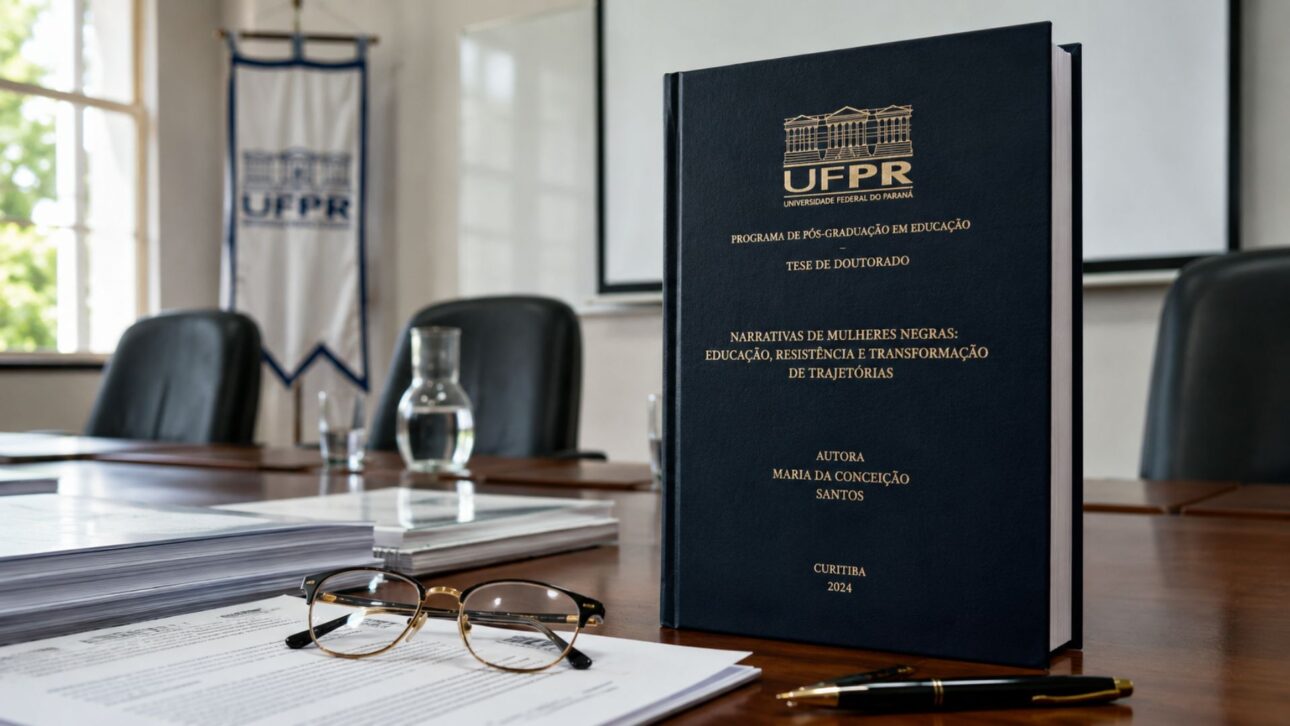
The thesis is called “Black Female Teachers: Gender, Race, African-rooted and Neopentecostal Religions in Public Education”.
According to CartaCapital, the research investigates how the religious identity of black female teachers influences the way they teach.
The study was defended in the Graduate Program in Education at UFPR, under the guidance of Professor Paulo Vinicius Baptista da Silva.
The defense took place on September 23, 2022, and was approved by the evaluation committee.
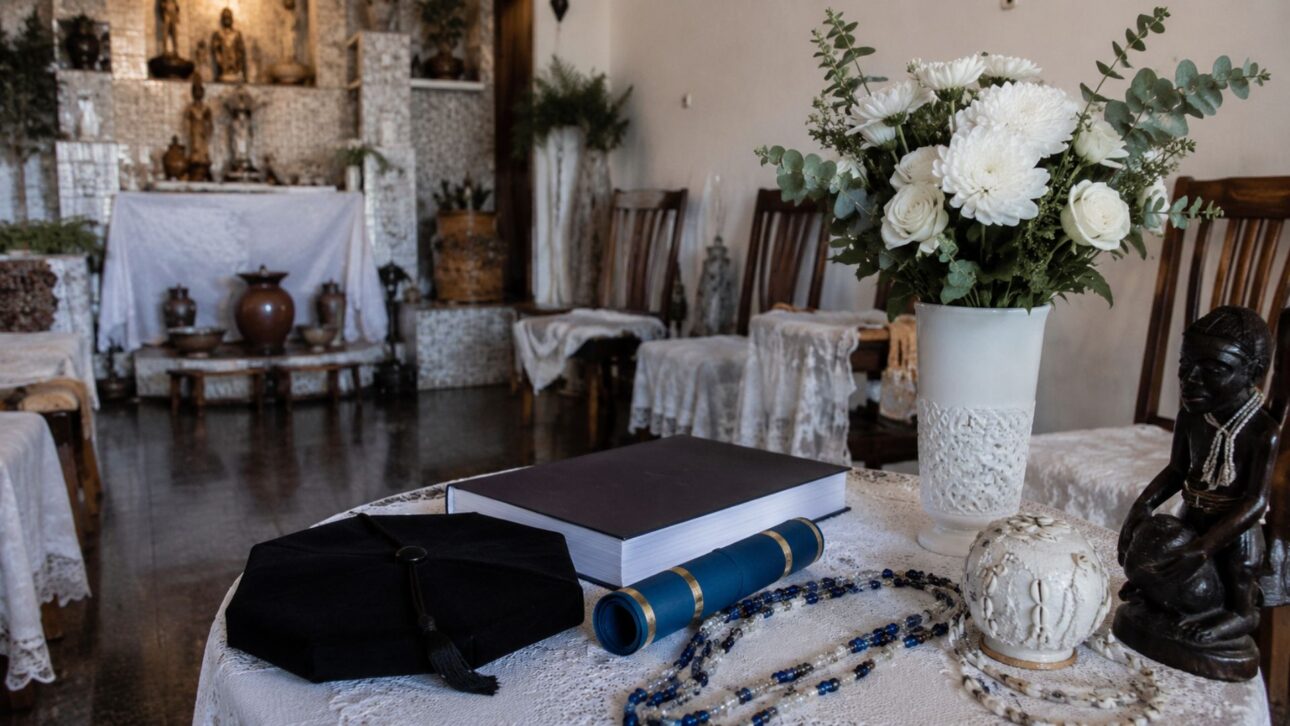
In practice, the doctorate transformed the terreiro experience into an object of study, with method, bibliography, and academic review.
It is a rare type of research: it comes from someone who lives the African-rooted religion from the inside, not from an external observer.
Therefore, the thesis was treated not only as a personal achievement but as an original contribution to the field of education.
What is EJA, the door that opened the way
EJA, Education for Young and Adults, is the public modality aimed at those who did not complete their studies at the regular age.
It was through this door, at 47, that Iyagunã Dalzira resumed formal schooling.
The program allows for the recovery of elementary and high school stages at a pace adapted to the adult routine.
Without EJA, she would hardly have reached graduation, a master’s, and a doctorate years later.
Her case serves as a concrete advertisement for a little-celebrated public policy.
Each subsequent step, from college to postgraduate, depended on this first reunion with the classroom.
Seniors in university: what the numbers say
The trajectory of Iyagunã Dalzira is an exception, but it aligns with a real trend.
According to the Higher Education Census by Inep, the number of enrolled students aged 60 or over jumped from 5,107 in 2013 to 39,448 in 2023.
This growth, driven by distance learning, exceeded 670% in ten years, the largest leap among all age groups.
Even so, seniors remain a minimal fraction of the total, around 0.4% of students in on-site courses.
In other words, the presence is growing rapidly but starts from a very small base.
The data shows that returning to study after 60 is no longer an anomaly, although it is still far from common.
Cases like that of the elderly doctor at 81 help push this curve upward by giving visibility to the topic.
Why studying in old age is worthwhile
Returning to studies in old age has effects that go beyond the diploma.
Research on aging associates constant intellectual activity with the preservation of memory and reasoning.
Keeping the brain active, with reading, writing, and debate, is linked to a slower cognitive decline.
There is also the social gain: the classroom reintegrates the elderly into a group, with exchange and purpose.
For many senior students, the goal is not employment, but rather the fulfillment of a postponed project.
In the case of Iyagunã Dalzira, studying became a work tool, as she works as an educator and researcher.
This meeting between health, social interaction, and purpose is what makes experts advocate for studying in old age as a well-being policy.
What the case of the elderly doctor at 81 years old shows
The journey of Iyagunã Dalzira inspires because it combines time, identity, and knowledge into a single biography.
She proves that starting late does not prevent reaching the highest point of academic achievement, the doctorate.
But it’s worth keeping your feet on the ground when drawing lessons.
A doctorate at 81 is an exception, not the rule, and Inep’s own numbers show that the elderly still make up 0.4% of university students.
An achievement like this depends on health, free time, and access to a quality public university.
Turning the feat into a demand like “if she succeeded, anyone can” would be unfair to those who did not have the same conditions.
The merit is individual, but the late starting point also highlights access to education that took a long time to arrive for many people.
Even so, few examples summarize so well the power of studying in old age and the reach of a policy like EJA.
From yalorixá to doctor by UFPR, Iyagunã Dalzira made knowledge an act of continuity, not farewell.
And you, would you return to study in old age like this elderly doctor at 81 years old? Comment here if you know someone who, like Iyagunã Dalzira, proved that it’s never too late to pursue a diploma.