Portuguese
  Spanish


Monitoring In A Remote Reserve In Chad Tracks The Return Of One Of The Largest Birds On The Planet To The Sahara, After Translocation And Adaptation Phase In Enclosures, With Records Of Reproduction In The Wild That Help Measure The Recovery Of The Species In The Desert.
A wild population of red-necked ostriches has re-established itself in a desert area in northern Chad after a translocation and reintroduction program conducted in the Ennedi Natural and Cultural Reserve.
The project monitoring has recorded the formation of pairs, nest building, and hatching of chicks in the wild, signs used by conservation teams to measure adaptation and continuity of the species in a territory where it had been eliminated.
Red-Necked Ostrich And The Challenge Of Returning To The Sahara
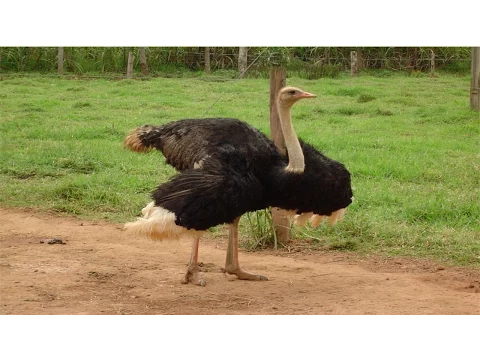
The red-necked ostrich is described by conservation organizations as a critically endangered form, also known as the North African ostrich.
-
Forgotten Map Leads Diver to Shipwreck with Gold, Rare Jewels, and Secrets Hidden for Nearly 350 Years

-
Furong: The 2,000-Year-Old Chinese City Built on a 60-Meter Waterfall Becomes a Global Tourist Phenomenon

-
YouTube Inventor Dubbed “Real-Life Tony Stark” Builds Robotic Legs for Father’s Day, Creating a Wheelchair That Conquers Stairs and Rough Terrain
-
Brazilian Scrap Dealer Processes 3,000 Tons of Ferrous Scrap Monthly, Paying $0.09 to $0.70 per Pound, Reveals Why a Hidden Cylinder Costs 1,500 kg Discount





It is the largest living bird, with records of about 2.7 meters tall and close to 150 kilograms in weight, characteristics that make management and transportation particularly delicate.
At the same time, this size makes the species a highly visible animal in the desert, which facilitates the identification of population changes, but also increases exposure to human pressures in regions where wildlife has already suffered declines.

Ennedi Reserve And The Context Of Fauna Restoration
The Ennedi is a vast landscape of plateaus, canyons, and sandstone formations, where perennial springs support wildlife even in conditions of extreme aridity.
Institutional reports highlight that, since the mid-20th century, the combination of illegal hunting and regional conflicts has eliminated several species from the local Sahelo-Saharan assemblage, including the addax and the red-necked ostrich itself.
The reversal of this scenario has come to depend on protection actions, management of protected areas, and species replenishment initiatives based on remaining populations.
The partnership to restore wildlife in Ennedi was initiated between African Parks and the government of Chad, with participation from local communities, and the formal status of the reserve was proclaimed later.
Within this effort, the reserve began to be presented as a refuge for mammals and birds adapted to the arid environment, while field teams reinforced patrolling, monitoring, and strategies to reduce hunting.
It was in this context that the reintroduction of the ostrich gained priority as an operational focus.
Zakouma As Origin And The Translocation Within Chad
To form a founding population, the program sought individuals from another part of the country that still maintains an important core of the species.
The chosen origin was Zakouma National Park, also in Chad, described as an area where the population of ostriches has remained in more robust numbers after hunting has decreased.
According to African Parks, Zakouma recorded approximately 250 ostriches, which led the team to consider the site a logical source to support a translocation aimed at Ennedi.
Capturing Chicks And The Transport Logistics
The transport of adult ostriches is often treated as a high-risk endeavor due to severe injuries during handling and movement.
For this reason, the project opted for a strategy focused on wild chicks born in nature, approximately two months old.
The rationale presented was operational: chicks at this stage would have already learned basic behaviors from their parents, but would still be young enough to better cope with the capturing and relocation process, reducing the risk of common traumas in larger animals.
The operation required quick and coordinated captures in Zakouma.
The described strategy involved driving away the adults and capturing a young one, which was then transported with care for the next stages.
The chicks were accommodated on aircraft and taken to an environment different from their savanna of origin, starting to integrate into an adaptation routine to the desert landscape of Ennedi.
In total, according to the report from African Parks, 63 chicks from eight clutches were captured, with the group divided between two destinations: part went to Ennedi and part was sent to a conservation partner operating in central Chad.
Adaptation Enclosures And Preparation For Wildlife

Upon arriving at the reserve, the chicks were not immediately released.
The described strategy involved enclosures designed to minimize human interaction, combined with night shelters for protection against the cold during certain times of the year.
Management included vaccination and controlled feeding with items such as corn, beans, peanuts, and plants found within the reserve, a procedure presented as nutritional support during the most sensitive acclimatization phase.
The next stage aimed to bring the animals’ living conditions closer to the demands of the open environment.
To this end, the ostriches were transferred to an acclimatization enclosure that replicated elements of the natural habitat they would live in, including rocks, holes, grasses, and trees.
This prolonged adaptation period was associated with preparation for autonomy, physical development, and consolidation of social behaviors within the group, before the exit door was opened.
The release moment was timed with the onset of the seasonal rains, when the landscape changes and resources such as temporary vegetation and water in scattered points may become more available.
From the opening of the enclosure, the ostriches began to roam freely and occupy areas where monitoring records signs of establishment, such as staying in certain sectors, recurring routes, and interaction with the human environment.
Nests, Hatchings, And Population Growth
Reports from African Parks describe that, after release, the ostriches began to approach villages and coexist with people, with field teams monitoring movements and working to support communities’ understanding of the animals’ presence.
The work has been described as a routine of constant observation and rapid response, aimed at reducing risks, avoiding conflicts, and supporting coexistence in a region where human life and wildlife share scarce resources.
The most sensitive indicator of stabilization of a reintroduction, however, is reproduction in the open environment.
The institutional report states that, in November 2023, four pairs within the wild population formed nests, and a total of 20 chicks hatched.
This record increased the total population in Ennedi to 53 individuals, a figure released as part of the program’s monitoring in the reserve.
The reintroduction of the red-necked ostrich in Ennedi has been presented as part of a strategy for restoring fauna in the Sahara and Sahel, with results measured by survival, adaptation, and births in the wild.
By rebuilding a population in a territory where the species had been eliminated, the program has come to rely on maintaining protection, monitoring, and continuity of translocations, elements that define long-term permanence in desert environments.
If a large species can reproduce freely in the Sahara after decades of decline, which other desert animals could follow the same path in reintroduction projects in North Africa?