






 Portuguese
  Spanish


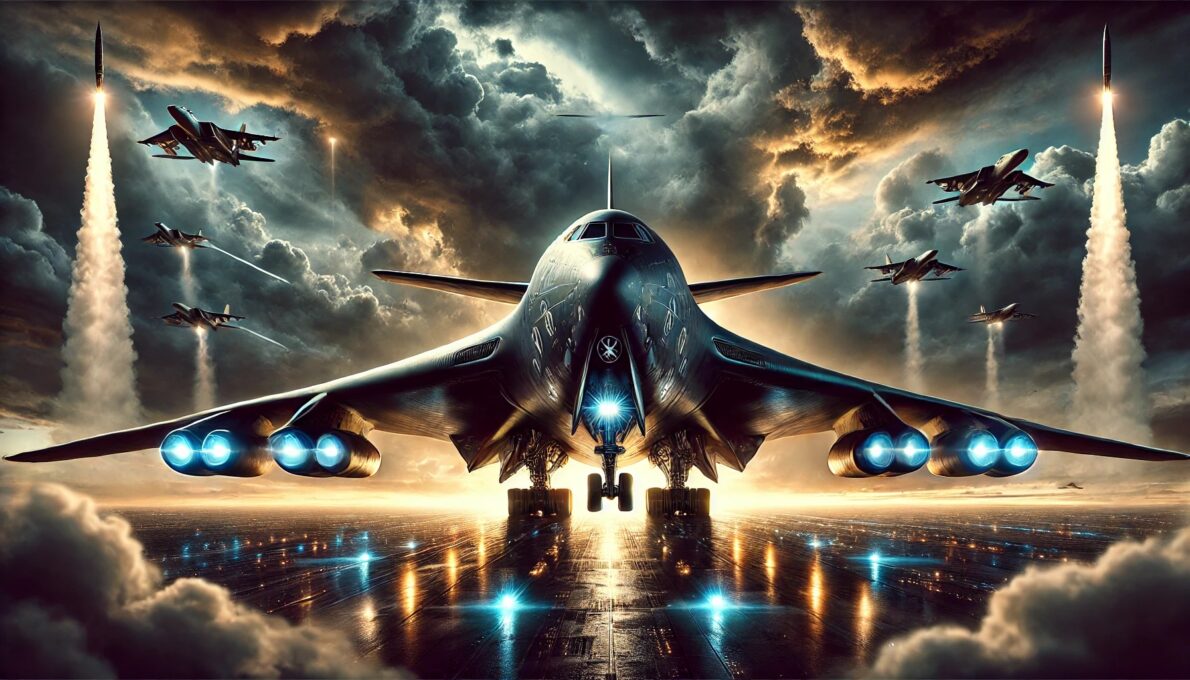

SNC Surpasses Major Competitors Like Boeing and Wins Billion-Dollar Contract to Develop Nuclear Defense Aircraft Known as “Doomsday Planes” That Will Ensure U.S. Security in Extreme Scenarios.
When it comes to national security, especially in times of global tension, the U.S. government spares no effort. Recently, Sierra Nevada Corporation (SNC) surpassed major competitors like Boeing and secured a billion-dollar contract for the construction of the country’s new nuclear defense aircraft. Known as doomsday planes, these giants used by the U.S. Air Force are designed to operate in large-scale destruction scenarios, such as nuclear wars. And, as you might imagine, we are not talking about just any plane.
What Are the “Doomsday Planes”?
The so-called doomsday planes are special aircraft designed to be flying military command centers. This means that in the event of a nuclear catastrophe or any other situation that destroys ground command bases, these planes come into action to ensure that the U.S. government still has control over its military operations. They are literally prepared for the worst-case scenarios.


These planes became famous during the Cold War when the threat of a nuclear war was constant. Since then, the U.S. Air Force has maintained an updated fleet of these nuclear defense planes, and now, with the new SNC contract, this fleet will receive reinforcements.
-
Brazilian Navy Demonstrates Strength in Naval Exercise with Over 20 Nations, Deploys Frigate Independência in Anti-Submarine and Air Defense Scenarios, and Joins Historic Formation with 26 Ships from 14 Allied Navies off the U.S. Coast

-
BAE Systems to Supply New Bofors 40Mk4 Cannons to the Brazilian Navy
-
Ukraine Bets on Swedish Gripen E Jets to Counter Russia, But 16 Fighters Won’t Arrive Until Late 2020s; Kiev to Use C/D Models for Pilot Training and Operations Amid Ongoing Missile and Drone Threats
-
End of an Era: US Navy’s C-2A Greyhound Makes Final Catapult Launch Before Retiring to Arizona Desert; Aircraft Supported Carriers in Wars and Humanitarian Missions for Nearly 60 Years


SNC Surpasses Boeing and Other Giants
The victory of Sierra Nevada Corporation over the giant Boeing to secure the $13 billion contract was a true achievement. To give you an idea, Boeing is 40 times larger in sales than SNC, and yet, the company led by the Turkish couple Eren and Fatih Ozmen managed to outshine the competition. The contract involves the construction of new “doomsday planes” that will be used by the U.S. Air Force as part of its nuclear defense strategy.
According to Eren, the company’s CEO, “taking smart risks is essential” for success. She has transformed SNC into one of the largest woman-owned defense contractors in the U.S., which is quite an accomplishment in the industry.
Boeing was not the only giant defeated: heavyweight names like Lockheed Martin and Northrop Grumman were also in the running. SNC stood out with its focus on innovation and, of course, by providing solutions that are on time and within the budget set by the U.S. government.
The Role of Nuclear Defense Aircraft
What makes these nuclear defense aircraft so special is their ability to maintain military control even in extreme situations. A famous example of this fleet is the E-4B Nightwatch, which is a militarized version of the Boeing 747. These planes are flying command centers, equipped with state-of-the-art technology and protected against electronic attacks, such as electromagnetic pulses.
The E-4B Nightwatch is equipped with advanced communication systems, allowing coordination of military forces, execution of emergency war orders, and communication with civilian authorities even in total chaos situations. It can fly at high altitudes and has the capability for long periods in the air, in addition to being refueled in-flight, ensuring that it can stay airborne indefinitely if necessary.
The Technology Behind the New Aircraft
The new aircraft from SNC will be even more advanced than the E-4B Nightwatch. The idea is for these next-generation jets to fly higher, faster, and be equipped with air intelligence, surveillance, and reconnaissance (ISR) technology for large-scale operations. According to Fatih Ozmen, the company’s co-founder, these new models will be capable of “deep sensing,” which means they will have an even more detailed view of what is happening on the ground, even in multi-domain operations.
The capacity of these nuclear defense aircraft goes far beyond that of commercial aircraft. They are protected against electromagnetic interference and are built to operate in hostile environments, ensuring that the U.S. Air Force always has a flying command base available.
The Future of Airborne Nuclear Defense
The $13 billion investment in new nuclear defense aircraft shows how seriously the U.S. takes emergency preparedness for large-scale situations. These doomsday planes are not just a piece of technology: they are a guarantee that, even in the most catastrophic possible scenario, the U.S. will still be able to defend itself and coordinate its forces.
With SNC at the forefront of this project, we can expect a new era for U.S. air defense. The company has already proven that it can compete with industry giants, and now it will have the opportunity to demonstrate its capabilities in one of the most important and secretive contracts of the U.S. government.
Meanwhile, the world watches. After all, these nuclear defense aircraft are a constant reminder that, even with the pursuit of peace, preparation for the worst-case scenario never stops.


