






 Portuguese
  Spanish


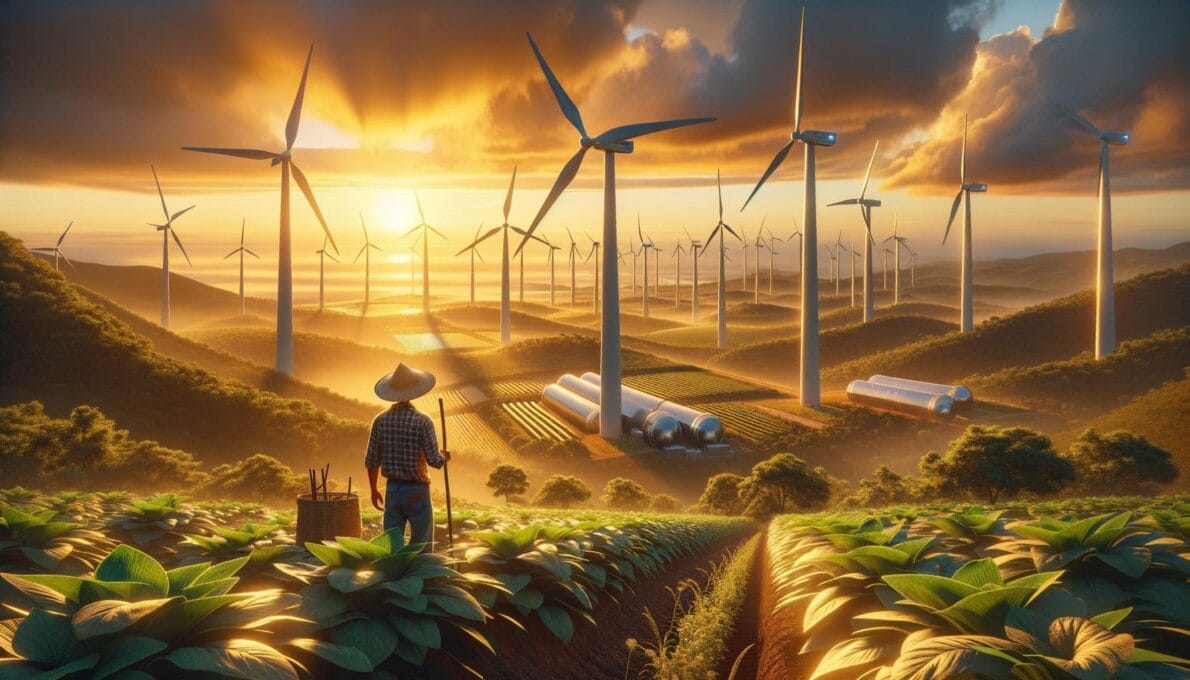
Recently, I had the opportunity to dive into a news story that left me particularly excited: Bahia is leading the way in renewable energy production in Brazil, contributing one-third of the country’s wind energy. This fact was highlighted during the Brazilian Energy Leaders Forum, a prestigious event that brings together industry experts and leaders.
Bahia’s Spotlight at the Energy Forum
In the city of Rio de Janeiro, the governor of Bahia, Jerônimo Rodrigues, shared valuable insights about the state’s success in generating clean energy. His presentation not only highlighted Bahia’s impressive performance but also underscored the potential for future expansions in this vital sector.
A Milestone in Wind Energy Generation
One of the highlights of my research was discovering the Aroeira Wind Complex, recently inaugurated by Enel Green Power. This project has the capacity to serve 849,000 households annually, with 81 wind turbines spread across eight wind farms. The installed capacity of 348.30 MW and the annual production of 1,800 GW are numbers that speak for themselves, showcasing Bahia’s commitment to sustainability and the reduction of harmful gas emissions.
-
Brazilian scientists are simultaneously advancing two research projects on clean hydrogen and driving solutions that could transform the energy matrix, enhance industrial competitiveness, and accelerate large-scale emission reduction targets.

-
Advancement in renewable energy: A R$ 150 million project launched by Petrobras and Finep aims to create state-of-the-art electrolyzers for green hydrogen, strengthening national research and preparing Brazil to compete in a billion-dollar energy market.
-
Illiterate or semi-literate grandmothers were trained to repair solar systems, open rural workshops, and light up homes that still depended on kerosene.
-
The world has bet on green hydrogen as the fuel of the future, but now faces the side effect: producing 1 kilogram requires about 9 liters of ultrapure water, and the largest projects on the planet are precisely in the driest regions of the Earth, where water is already scarce for people.





Contributions and Future Perspectives
The event in Rio de Janeiro was a platform to discuss the energy transition and what states can offer for COP 30. Bahia, along with Rio Grande do Norte, proved to be a pillar in generating energy from renewable sources, highlighting the importance of the Northeast in the national energy landscape. The projection is that, with the ventures underway, Bahia will soon reach 50 GW of installed capacity in wind and solar energy.
A Renewable Future
Bahia’s electricity matrix is already composed of 93% renewable sources, with wind energy representing the largest share. This fact not only reinforces the state’s role as a leader in clean energy but also points to a future where sustainability is key to economic and social development.
In conclusion, Bahia’s leadership in renewable energy generation is a shining example of how investment and commitment to clean sources can transform the energy landscape of a region. I look forward to seeing how this leadership will develop in the coming years and the impact it will have not only in Brazil but also in the global effort to combat climate change.
For more information, visit Canal Rural.







Be the first to react!