






 Portuguese
  Spanish
  6 min of reading
  0 comments


The choice is not simple between yes and no. Due to a law from the 1970s, the indigenous people themselves became shareholders of the companies that exploit their lands, and today the same person can profit from the mine and, at the same time, fear for the river that feeds their family. It is the dilemma between gold and salmon.
Beneath the soil of Alaska lies a gold deposit valued at over $170 billion, but the Donlin mine project divides the native communities of the region. On one side, there is the promise of billion-dollar revenues and jobs; on the other, the fear that the cyanide used in extraction and mining waste will contaminate the waters and threaten the salmon, a fish on which these populations depend for survival.
The dilemma gained prominence with a recent study, released at the end of May 2026, published in the Journal of Anthropological Research and conducted by researchers from Kyushu University in Japan. The analysis shows that the opinions of native communities are not simply divided between “for” and “against,” because each group experiences the risks and opportunities differently. The Donlin gold deposit, in the Kuskokwim River basin, has thus become the symbol of one of the most complex debates about mining and traditional way of life.
One of the largest gold deposits in the world
The size of the deposit helps to understand why the topic is so sensitive.
-
Federal Police involved in the case to identify the person responsible for hacking the Civil Defense system, which sent ten false alerts, frightened residents of different capitals, and turned messages about real risks into notifications with “misanthropy” and even alien attacks.

-
Extreme drought causes ghost village to reappear at the bottom of the reservoir that supplies Athens, revealing houses, a school, and ruins swallowed since the 1980s as the lake shrinks and exposes the water crisis threatening the capital of Greece.

-
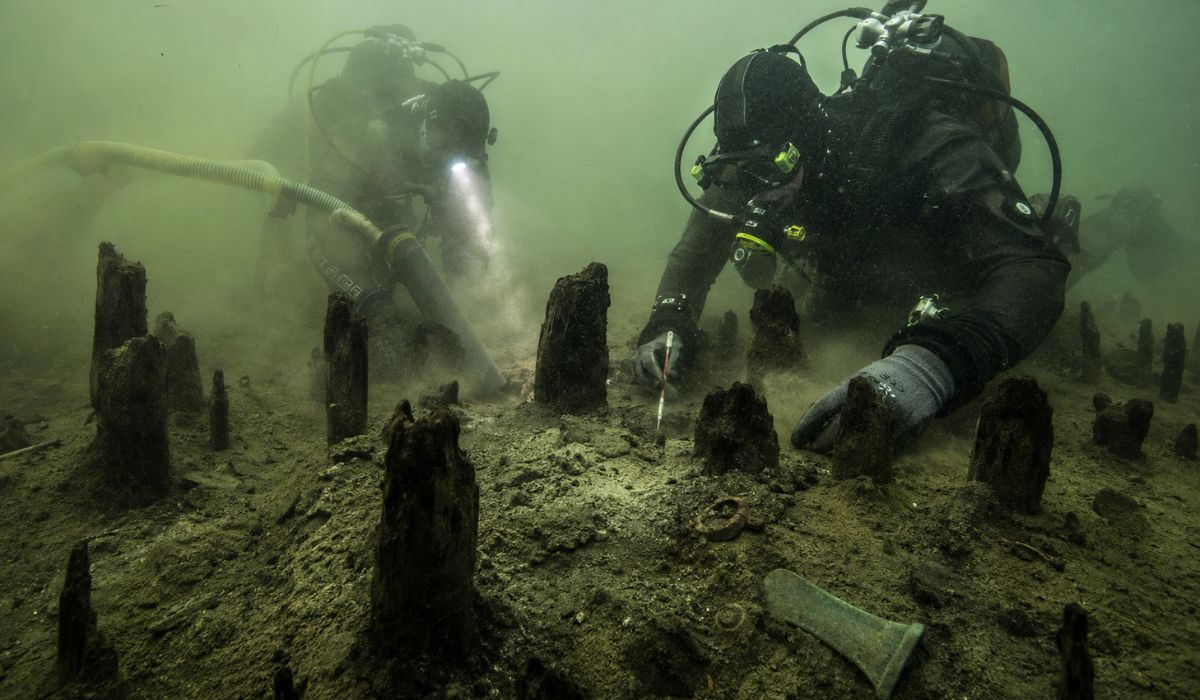
An entire village lay asleep at the bottom of a lake for 3,000 years: divers suction sediments in Italy and reveal more than 600 wooden stakes, bronze tools, and traces of a Bronze Age settlement hidden underwater.
-
They call it the “Shopee house” and even cardboard, but the R$ 20,000 house is a certified Wood Frame from Alea, financed by Minha Casa Minha Vida: understand if it’s worth more than masonry.


The Donlin gold deposit is among the largest yet unexplored on the planet, with about 39 million estimated ounces, representing a value exceeding $170 billion considering current metal prices, a fortune capable of economically transforming an entire remote region.
If mining progresses, the financial potential is significant: companies linked to native peoples could receive billion-dollar revenues, and local residents would have priority in job vacancies and development opportunities.
The project is managed by Donlin Gold, a company controlled by the mining companies NovaGold and Barrick Gold, on lands whose rights belong to indigenous corporations in the region, making the equation even more unique.
The 1971 law that turned indigenous people into shareholders
To understand the current impasse, it is necessary to go back more than five decades in time.
In 1971, an American law known as ANCSA transferred part of the rights over lands and resources to the indigenous communities of Alaska, but required them to organize as for-profit corporations, turning the indigenous people into shareholders of these companies.
It was a unique model of territorial and economic management in the world.
This structure created a curious situation full of internal tensions: many indigenous people began to occupy, at the same time, the role of shareholders who can profit from the exploitation, residents who depend on the land, and guardians of ancestral territories.
These interests do not always align, and it is precisely here that the division of opinions arises regarding a project like Donlin, which affects all these dimensions simultaneously.
The fear for salmon and water
On the side of concerns, the most sensitive point is environmental.
The greatest concern involves the transportation of materials by barges on the Kuskokwim River, as the lack of roads would require using the waterway, which could disrupt salmon spawning areas, a fish fundamental for the diet and culture of many communities that rely on subsistence fishing.
Added to this is the planned extraction method, which involves using cyanide to separate gold from rocks and storing the waste in large tailings dams.
As this type of dam has already failed in other mines around the world, some residents fear that the environmental risks are being underestimated.
Not surprisingly, several local communities have filed lawsuits demanding more in-depth studies on the possible impacts of the project.
Why there is no consensus among the communities
The main lesson from the study is that reality is more complex than it seems.
Opinions cannot be simply divided between favorable and opposed, because each community faces risks and opportunities differently, depending on their location and traditional activities, which makes the situation full of nuances.
Groups living downstream, for example, tend to worry more about water contamination and the impacts on salmon, which they depend on to stock food for the winter.
Meanwhile, communities closer to the mine area focus their attention on the effects on terrestrial fauna and local ecosystems.
And the disagreements reach within families themselves, where the same person can see advantages as a shareholder and, at the same time, fear for the environmental future of their children and grandchildren.
The two sides of the same dilemma
It is important to give voice to those who defend the project, and not just to those who criticize it.
Companies and some native corporations, like Calista, advocate for what they call responsible development, arguing that the mine can generate important socioeconomic benefits for a needy region, while committing to protect the land and water on which the local way of life depends.
On the other side, community leaders like Orutsararmiut and local movements warn that the project would pose an existential threat to the Kuskokwim River and the salmon, especially at a time when the region is already facing a fishing crisis.
For these groups, no financial benefit would compensate for the risk of compromising a resource that has sustained the life and culture of their people for thousands of years.
It is a debate in which both sides have legitimate arguments.
A Mirror for Brazil
As distant as it may seem, the case in Alaska directly relates to Brazilian dilemmas.
Brazil faces very similar tensions between mining, traditional communities, and the environment, whether in the debate about mining on indigenous lands or in the tragedies of tailings dam collapses, like those in Mariana and Brumadinho, which left deep scars.
The Donlin dilemma, therefore, is universal: how to balance economic development and mineral wealth with the cultural and environmental preservation of those living in the region?
Experts highlight that there is no single answer, and the path involves respecting the different realities and views of each community.
It is a valuable reflection for a country like Brazil, a mineral giant that faces, daily, similar choices between the profit from the subsoil and the protection of its peoples and ecosystems.
The Donlin gold deposit in Alaska is much more than a fortune hidden beneath the earth: it is a living portrait of how decisions about natural resources are rarely simple.
Between the promise of prosperity and the fear of losing the salmon and water that sustain a people, native communities face a choice that could change their future forever.
The case shows that, when it comes to mining, listening to all voices and respecting different realities is as important as measuring the value of what is beneath the soil.
And you, what would you do in the face of such a dilemma? Do you think it is worth exploring a fortune in gold even at environmental risks, or should the preservation of lifestyle and nature take precedence? Leave your comment, share your opinion on the balance between mining and the environment, and share the article with those interested in economics, sustainability, and the rights of traditional communities.




Be the first to react!