






 Portuguese
  Spanish
  5 min of reading
  0 comments


Backyards with natural stones, gravel, and permeable paving are regaining space in residential projects, combining retro visuals, more efficient drainage, and less rigid outdoor areas, without completely eliminating the use of concrete where it is still necessary.
Concrete has ceased to be the automatic solution for every backyard and has started to share space with natural stones, gravel, pebbles, and permeable paving in residential projects that aim to unite aesthetics, drainage, and thermal comfort.
This change recovers a common language in outdoor areas of past decades, but now appears linked to a practical concern: reducing completely impermeable surfaces and allowing part of the rainwater to return to the soil.
The strength of this trend lies in the combination of two movements present in residential renovations: the search for less rigid outdoor areas and the interest in solutions capable of reducing surface water runoff.
-
Without tiles, grout, or demolition: laminated panels that click onto the wall promise to speed up bathroom renovations by up to 5 times, cover old surfaces, and eliminate joints where mold, dirt, and germs usually accumulate.

-
He got tired of renting, bought an old school bus, removed the seats, modified the roof, reinforced everything with steel, and created a two-story mobile home that looks small on the outside but houses two bedrooms inside.

-
How the right choice of blocks reduces construction costs by up to 30%, eliminates beams and pillars, and prevents structural failures that can lead to rework, material waste, and significant losses over the years.

-
Researchers create reusable brick walls that can be dismantled and rebuilt elsewhere, like Lego pieces, to reduce construction waste and cut emissions by up to 60%.


In properties where the entire backyard was covered by a continuous layer of concrete, draining materials have come to be seen as an alternative to restore a more natural appearance to the space.
Natural stones return to backyards
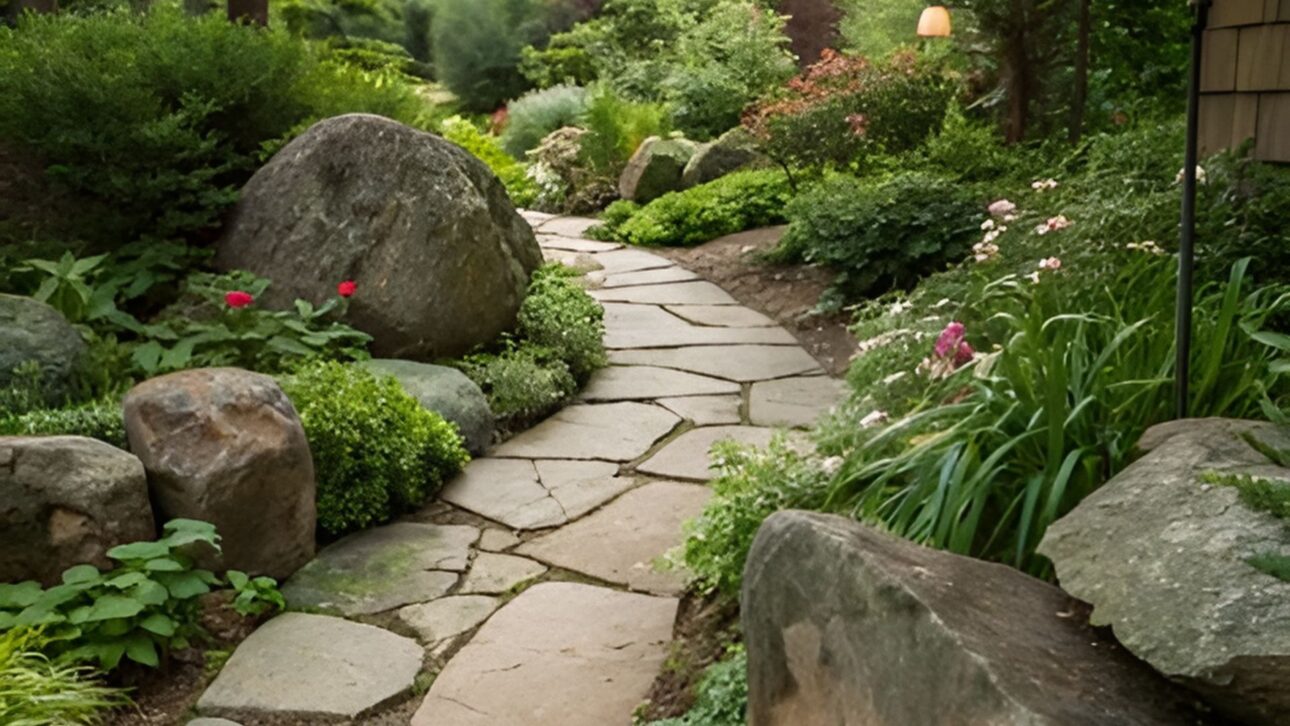
Known as crazy paving, the style uses stones of various shapes, laid in less uniform compositions than traditional paving and with visible joints between the pieces.
This design creates an organic and handcrafted appearance, moving the backyard away from the straight and standardized logic of cement slabs that dominated many outdoor areas for decades.
Although it was closely associated with gardens of the 1960s and 1970s, this type of paving has reappeared in contemporary projects with a more integrated approach to landscaping.
A publication specializing in garden design points out that the technique has been revived with natural materials, ground cover plants, and less symmetrical compositions to reinforce the relationship between flooring, architecture, and vegetation.
In current projects, the solution appears in side paths, passages between flowerbeds, rest areas, small patios, and outdoor living spaces.
With suitable vegetation, low lighting, and ground covers between the joints, the stone ceases to appear merely as a covering and starts to function as part of the garden.
Why concrete has lost space in the backyard
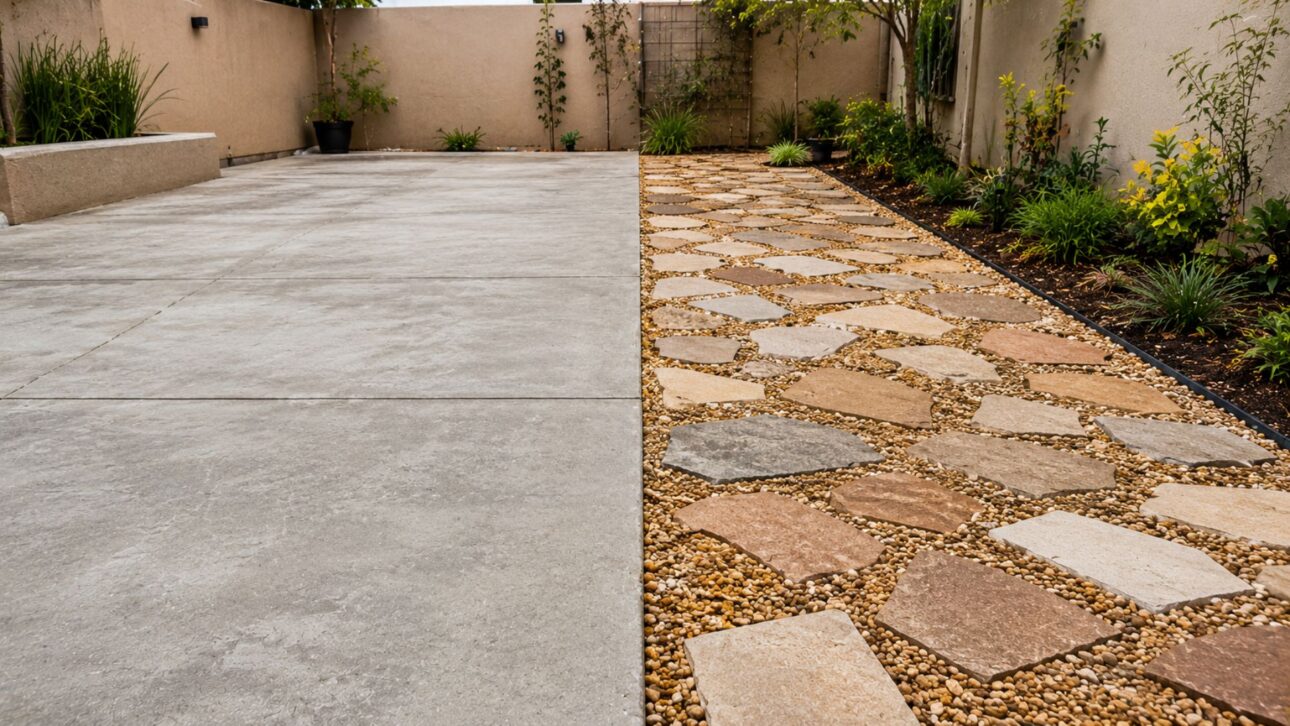
Garages, ramps, structural bases, and high-traffic areas still depend on concrete, especially when the floor needs to support weight or frequent use without deformation.
What has changed is the practice of covering the entire backyard with a single, rigid, and impermeable surface, even in areas where such resistance was not necessary.
When the floor prevents rain infiltration, the volume of water that flows to drains, sidewalks, and streets tends to increase, making drainage control on the land more difficult.
Permeable materials, on the other hand, allow water to pass through the surface and reach the lower layers, functioning as a green infrastructure strategy for stormwater control, according to the United States Environmental Protection Agency.
This behavior makes a difference in small and medium-sized backyards, especially when there is little exposed soil area to absorb part of the water during heavier rains.
Instead of turning all rain into surface runoff, a well-designed project can better distribute water across the land and reduce reliance on drains and gutters.
Permeable flooring requires correct installation
Replacing concrete with loose stone, gravel, or draining flooring should not be treated as a simple aesthetic substitution, because performance depends on base preparation.
To work well, the area needs to consider the slope of the land, the soil’s infiltration capacity, the intended use, and the natural path of water after crossing the surface.
Without proper execution, a permeable floor can accumulate mud, displace stones, form puddles, or lose stability over time, especially in areas of frequent circulation.
Therefore, the base usually plays a decisive role: layers of gravel, suitable sand, geotextile fabric, and lateral containment help keep the surface firm and reduce the risk of material spreading.
Residents, children, the elderly, pets, and visitors are also considered in the evaluation, as safety and comfort of movement vary depending on the type of flooring chosen.
Very loose paths can be uncomfortable in areas of constant passage, while stones set with well-planned joints offer more firmness without completely eliminating drainage capacity.
Thermal comfort in outdoor areas
In addition to drainage, permeable floors and lighter or porous surfaces can help control heat in outdoor areas, especially when combined with vegetation and shade.
The EPA reports that permeable pavements can allow water infiltration into the floor and soil, reducing runoff, filtering pollutants, and helping to lower temperatures associated with hot urban surfaces.
In residential practice, this effect reinforces the choice of backyards with less continuous concrete mass and more combinations of stone, exposed soil, and vegetation.
Plants, shade, and soil moisture make the outdoor area more pleasant, especially in regions where cemented floors tend to accumulate heat throughout the day.
This gain, however, does not depend solely on the material used on the ground, as trees, shrubs, pergolas, side gardens, and flowerbeds directly influence the thermal sensation.
By creating shade and reducing the direct exposure of surfaces to the sun, landscaping complements the function of draining floors and improves the daily use of the backyard.
Maintenance of natural stones
The durability of natural stones is one of the arguments in favor of the trend, but outdoor areas with open joints or loose materials still require regular care.
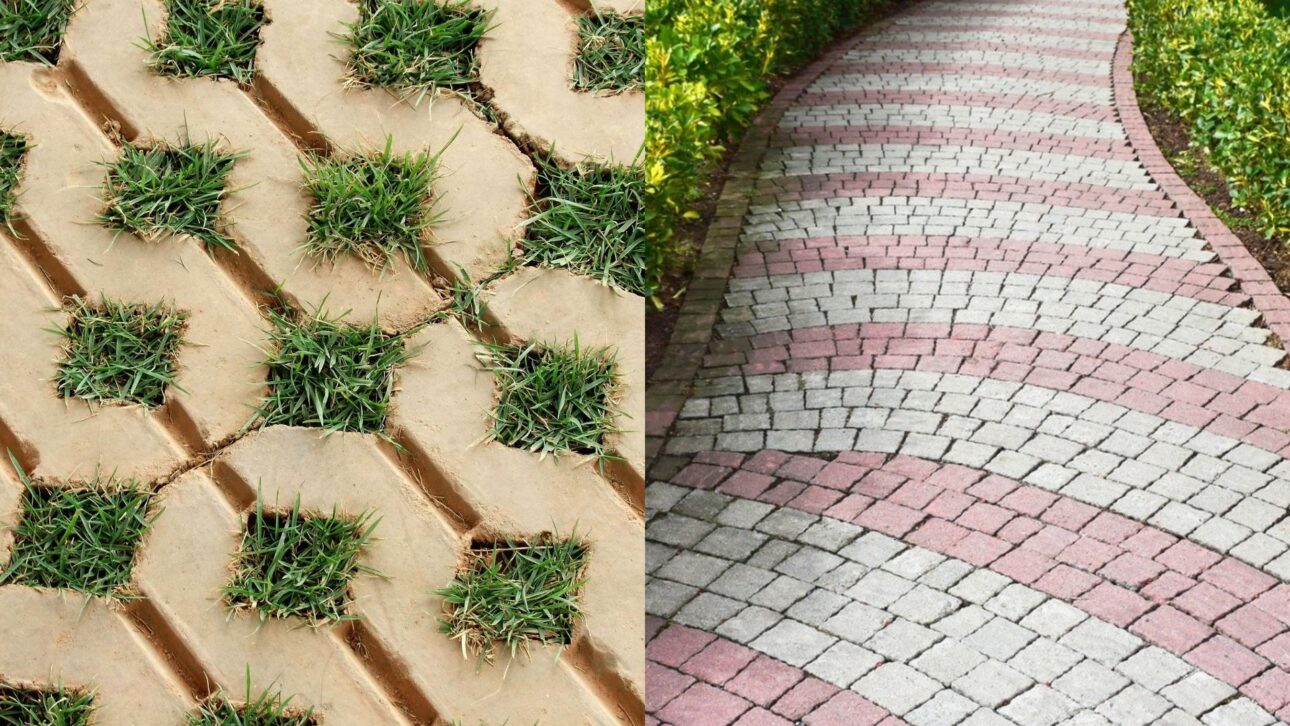
Leaves, soil, spontaneous herbs, and displacement of gravel are part of the routine for this type of floor, especially when the garden is exposed to rain, wind, and constant traffic.
When the project is well designed, maintenance tends to be simple and focused on periodic cleaning, gravel replacement, edge review, and vegetation control between joints.
In areas of higher use, stones set on a firm base tend to perform better than loose gravel, which can spread more easily.
On secondary paths or side lanes, gravel and pebbles effectively serve the purpose of drainage and finishing, as long as they do not hinder people’s passage.
Backyard with less concrete and more garden
The return of natural stones shows a change in the way we view the backyard, which is no longer just a service area or a space to be “cleaned” with concrete.
Increasingly, this environment is being treated as an extension of the house, with aesthetic, environmental, and social functions for the residents.
In this new arrangement, concrete does not disappear but ceases to automatically occupy the entire outdoor area and is used in places where its strength really matters.
Meanwhile, stones, permeable paving, and vegetation take over the spaces intended for leisure, pathways, and integration with the garden, creating backyards that are less rigid and more adapted to the climate.






Be the first to react!