Portuguese
  Spanish


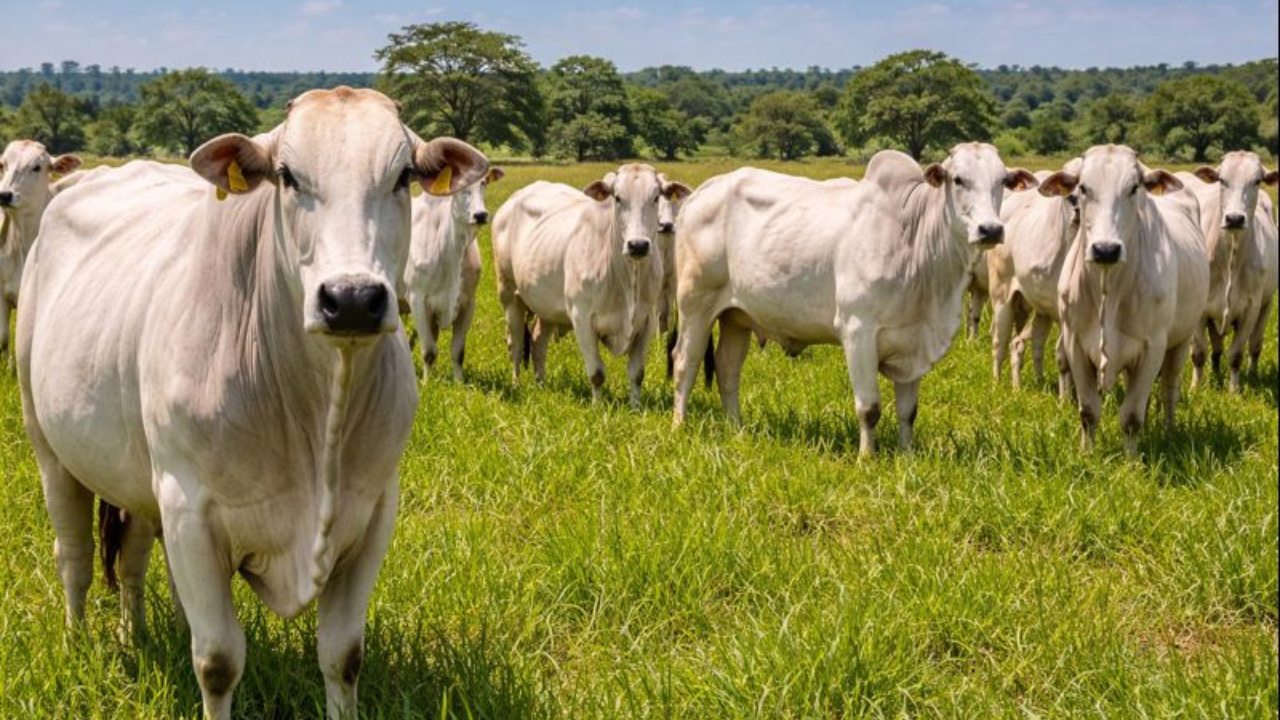


Cattle Market Operates Slowly After Christmas, With Full Slaughter Schedule, Stable Price for Arroba, and Firm Beef Exports.
The cattle market resumed trading after the Christmas holiday at a slower pace, with few deals recorded, stable arroba prices, and a slaughter schedule already set in various meatpacking plants.
The scenario involves producers being more distant from negotiations, meatpackers stocked for the short term, and a cautious environment typical of the holiday season, according to an analysis released by Scot Consultoria.
Livestock Market Faces Low Liquidity Post-Holiday
After the Christmas break, the livestock market began operating with less intensity than usual for a Friday.
-
At 35, Lawyer Leaves Corporate Career to Turn 1-Hectare Farm into Organic Supplier for Schools in Southern Brazil

-
Solar-powered agricultural robots operate 24/7, remove weeds with 8mm precision, and aim to cut herbicide use without fuel consumption in the fields.

-
Brazilian Farmer Invents Low-Cost Tractor Using Motorcycle Parts, Efficiently Working 2 Acres on 1 Liter of Diesel

-
Regenerative Farmers Use Keyline Plow to Improve Pasture Hydration, Storing 1 Gallon of Water Every 30 Centimeters





According to Scot, the combination of filled slots and the absence of ranchers in negotiations significantly reduced the purchasing need by meatpackers.
Additionally, some industrial units opted to give their teams a break, taking advantage of the comfortable slot composition.
“Some units even took advantage of the composition of slots and slow pace of business and granted their teams a break, expecting to resume activities next Monday (29/12),” the consultancy reported in a bulletin.
Slaughter Schedule Ensures Peace of Mind for Meatpackers
One of the main factors explaining the market’s slowness is the slaughter schedule, which is, on average, positioned around ten days.
As a result, meatpackers are not facing immediate pressure to acquire new lots of cattle.
According to Scot, this situation is likely to keep the market sluggish in the short term. “With slots already filled for next week, the market is expected to remain sluggish,” the consultancy anticipates, reinforcing expectations of stability in negotiations.
Arroba Price Remains Firm in São Paulo
Despite the low volume of transactions, the arroba price remains firm in São Paulo, the main reference of the national market.
The fat cattle is quoted at R$ 321 per arroba, while the cow is traded at R$ 302 and the heifer at R$ 312 per arroba.
The so-called “China cattle,” an animal that meets sanitary and age requirements for exporting beef to the Chinese market, reaches R$ 325 per arroba.
All values are gross and with payment terms, according to data from Scot Consultoria.
Beef Exports Sustain the Market
Even with the slowness in the physical market, the performance of beef exports remains positive.
External sales continue to be strong, helping to balance the market and avoid more intense negative price pressures.
Additionally, the stronger dollar relative to the beginning of the last quarter reinforces the competitiveness of Brazilian meat in the international market.
This factor helps to offset the more restrained pace of internal negotiations this year-end.
Domestic Consumption Ends the Year With Positive Assessment
In the domestic market, beef sales during the holiday period are viewed as satisfactory.
The typical year-end consumption contributed to the good turnover of stocks, even in the face of an economic scenario still marked by consumer caution.
This balance between the internal and external markets helps to explain the stability observed in the cattle market, even during a traditionally slower period.
Expectations for January Remain Without Major Fluctuations
Looking to the short term, Scot Consultoria assesses that the market should start January without major changes.
The combination of comfortable slots, firm exports, and regular domestic consumption tends to keep the livestock market in balance.
Thus, the cattle market remains supported but without clear signs of more aggressive movements up or down at the beginning of next year.
Agents’ attention remains focused on the full resumption of activities after the holidays and on demand behavior in the first weeks of January.