Portuguese
  Spanish



The National Railway Plan Invests R$ 138.6 Billion to Modernize Brazil, Cutting Emissions, Reducing Accidents, and Bringing More Efficient Transportation!
The federal government is betting big on the National Railway Plan, launched in June 2025, to transform this scenario. With billion-dollar investments and a modern vision, the plan aims to revolutionize the country’s railways, reducing dependence on highways and bringing solutions such as shortlines, short-distance tracks that are already successful abroad.

Government Invests R$ 138 Billion in Rail Expansion Focusing on Well-Structured Projects
R$ 138.6 billion is allocated to 15 projects totaling 19 thousand kilometers of railways across Brazil. The idea is to tackle multiple fronts: construction of new lines, modernization of existing sections, and solutions for regulatory bottlenecks. This includes facilitating rights of way, streamlining environmental licensing, and renegotiating concessions. By 2027, the government plans to auction 4,700 km of tracks to the private sector, with six major bids already on the radar.
According to Leonardo Ribeiro, national railway transport secretary, the focus is clear: “We want well-structured projects to ensure that investments become a reality.” At an event by the Brazilian Association of Infrastructure and Base Industries (Abdib), he highlighted the creation of a railway project bank, which organizes initiatives at different stages to ensure technical and economic viability. No more poorly planned auctions that hinder execution!
-
Brazilian Civil Servant Earns $2,800 Monthly but Seeks Legal Help as Bank Loans Consume Nearly 80% of Income

-
Brazilian Pet Industry Giant with $6 Billion Valuation Targets 24 Million Customers, Launches Franchise Model with Six Revenue Streams and $7.80 Subscription Plan for National Expansion

-
Daughter of a Mechanic, Roberta Pirolla Turns Passion for Cars into a Million-Dollar Vehicle Wrapping Business Set to Grow 75% in a Male-Dominated Industry

-
At 30, Thyago Plácido turned Innova into a solar energy operation serving central Brazil with over 300 projects completed.


Rails Stuck and Billion-Dollar Investments Face Historical Bottlenecks in Brazil
In Brazil, railway projects have a reputation for being “eternal.” “We have never seen a railway construction meet the schedule,” states Marcus Quintella, executive director of FGV Transportes, in an interview with the Neofeed portal. Among the bottlenecks are the lack of diversity in transported cargo, tracks with different gauges that hinder integration, and the so-called interoperability, when a train cannot cross a line granted to reach its destination, such as a port.
System: mapped 39 railway enterprises with R$ 91.3 billion in investments, but the 2025 plan goes further, seeking solutions to these problems. The modernization of the legal framework, inspired by international models, is one of the pillars to unlock the sector.
Shortlines: The New Railway Bet of Brazil – Short Tracks, Sustainability, and Logistical Impacts
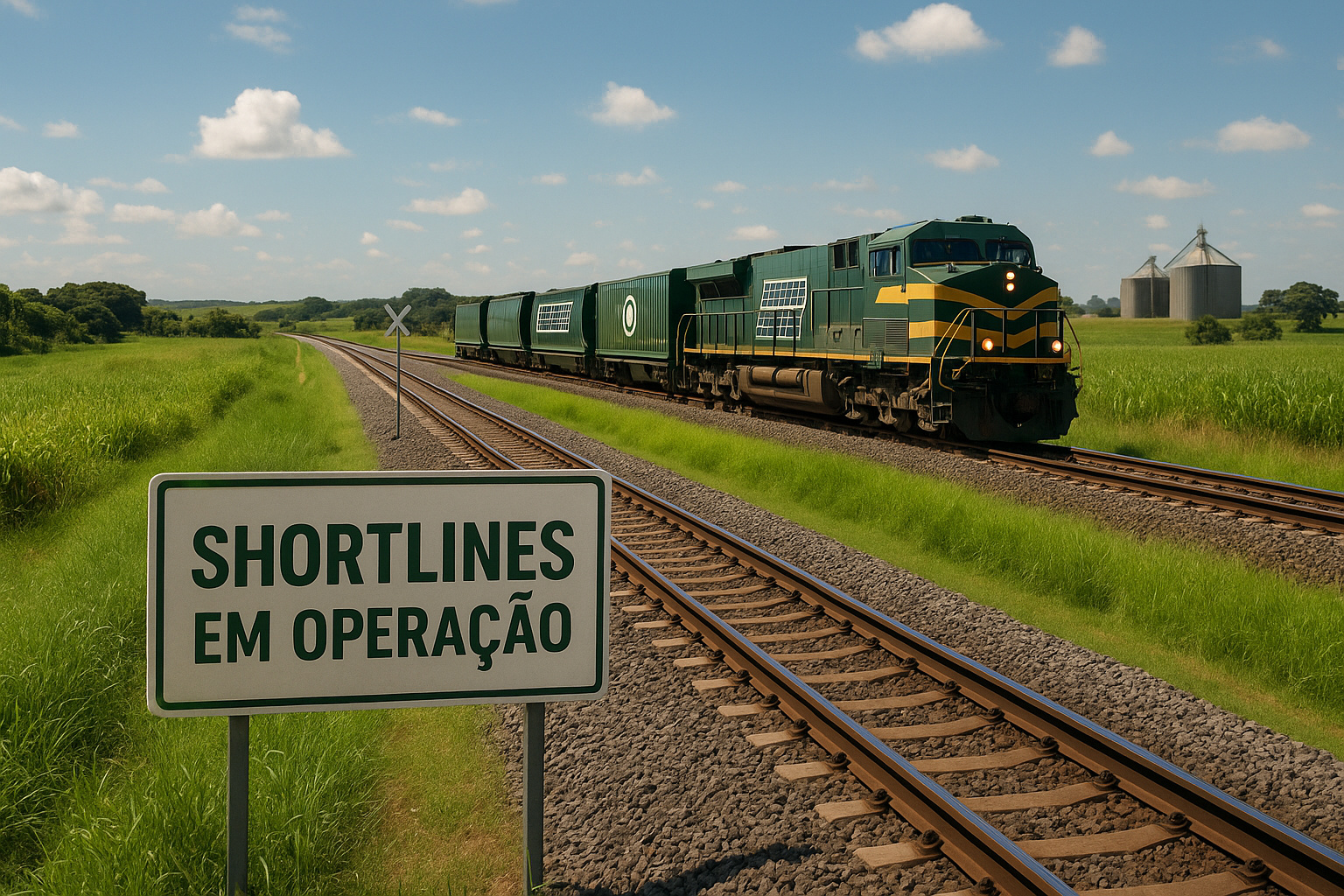
One of the main bets of the plan is the adoption of shortlines, short-distance railways that connect main lines to ports, industries, or logistics centers. In the U.S., there are 720 of these lines, and Brazil wants to follow suit. A concrete case is the Serra Azul Railway Branch, a R$ 1.5 billion project by Cedro Participações, which will connect Mateus Leme to São Joaquim de Bicas in Minas Gerais, with 26.47 km of tracks.
The branch, connected to the Southeast Regional Network, will have access to the Port of Itaguaí (RJ), transporting 24 million tons of iron ore annually. “This project will remove 5,000 trucks per day from the roads, reducing 40,000 tons of CO2 annually,” says Lucas Kallas, chairman of Cedro’s board. Construction will start in 2027, with operations planned for 2030, promising to relieve BR-381, known as the “Road of Death,” and generate 4,000 direct and indirect jobs.
Railways Gain Strength as a Sustainable Solution and a Tool for Decarbonizing National Logistics
Rail transport is key to decarbonizing the economy. Compared to highways, it emits much less carbon, making it strategic for sectors such as mining and agribusiness. Recently, Leonardo Ribeiro presented the plan to a delegation from the European Union, highlighting opportunities for technical partnerships and investments. “Shortlines increase operational efficiency and connect Brazil to the world in a more sustainable way,” he said.
Another example is the cellulose branch in Mato Grosso do Sul, which promises to reduce logistical costs and emissions. According to the National Land Transport Agency (ANTT), the share of railways in Brazil’s transport matrix is only 15%, compared to 60% for highways. The plan aims to double this share by 2035, aligning the country with global sustainability goals.
Green Challenges and Solutions for Rail Expansion Between Environmental Licensing and Financing
In addition to the unification of gauges and interoperability, the plan faces challenges such as environmental licensing. The government is streamlining processes but carefully to minimize impacts. The Serra Azul Branch, for instance, was designed to interfere minimally in populated areas, using existing geographical paths and avoiding large works like tunnels and viaducts.
The National Confederation of Industry (CNI) supports the plan but warns: “Execution depends on financing and governance.” The railway project bank, according to Ribeiro, is the answer, ensuring robust technical studies before auctions. “We do not want to repeat the mistakes of the past, with projects that do not get off the ground,” he reinforces.
What do you think about this transformation? Share in the comments or pass this on to someone who needs to know!