Portuguese
  Spanish



Brazilian Livestock Impresses With 238.2 Million Cattle And Shows Why The Country Is A World Power In Meat Production
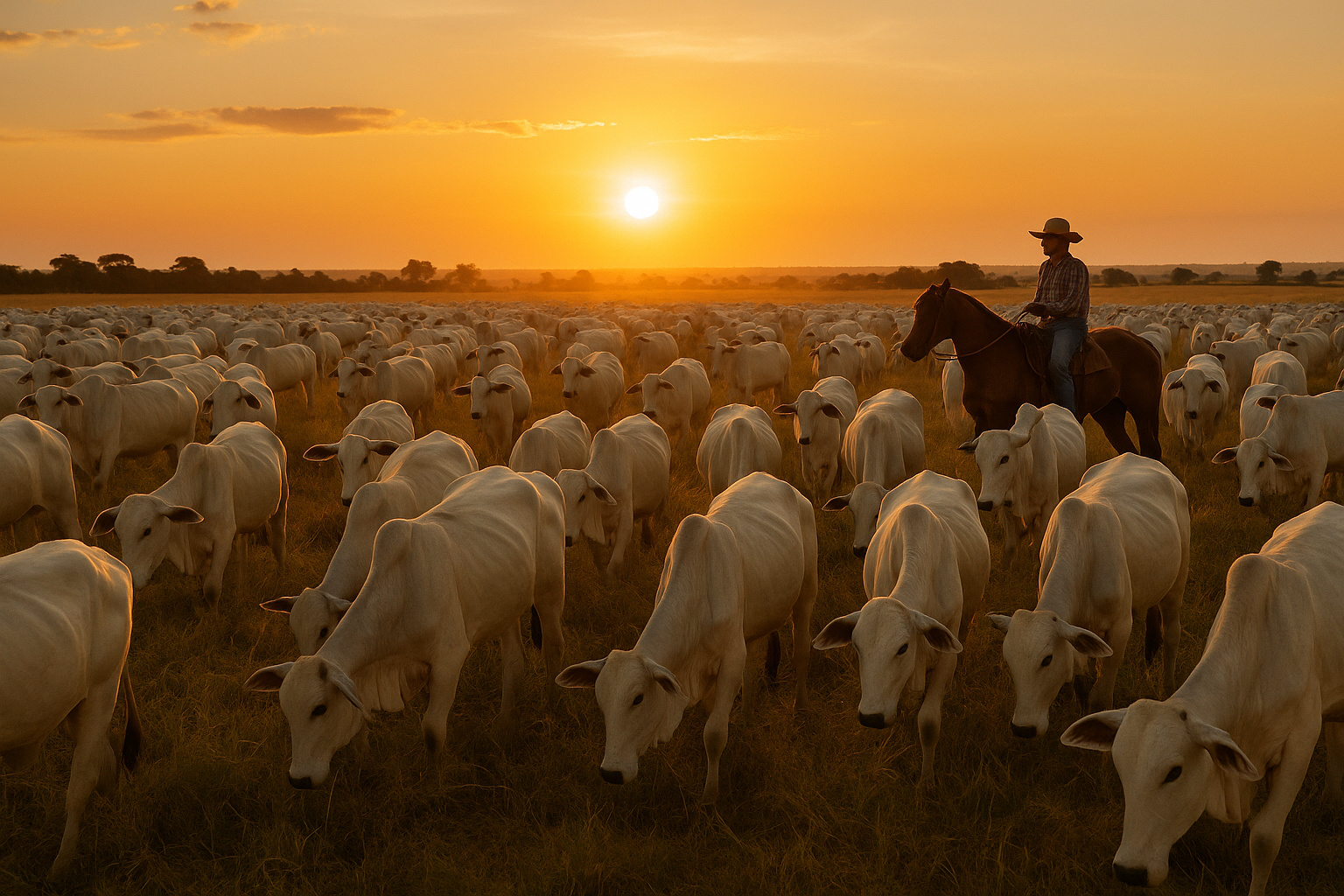
The Brazil lives a curious reality: there are more cattle than people in its territory. According to data from 2024 of the Municipal Livestock Survey (PPM), from the Brazilian Institute of Geography and Statistics (IBGE), the country counts 238.2 million head of cattle, a number 12% higher than the Brazilian population, estimated at 212.6 million inhabitants. This difference reinforces Brazil’s role as one of the largest producers and exporters of meat in the world.
Although the total volume of animals recorded a slight decrease of 0.2% compared to 2023, the country still maintains the second largest cattle herd since 1974. This reduction, according to IBGE, is explained by the increase in the slaughter of females, a natural stage of the livestock cycle that aims to adjust supply and prices in the market.
The research analyst, Mariana Oliveira, explains that this movement is part of the market logic of livestock. “For a few years, the slaughter of females has been high, due to calf and price fluctuations, which discourages the retention of cows for breeding,” she said.
-
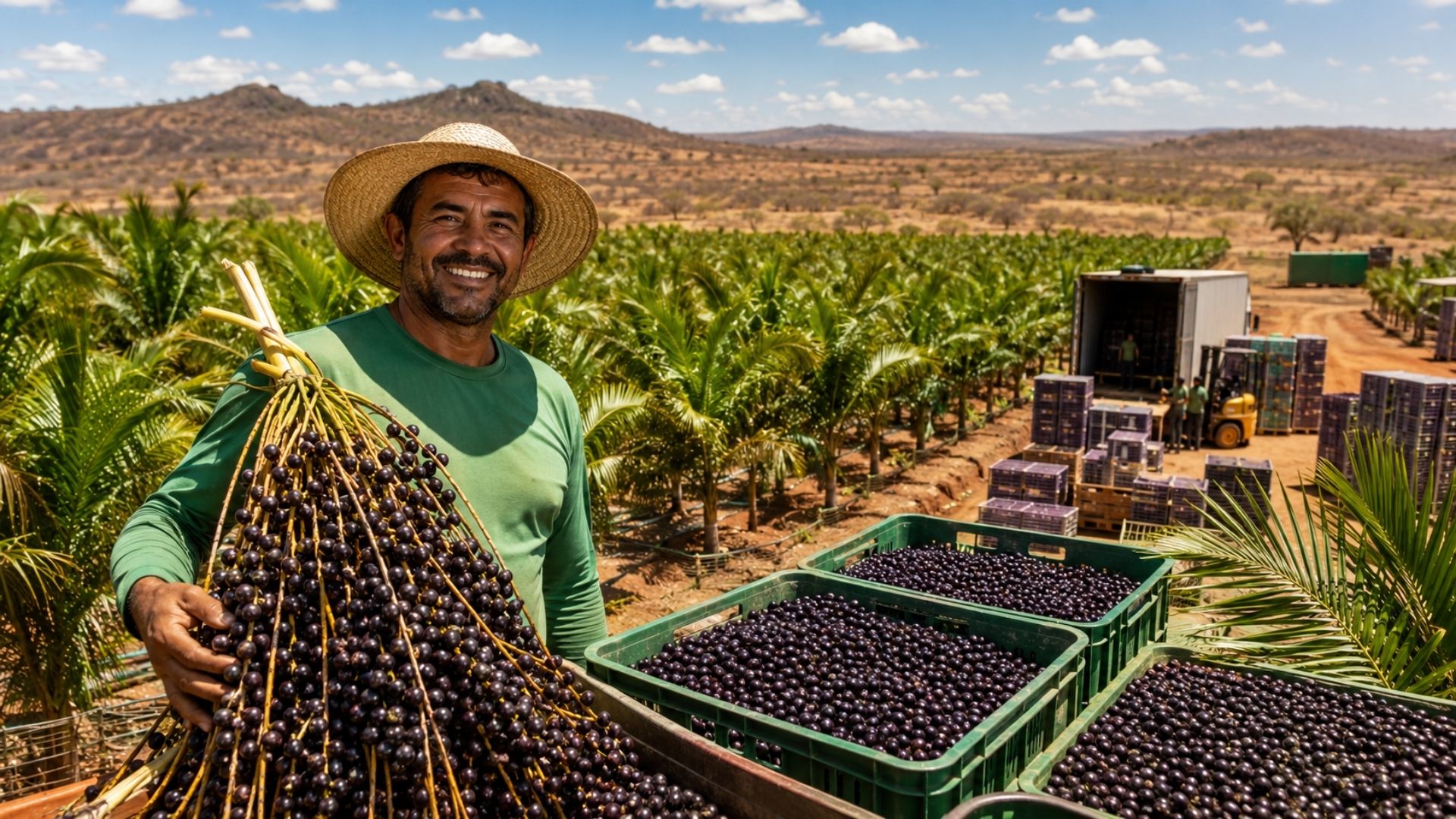
Without anyone betting that Amazonian açaí would catch on in Rio Grande do Norte, he brought the seedling from Pará, planted 80 hectares, and transformed the “unlikely land” into a business that harvests 280 tons of fruit and exports pulp to Italy, the Netherlands, and Kuwait, proving that the superfood from the North thrived in the semi-arid region.

-
A company from SC that moves R$ 125 billion in agribusiness is integrated into an international group, maintains its headquarters and jobs in Chapecó, and is preparing to expand software for cooperatives, grain companies, and industries while targeting new markets without leaving the western region of Santa Catarina.

-
Producer receives news and had to cull almost the entire herd, bounced back with the help of compensation, and is now producing 450 liters of milk per day in SC.

-
Quail Eggs Reveal a “Secret Code” on Their Shells Explaining Unique Patterns and Colors



Mato Grosso Leads With 32.9 Million Head; Milk Production Hits Historic Record And Moves R$ 87.5 Billion
The survey details that the slaughter of cattle grew 3.3% in the second quarter of 2025 compared to the same period in 2024, totaling 10.4 million head, while the increase from the first quarter was 5.4%. The production of beef, measured in carcasses, rose 1%, totaling 2.63 million tons.
But the highlight of the sector was the record in milk production, which reached 35.7 billion liters, an increase of 1.4% over the previous year, with R$ 87.5 billion in economic movement. Interestingly, the number of milking cows fell to its lowest level since 1979, indicating greater productivity in the field.
The states with the largest cattle herd continue to be:
- Mato Grosso – 32.9 million head;
- Pará – 25.6 million;
- Goiás – 23.2 million;
- Minas Gerais – 22 million;
- Mato Grosso do Sul – 18.7 million.
These five federative units concentrate almost half of Brazil’s cattle and represent the heart of the beef and dairy farming of the country. According to data from IBGE, the slaughter of females and the increase in exports have been completely reshaping the cattle cycle.
Slaughter of Females Grows 16% And Exports Boost The Beef Market
According to veterinarian Urbano Gomes, from Embrapa, “beef is the most common meat on Brazilian tables,” since males are directed for export, while females supply the domestic market. He explains that, although the taste is almost identical, the bull gains weight more slowly, making it ideal for premium cuts.
This behavior influenced the 16% increase in the slaughter of females compared to the same period in 2024. Together, cows and heifers represented 33% of total slaughter, surpassing males for the first time since 1997. Overall, national cattle slaughter increased 3.9%.
The livestock manager at IBGE, Angela Lordão, emphasizes that the phenomenon is directly related to growing demand for exports. “The slaughter of young animals was at record levels, especially of heifers (33%), driven by international trade,” she stated. Even with the decrease in total slaughter in Mato Grosso, the slaughter of females continued to be higher than the previous year.
Exports On The Rise And A Forecast For Decreased Meat Production In 2026
Even with the tariffs imposed by the United States, Brazil maintained the pace of external sales of beef. The Americans dropped from the second to the fifth position among the largest importers, while Mexico tripled its purchases between January and July compared to 2024.
The Brazilian Association of Exporting Meat Industries (Abiec) forecasts a 12% increase in total exports in 2025, while the National Supply Company (Conab) projects a 3.5% decrease in national beef production in 2026, a reflection of the retention of females for breeding, a natural part of the Brazilian livestock cycle.
According to Conab, the retention of cows for breeding is expected to temporarily reduce meat supply, but it is likely to raise prices and strengthen the domestic market in the medium term.
Females Dominate Slaughter And Confirm A Change Of Cycle In National Livestock
The second quarter of 2025 was marked by the record slaughter of heifers, with 1.7 million head, compared to 377 thousand steers. This unprecedented ratio demonstrates the structural change in livestock, focusing on genetic efficiency and reduced costs.
Contrary to popular belief, not every cow is slaughtered only at the end of its productive life. There are breeders specialized in beef cattle, focused solely on meat production. The cows gain weight faster, require less pasture and feed, and allow for faster financial returns, unlike bulls, whose weight gain is slower.
This new production profile reinforces the strength of Brazilian livestock, which, despite facing market fluctuations, remains a global leader in meat exports and a reference in animal genetics and productivity in the field.
The information was originally disclosed by Gazeta do Povo, based on data from IBGE, Conab, and Abiec.