Portuguese
  Spanish


The arrival of electrified Chinese cars changes the Brazilian market and pressures workshops, insurers, and owners with more complex parts, batteries, and modules. Without qualification, mechanics may lose space, while drivers face delays, expensive labor, and a sector forced to adapt to the new modern Brazilian automotive maintenance.
Electrified Chinese cars are advancing in Brazil and have raised a question that goes beyond sales: what happens when batteries, modules, body parts, and high-voltage systems start to fail on a large scale? The debate involves drivers, workshops, mechanics, insurers, and manufacturers in a market still adapting.
According to a video published by the channel Meu Carro LifeStyle, released on June 10, 2026, the alert gained strength amid the growing entry of imported, hybrid, and electric models into the country. The concern is not only whether these vehicles sell well now, but how maintenance will be in the coming years when the warranty expires, the cars age, suffer accidents, and depend on parts, technical diagnostics, and specialized labor.
The fear is not only of Chinese cars, but of the lack of parts
The arrival of Chinese cars has reignited an old complaint in Brazil: the delay in obtaining parts. The problem does not only affect new or imported brands. Even traditional manufacturers, established for decades in the country, already face reports of customers waiting weeks for specific components.
-
Scientists Predict Earth’s Habitable Lifespan: 1.8 Billion Years Before Oceans Evaporate and Sun Forces Planet Out of Life Zone

-
LG Unveils XBOOM Stage 501 Portable Speaker with 25-Hour Battery, AI Karaoke, and Sound by will.i.am in Brazil

-
Scientists Warn San Andreas Fault Holds Highest Seismic Tension in 1,000 Years, Renewing Fears of “The Big One” Megaquake on U.S. West Coast

-
Brazil Advances with 14-X Hypersonic Project to Achieve Speeds Over Mach 5, Surpassing Concorde, After Two Decades of Research




The bottleneck can appear in mechanical workshops, body shops, and insurers. When a safety part, such as a suspension item, steering, headlight, or structure, does not arrive, the car can be stopped for a long time. In some cases, the vehicle occupies space in the workshop without the repair progressing.
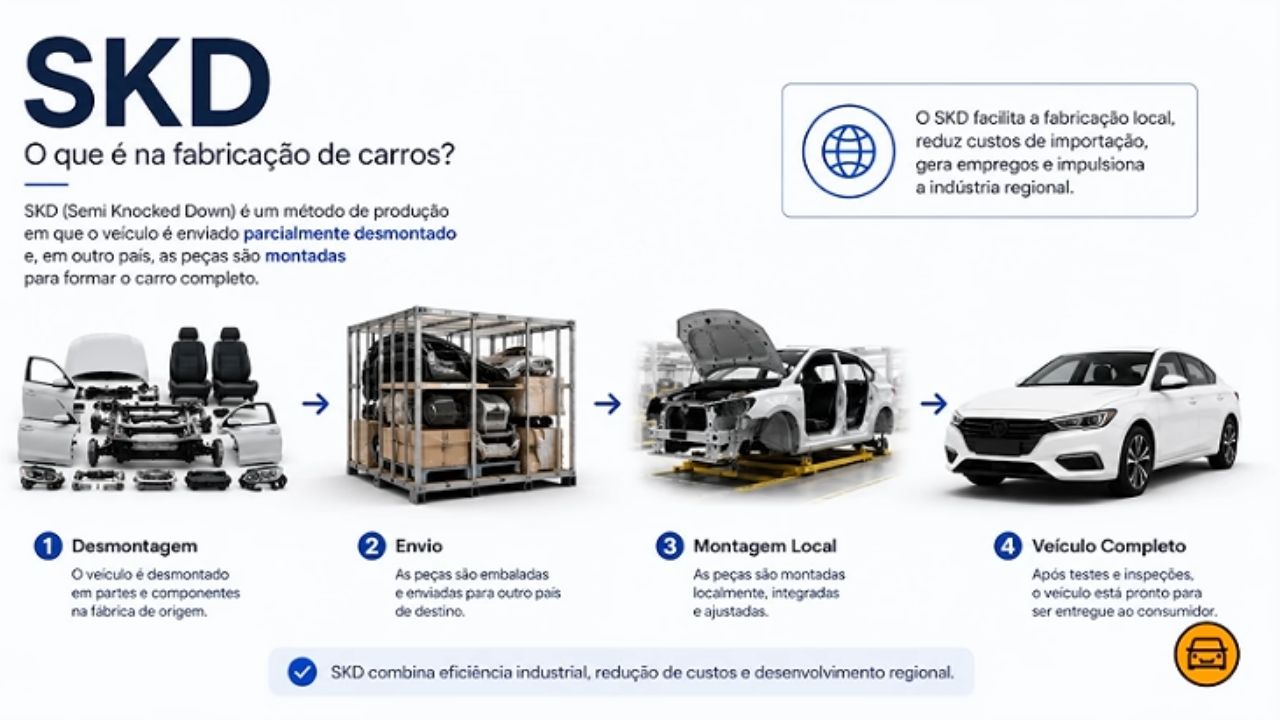
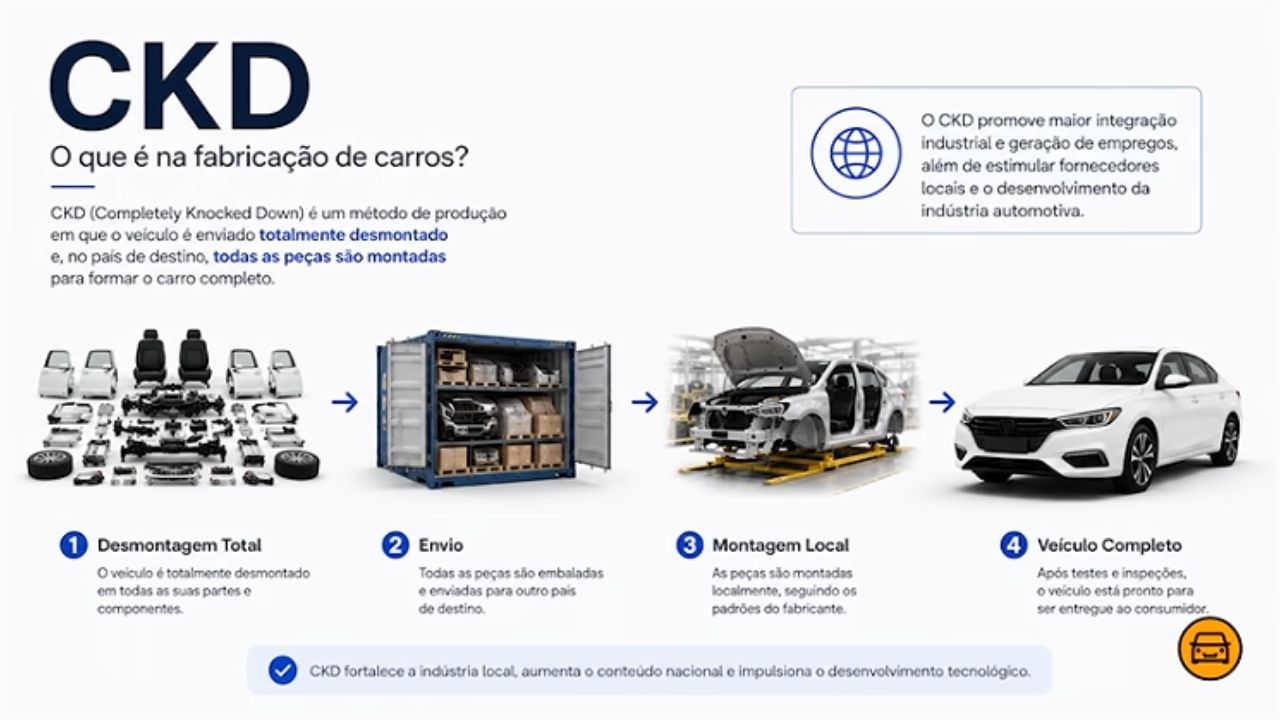
The sensitive point is that the Chinese electrified fleet is still maturing in the Brazilian market. Many models arrived through importation and some are beginning to be assembled in the country in initial production regimes, such as SKD or CKD, without the same level of localization as brands that have been manufacturing locally for a longer time.
This raises a practical question: if today there is already a shortage of parts for known models, what might happen when imported cars, with embedded electronics and specific batteries, start requiring repairs more frequently?
Workshops may face a new type of queue
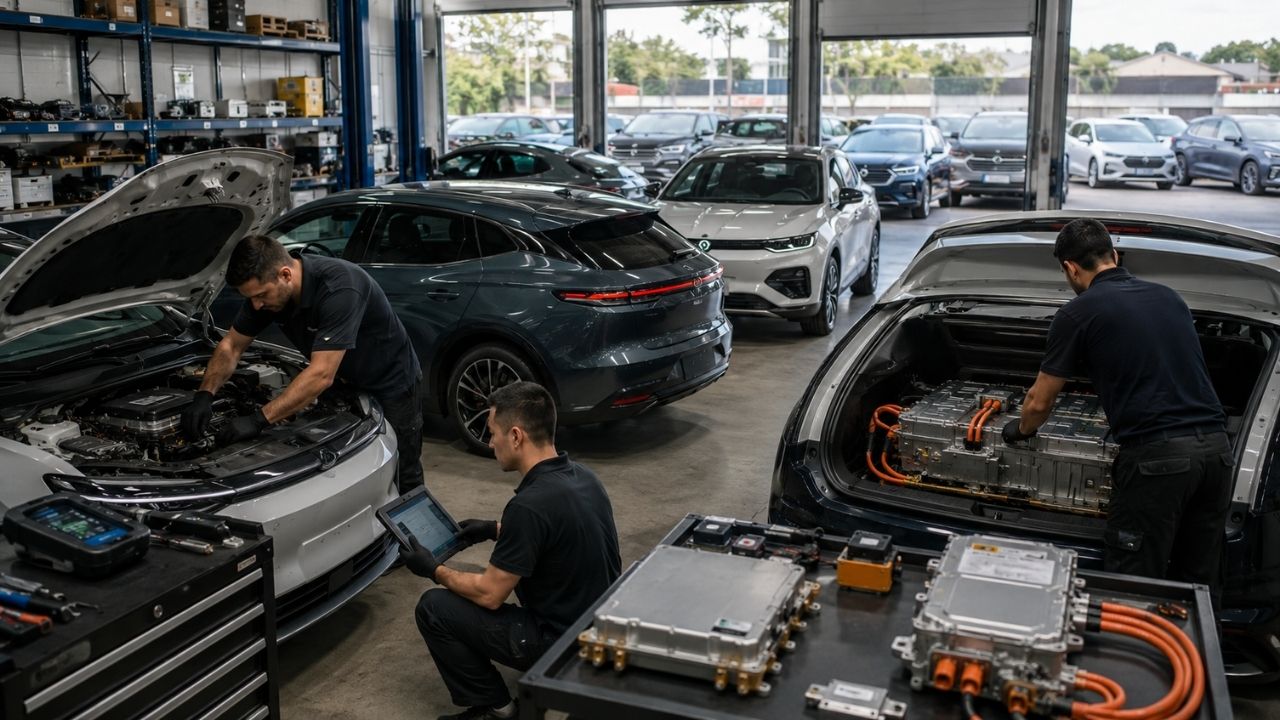
The risk of crowded workshops doesn’t just come from the number of vehicles. It comes from the combination of increasing volume, new technology, and a replacement chain still in formation. The Chinese cars that are currently attracting attention on the streets will age, go out of warranty, suffer collisions, and require maintenance like any other car.
The difference is that some of these models come with more complex systems, especially in hybrids and electrics. In addition to conventional components like brakes, suspension, and cooling, there are batteries, inverters, electronic modules, high-voltage cables, and diagnostic software.
If the part doesn’t arrive, the mechanic can’t fix it. If the professional isn’t trained, he also can’t fix it. The bottleneck can arise precisely from this dual difficulty: availability of components and technical qualification.
This scenario doesn’t mean that all vehicles will be stuck. But it indicates that the repair network needs to prepare before the demand explodes, because today’s sales increase becomes tomorrow’s maintenance queue.
Mechanic who doesn’t update may fall behind
The entry of electrified Chinese cars also changes the profile of the professional needed in workshops. The mechanic accustomed only to combustion engines, oil changes, belts, spark plugs, and traditional systems will need to learn new safety and diagnostic routines.
Working on an electrified car requires caution with high voltage, personal protective equipment, appropriate tools, and specific knowledge. It is not the same procedure as a common combustion vehicle, especially when the defect involves the battery, hybrid system, or electronic module.
The trend is that specialized labor will become more valued. Those who study, invest in tools, and understand this new market can gain space. Those who reject the technology may lose customers to more prepared workshops.
This transition is reminiscent of other changes already seen in the sector. The arrival of electronic injection, 16-valve engines, direct injection, and three-cylinder turbo engines also generated resistance, fear, and distrust. Over time, part of the market adapted.
Hybrids can be more complex than pure electrics
Among electrified vehicles, hybrids stand out for their complexity. A hybrid car combines a combustion engine, electric motor, battery, control electronics, and management systems that work together. This increases the number of components and requires more refined diagnostics.
A 100% electric car, on the other hand, eliminates several traditional parts: there is no piston, connecting rod, cylinder head, exhaust, injection system, or engine oil change. Still, it presents other challenges, such as traction battery, modules, software, specific cooling, and high-voltage components.
In the case of Chinese cars, the concern grows because many electrified models arrive in the country with advanced technological packages and a replacement chain still in consolidation. The challenge is not just to sell, but to ensure support throughout the vehicle’s useful life.
The consumer may find that the purchase price is only part of the equation. The real cost appears when there is a collision, breakdown, part replacement, complex diagnosis, or waiting for an imported component.
Batteries are intimidating, but there is already a repair market
The fear of batteries is one of the strongest points in the conversation about electrified Chinese cars. Many drivers imagine that if a battery fails, it will be necessary to replace the entire set at a high cost. This concern exists, but the scenario tends to be more complex.
In many systems, batteries are made up of modules or cells. When the defect is located, there may be the possibility of replacing specific parts, preserving the rest of the set. This repair market already appears in older hybrid models and is expected to grow as the electrified fleet increases.
This does not eliminate the risk of high costs. Batteries, modules, and electronic components are still expensive and require skilled labor. But it also shows that not every defect means complete disposal.
The larger the fleet, the greater the economic incentive for specialists to emerge. If there is sufficient demand, companies will start offering repair, recycling, reconditioning, and advanced diagnostics, creating a new niche within automotive maintenance.
Component disposal also counts
Besides maintenance, there is another important point: disposal. Batteries, electronic modules, and sealed components can become an environmental and economic problem if there is no proper chain for reuse or recycling.
The concern increases because electrified cars carry more onboard electronics. When a part is not worth repairing, the question arises about the correct destination of the component. This applies to any brand but gains strength with the rapid advancement of imports.
In the case of Chinese cars, the challenge will be to keep up with the speed of model entry with a post-sale, recycling, and assistance structure. Selling thousands of units is one thing; sustaining the fleet for years is another.
The industry may need to turn the problem into an opportunity. Used batteries can have a second life in stationary systems, such as off-grid energy storage, but this requires regulation, logistics, and prepared companies.
No reason for panic, but reason for preparation


The advance of Chinese cars does not need to be treated as an inevitable disaster. The automotive market has already gone through several technological transitions and, in almost all, there was initial resistance, lack of preparation, and then adaptation.
The difference now is the speed. Electrification has arrived along with strong imports, competitive prices, great public interest, and technologies that require qualification. This can shorten the time workshops and suppliers have to adjust.
The risk of bottleneck exists, especially in parts, bodywork, batteries, and specific modules. But panic doesn’t solve it. The most likely path is the creation of a new maintenance ecosystem, with courses, specialists, parallel suppliers, battery repairers, and more prepared networks.
Whoever sees the change first can get ahead. For mechanics, it can be a threat or an opportunity. Mechanics who prepare now will have a better chance of competing in this new market. For drivers, it can mean choosing not only based on the price and technology of the car but also on the available support structure.
Consumers need to look beyond the screen and the finish
Many Chinese cars attract attention with modern design, technological package, advanced multimedia center, safety equipment, and competitive price compared to traditional rivals. These factors help explain the growing interest in Brazil.
But the purchase decision should include practical questions: Is there a dealership nearby? Does the brand have a stock of parts? Does the insurer cover the model well? Are there prepared workshops? What is the battery warranty? Does the repair depend on importation?
The allure of novelty cannot overshadow the maintenance cost. A modern car can be excellent for daily use but complicated when it needs a rare part, specific diagnosis, or repair outside the authorized network.
This care is especially important for those who intend to keep the vehicle for many years. The most difficult phase may not be the purchase, but the period when the car is out of warranty and starts to depend on the independent market.
Do you think Chinese cars will force Brazilian workshops to evolve faster, or might the consumer end up paying the price of this adaptation in the coming years? Leave your opinion in the comments.